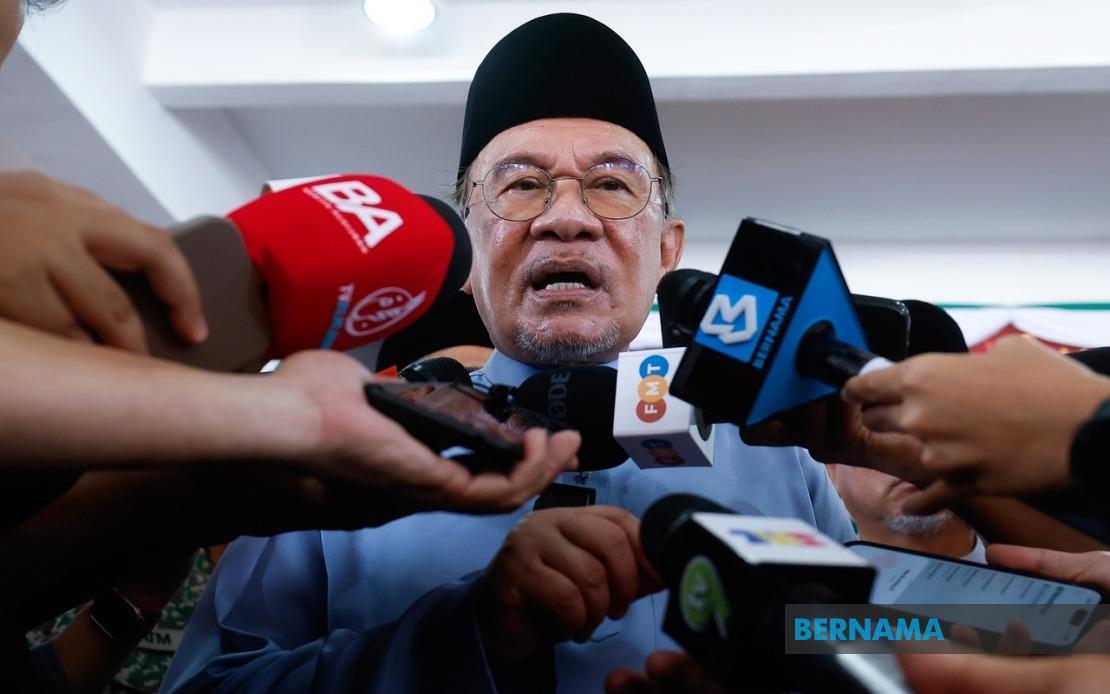
Malaysia will maintain diplomatic channels with the United States to contest new tariffs imposed on the country, Prime Minister Datuk Seri Anwar Ibrahim announced at a military event in Port Dickson on Wednesday. The government views the ongoing discussions as vital to safeguarding national commercial interests, particularly as trade tensions reshape regional economic dynamics. Minister of Investment, Trade and Industry Datuk Seri Johari Abdul Ghani is leading the negotiating effort, with Anwar indicating that if talks fail to yield acceptable terms, the matter will be escalated once more through appropriate diplomatic channels.
The tariff situation stems from a controversial determination by the United States Trade Representative that Malaysia, along with Cambodia and Indonesia, had not adequately enforced prohibitions on importing goods manufactured with forced labour. This finding triggered the application of Section 301 of the Trade Act of 1974, a powerful tool that allows Washington to unilaterally impose trade sanctions on nations deemed to have inadequate labour protections. The US investigation encompassed sixty economies globally, reflecting broader American concerns about global supply chain integrity and worker rights in developing regions.
While Anwar acknowledged the government's disappointment with the tariff designation, he drew reassurance from the rate structure itself. Malaysia faces a 10 per cent duty on affected goods—the lowest tier in the US action—placing it favourably relative to most trading partners. The remaining economies under investigation were subjected to a significantly steeper 12.5 per cent rate, a distinction that Anwar framed as partial vindication of Malaysia's labour enforcement record. This positioning suggests that despite documented shortcomings, the US assessment recognised relative progress compared to peer nations, though not enough to avoid penalties entirely.
The forced labour issue has emerged as an increasingly consequential trade friction point between Southeast Asian manufacturers and Western importers. Malaysia's prominence in semiconductors, electronics, palm oil processing, and textile production makes the country particularly vulnerable to such sanctions, given that these sectors employ large numbers of migrant workers who are occasionally subjected to exploitative conditions. International investigations have repeatedly documented instances of wage theft, contract violations, and restricted movement among foreign workers in these industries, creating both humanitarian concerns and commercial liability for major exporters.
The tariff implications extend beyond immediate cost increases to importers. Malaysia is simultaneously eligible for consideration under a tariff-rate quota arrangement designed to incentivise greater utilisation of American cotton and textile inputs. This carrot-and-stick approach reflects Washington's strategy of combining punitive measures with commercial incentives to modify behaviour. Companies importing from the United States could potentially secure preferential tariff treatment if they increase their sourcing of American raw materials, creating a dual pressure mechanism that affects both the cost structure and sourcing decisions of Malaysian manufacturers.
Anwar's comments represent a carefully calibrated diplomatic response balancing domestic and international considerations. Public acknowledgment that Malaysia faces shortcomings in labour enforcement could invite criticism from opposition quarters and civil society organisations, yet outright dismissal of US concerns risks appearing dismissive of worker protections. By characterising the situation as manageable and emphasising the relatively low rate imposed, the government signals competence in trade diplomacy while suggesting the matter is not catastrophic to the economy.
The broader context reveals how trade policy has become intertwined with labour and human rights concerns in the post-pandemic era. Western governments and their electorates increasingly scrutinise supply chain ethics, and major trading blocs have begun weaponising trade instruments to enforce labour standards they view as fundamental. For Malaysia, which has long relied on cost advantages and labour-intensive manufacturing, such developments necessitate genuine structural reforms rather than mere diplomatic manoeuvres. The presence at the announcement of Defence Ministry personnel and senior government officials underscored the official gravity attached to the matter.
Sector specialists note that the most affected Malaysian industries will likely face increased compliance costs as importers and multinational buyers respond to the tariffs by demanding more rigorous labour audits and supply chain transparency. This could paradoxically benefit larger, better-organised manufacturers capable of absorbing compliance expenses while squeezing smaller firms lacking resources for comprehensive labour governance systems. The tariffs thus risk reshaping Malaysia's industrial structure, potentially consolidating production among established players.
Regional observers view Malaysia's negotiating posture as pragmatic rather than confrontational. Unlike some governments that have responded to trade sanctions with retaliatory rhetoric, Anwar's administration has pursued quiet diplomacy aimed at securing marginal relief. This approach reflects Malaysia's economic interdependence with the United States and recognition that scorched-earth trade conflict would damage the country more than patient negotiation. The government's emphasis on the tariff rate's comparative moderation suggests it may be preparing public opinion for an outcome in which the 10 per cent rate remains in place but with potential modifications to application procedures or exemptions for specific sectors.
The forced labour investigation simultaneously highlights Malaysia's vulnerability to extra-territorial enforcement of foreign labour standards. Unlike tariffs imposed for protectionist trade reasons, which target broad sectors, labour-based sanctions can shift rapidly as new evidence emerges or investigations target specific companies or regions. This unpredictability makes long-term commercial planning difficult for Malaysian exporters, creating incentives for genuine improvement in working conditions rather than cosmetic compliance.
Moving forward, the government's negotiating strategy will likely emphasise demonstrable progress in labour enforcement rather than arguing against the underlying US concerns. Recent months have seen various Malaysian agencies intensify enforcement against labour trafficking and improved migrant worker registration, giving negotiators concrete achievements to highlight. Whether such efforts will ultimately secure tariff reductions remains uncertain, but they represent the most viable path for Malaysia to address American concerns while protecting its trade relationships.

