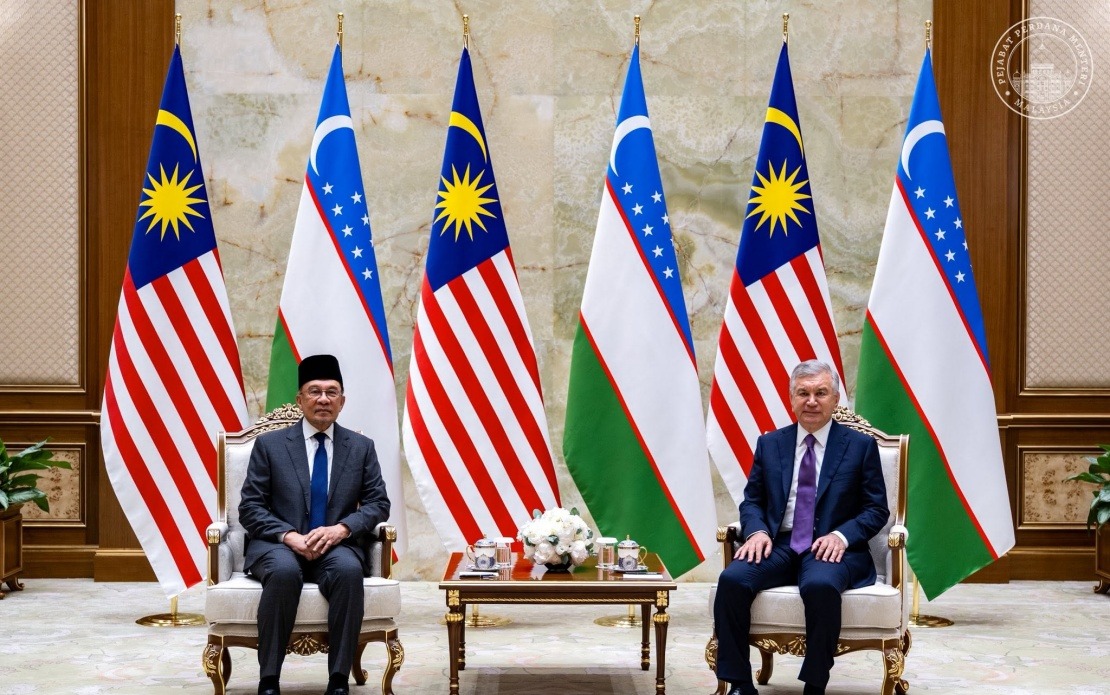
Prime Minister Datuk Seri Anwar Ibrahim has identified significant opportunities for Malaysia to deepen its strategic partnership with Uzbekistan across multiple sectors including energy, commerce, education and tourism. The discussion emerged from a brief but substantive meeting between Anwar and Uzbekistan President Shavkat Mirziyoyev during a transit stop in Tashkent on June 17, as the Malaysian leader travelled to Kazan to participate in the ASEAN-Russia Commemorative Summit scheduled for June 17-18.
The encounter, though conducted during a transit layover rather than a formal state visit, underscored the importance both nations place on strengthening institutional ties. Anwar characterised the meeting as a valuable opportunity to exchange perspectives on expanding cooperation across what he described as growing strategic areas of mutual interest. The time constraints of a transit stop did not diminish the substantive nature of the discussion, with both leaders identifying concrete sectors ripe for development.
Energy cooperation emerged as a cornerstone of the proposed partnership framework. Anwar highlighted the significant potential within the gas and petroleum industries, sectors where both countries possess relevant expertise and resources. For Malaysia, diversifying energy partnerships beyond traditional suppliers strengthens long-term energy security. Uzbekistan, as a significant Central Asian energy producer with strategic geographic positioning, offers Malaysian businesses and investors pathways into the region's hydrocarbon sector. Beyond immediate economic returns, collaborative energy ventures could position both nations as stakeholders in regional infrastructure development and contribute meaningfully to global sustainable energy transition objectives.
Commercial and investment linkages represent another pillar of the envisioned relationship. The two leaders recognised that enhanced trade flows and investment frameworks would generate mutual economic benefits while creating employment opportunities in both economies. Malaysia's established position as a gateway to Southeast Asian markets and Uzbekistan's increasingly prominent role in Central Asia present complementary advantages. Developing bilateral investment protocols and trade mechanisms could facilitate Malaysian enterprises seeking Central Asian expansion while enabling Uzbek businesses to access Southeast Asian distribution networks.
Educational cooperation constitutes an often-underestimated dimension of bilateral relations with lasting civilisational implications. Expanded academic exchanges, scholarship programmes and institutional partnerships between Malaysian and Uzbek universities would cultivate people-to-people connections essential for sustained diplomatic relations. Such engagement enriches both societies through knowledge transfer and creates networks of professionals and scholars who become de facto ambassadors for bilateral goodwill.
The halal industry discussion reflects Malaysia's distinctive positioning as a global halal certification and production hub. Uzbekistan, with its substantial Muslim population and growing interest in halal standards, represents a natural market for Malaysian halal expertise, certification services and value-added products. This sector offers particular promise because it combines commercial viability with cultural and religious significance, potentially expanding Malaysian halal sector revenues while facilitating Uzbekistan's integration into global halal supply chains.
Tourism cooperation opens additional avenues for revenue generation and cultural exchange. Malaysia's tourism infrastructure and Uzbekistan's remarkable historical and architectural heritage—particularly the Silk Road cities of Samarkand and Bukhara—create opportunities for reciprocal tourism promotion. Increased visitor flows in both directions would generate economic activity whilst fostering cultural understanding among ordinary citizens.
Anwar's explicit reference to preserving Islamic civilisation's intellectual treasures and scholarly traditions elevated the discussion beyond purely transactional commercial considerations. This framing acknowledges both nations' shared Islamic heritage and intellectual traditions. It suggests Malaysia seeks to position bilateral relations within a broader civilisational context, emphasising values-based partnership that transcends narrow economic calculation. This approach resonates with Malaysia's broader foreign policy orientation emphasising ethical dimensions of international engagement.
The Prime Minister's characterisation of potential cooperation as contributing to "human dignity" and "equitable and inclusive development" reflects Malaysia's commitment to development paradigms that prioritise social wellbeing alongside economic growth. Such language indicates Malaysian policymakers view partnerships through lenses encompassing social responsibility and environmental sustainability rather than purely profit-maximising frameworks.
Uzbekistan's growing engagement with ASEAN merits attention from Southeast Asian policymakers. As Central Asia assumes greater geopolitical significance amid shifting great power dynamics, Uzbekistan's deepening ties with ASEAN states like Malaysia enhance the region's connectivity to Central Asian markets and political processes. For Malaysia specifically, cultivating relationships with major Central Asian powers diversifies its diplomatic portfolio and creates alternative partnership channels independent of traditional Western or regional hegemon relationships.
The timing of this meeting during Anwar's journey to a commemorative ASEAN-Russia summit underscores how bilateral engagements occur within broader regional frameworks. Malaysia's diplomatic efforts with Central Asian partners contribute to ASEAN's broader strategy of maintaining diverse international relationships and preventing any single power from dominating regional affairs.
Anwar's good wishes to Uzbekistan's national football team before their 2026 FIFA World Cup campaign opener against Colombia illustrated how diplomatic courtesy extends to cultural and sporting domains. Such gestures, whilst seemingly minor, reinforce personal relationships between leaders and demonstrate genuine engagement with partner nations' concerns beyond official state business.
Looking forward, transforming these identified cooperation areas into concrete partnerships requires establishing institutional mechanisms, negotiating bilateral agreements and allocating resources towards implementation. Success depends on both governments following through with substantive policy measures that translate aspirational rhetoric into tangible results benefiting citizens of both nations.