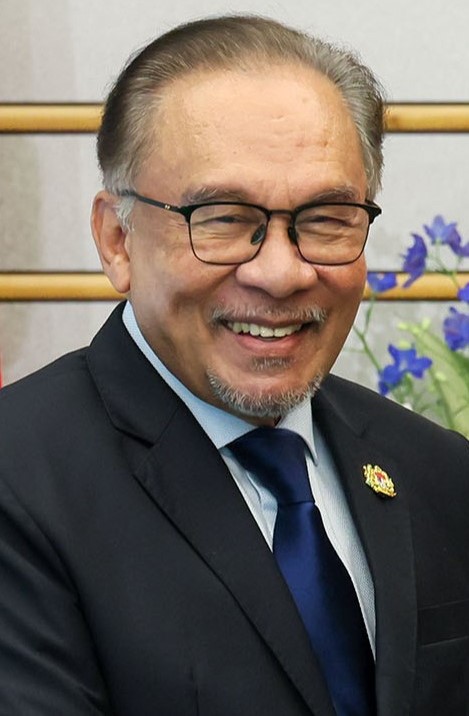
Prime Minister Anwar Ibrahim has issued a forthright declaration that developing nations will no longer tolerate discriminatory treatment by European countries, signalling Malaysia's determination to chart its own course when faced with what it perceives as unfair practices. The statement underscores a broader shift in how Southeast Asia's largest economy is positioning itself within international relations, rejecting a posture of deference to Western powers and instead asserting its right to reciprocal, equitable treatment.
In articulating this stance, Anwar drew upon Malaysia's current dispute with Norway centred on defence-related matters, using the situation as a concrete illustration of how developing nations are increasingly willing to abandon traditional partnerships when faced with what they view as unjust conditions. The reference to Norway is particularly significant given the Nordic nation's international reputation for neutrality and human rights advocacy, suggesting that even countries perceived as principled actors are not immune to charges of selective or inconsistent application of standards.
The Malaysian prime minister's remarks reflect a growing frustration among developing nations with what many view as a pattern of double standards in international engagement. Where industrialised nations frequently invoke principles of free trade, sovereignty, and mutual respect in their dealings with one another, these same principles are often applied inconsistently or conditionally when dealing with countries from the Global South. Malaysia's experience with Norway exemplifies how even seemingly technical or commercial disputes can become emblematic of deeper imbalances in how the international system operates.
The defence dimension of the Malaysia-Norway disagreement adds complexity to the broader narrative. Defence procurement and military cooperation have traditionally been areas where developed nations exercise considerable leverage over developing countries, often attaching political or behavioural conditions to access to advanced technology or equipment. Malaysia's willingness to explicitly challenge Norwegian positions in this domain suggests a fundamental recalibration of how it views its international relationships and an unwillingness to subordinate its defence interests to external pressure.
Anwar's message carries implications that extend well beyond the specific bilateral relationship between Malaysia and Norway. By framing this as an issue affecting developing nations more broadly, the prime minister is attempting to build solidarity among countries facing similar experiences of perceived unfairness or conditionality in their international dealings. This rhetoric resonates particularly strongly in Southeast Asia, where several nations have expressed frustration with Western responses to their domestic policies, whether relating to governance, environmental management, or human rights.
The emphasis on seeking alternative solutions is equally revealing. Rather than accepting European conditions or attempting protracted negotiations within existing frameworks, Malaysia is explicitly signalling its intent to diversify its partnerships and dependencies. This approach reflects the reality of twenty-first century international relations, where countries from the Global South have substantially greater latitude to pivot toward different partners than they possessed in previous decades. The availability of alternative sources of defence equipment, investment, and technology has fundamentally altered the bargaining dynamics that once favoured developed Western nations.
The Malaysia-Norway situation, while ostensibly technical or sectoral, thus represents a microcosm of shifting power dynamics in international affairs. Developing nations are increasingly asserting agency in their relationships with Western countries, refusing to accept the implicit hierarchy that has long characterised these interactions. Anwar's comments suggest that Malaysia views such assertiveness not as confrontational but as the legitimate exercise of national sovereignty and self-interest.
For Southeast Asian nations observing from the sidelines, Anwar's stance provides both encouragement and a template. It demonstrates that principled pushback against what is perceived as unfair treatment need not result in complete rupture of relationships but can instead prompt a recalibration that respects the autonomy and dignity of all parties involved. This approach contrasts sharply with both complete capitulation to Western preferences and wholesale rejection of Western partnership, instead pursuing what might be termed strategic pragmatism.
The broader context involves a region increasingly confident in its economic weight and geopolitical significance. Southeast Asia's role in global supply chains, its strategic location astride vital shipping routes, and its combined market of over 600 million people have all enhanced the region's ability to negotiate from positions of greater strength than in previous eras. Malaysia, as one of the region's most developed and diplomatically active economies, is well-positioned to lead in asserting these interests.
Anwar's remarks also reflect changing domestic political expectations within Malaysia. A Malaysian public increasingly conscious of the nation's capabilities and potential is unlikely to accept explanations for disadvantageous international arrangements framed as inevitable or unchangeable. The prime minister's explicit rejection of unfair treatment aligns his government's international approach with growing domestic sentiment regarding national dignity and self-assertion.
Moving forward, the Malaysia-Norway dispute will likely become a test case for how developed nations respond when confronted with pushback from developing countries. The outcome will send signals to other Southeast Asian nations about the costs and benefits of asserting their interests more forcefully in international relations. Should Malaysia successfully navigate this dispute while maintaining broader European partnerships through alternative arrangements, it would demonstrate that such pushback need not result in isolation but can instead prompt more equitable engagement.
The significance of Anwar's intervention extends beyond the immediate dispute. It represents a broader claim about the terms on which developing nations should engage with the developed world in the contemporary era. By framing the issue in terms of fundamental fairness rather than specific grievances, the prime minister is articulating a principle that transcends Malaysia's particular situation and speaks to aspirations for more balanced international relations across the Global South. Whether this rhetorical positioning translates into substantive changes in how Malaysia conducts its international affairs will become evident as the Norway dispute unfolds and as Malaysia pursues its promised alternative solutions.