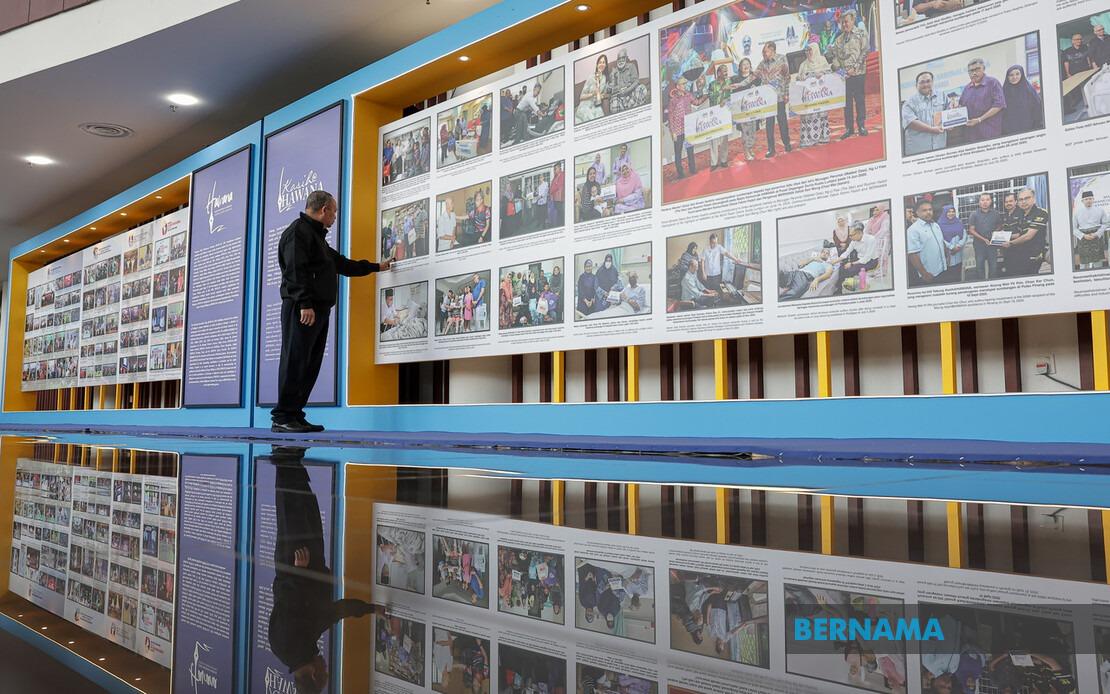
The media industry in Malaysia is converging on Penang this week for HAWANA 2026, a celebration that transcends ceremonial recognition to become a substantive forum for examining the profession's trajectory. Running parallel to the main event are several carefully curated programmes that reveal deeper concerns occupying newsrooms and editorial offices across the country. These initiatives underscore a sector grappling simultaneously with preserving journalistic integrity whilst adapting to profound technological and consumer behavioural shifts.
The Malaysian Federation of Media Clubs (GKMM) kicked off proceedings with Malaysia Media Retreat 2.0, drawing representatives from fifteen media clubs scattered across the nation. This gathering provides an instructive vantage point on how the industry's regional networks are coalescing around shared interests. GKMM president Mohamad Fauzi Ishak characterised the retreat not merely as a social occasion but as a strategic checkpoint for assessing the federation's development since its formal establishment in October 2022. The retreat, officiated by Communications Minister Datuk Fahmi Fadzil, included Bernama Chief Executive Officer Datin Paduka Nur-ul Afida Kamaludin and Editor-in-Chief Arul Rajoo Durar Raj, signalling government and state media engagement with the federation's trajectory.
Ahead of tomorrow's main ceremony, the federation is proceeding with its third annual general meeting, notably without any contested elections scheduled. Mohamad Fauzi explained to Bernama that this retreat functioned as both an opportunity for reflection on GKMM's achievements to date and as a mechanism for reinforcing bonds among member clubs. Such coordination among regional media clubs takes on particular significance in Malaysia's federal structure, where press activity is distributed across state capitals and major urban centres. By consolidating these disparate operations under a common institutional framework, GKMM is attempting to amplify the collective voice of media practitioners in policy discussions and industry forums.
The Malaysian Press Institute (MPI) has organised a town hall session with the provocative title "2035: Will Journalists Still Exist?" at Han Chiang University College of Communication. This framing encapsulates anxieties permeating the global journalism profession. The discussion encompasses three vectors of disruption: the ascendancy of artificial intelligence in news production and distribution, the accelerating pace of digitalisation across media organisations, and the shifting patterns through which audiences consume information. These are not abstract theoretical concerns but immediate operational challenges confronting Malaysian newsrooms attempting to maintain editorial quality whilst managing technological transitions and audience fragmentation.
The town hall assembled a cross-section of senior editorial leadership, including MPI president Datuk Yong Soo Heong alongside New Straits Times Press (NSTP) deputy group managing editor (News and Current Affairs) and NST group editor Farrah Naz Abd Karim. Azhari Muhidin, occupying the dual position of Media Prima News and Current Affairs (NCA) group editor and senior general manager of editorial content support for NCA, TV Networks and NSTP, brought additional perspectives from the commercial broadcasting sector. The composition of this panel reflects how Malaysian media—spanning print, digital and broadcast platforms—faces interconnected challenges requiring industry-wide deliberation rather than siloed institutional responses.
The Malaysian Media Council (MMC) contributes its own programming to HAWANA 2026, scheduled to conduct an introductory and engagement session with media practitioners in addition to a networking forum bringing together the media fraternity from Peninsular Malaysia's northern states. This tiered approach—with the GKMM addressing club-level networking, MPI focusing on existential professional questions, and MMC facilitating broader practitioner engagement—suggests a deliberately constructed architecture for dialogue operating at multiple scales. For Malaysian practitioners, particularly those outside Kuala Lumpur's media hubs, such regional engagement provides access to industry leadership and policy conversations otherwise geographically remote.
The centrepiece of HAWANA 2026 unfolds tomorrow when Prime Minister Datuk Seri Anwar Ibrahim officially inaugurates proceedings at PICCA @ Butterworth Arena. The event is projected to draw approximately one thousand media professionals from within Malaysia and internationally. This attendance scale reflects how HAWANA has evolved into a genuinely significant convening point for the sector. The deliberate choice of Penang rather than Kuala Lumpur for the main celebration sends a subtle signal about decentralising media dialogue and recognising the contributions of practitioners based outside the capital.
The overarching theme—"Media Integrity, Foundation of Credibility"—directly addresses the trust deficit affecting news organisations globally and within Malaysia specifically. In a context where misinformation circulates rapidly across social media platforms and audience scepticism toward institutional media persists, the explicit foregrounding of integrity as foundational becomes tactically significant. The Communications Ministry, through Bernama as implementing agency, is positioning this theme as connecting journalistic ethics to organisational and sectoral credibility. This framing acknowledges that individual journalistic acts occur within institutional and broader media ecosystem contexts, and that integrity must be conceived at multiple levels simultaneously.
Concurrently with the formal programming, a three-day carnival branded RIUH @ HAWANA unfolds at PICCA Convention Centre. The carnival component introduces a populist dimension to what might otherwise remain an industry-insider event. By incorporating entertainment, exhibition and public engagement elements, the organisers are attempting to demonstrate media's relevance to broader Malaysian audiences beyond the professional practitioner community. This public-facing dimension becomes increasingly important as media organisations navigate audience scepticism and the competitive landscape created by digital platforms and social media, where traditional institutional authority provides diminishing competitive advantage.
The assembled programming for HAWANA 2026 in Penang reveals an industry in self-reflective mode, simultaneously consolidating institutional networks, confronting technological disruption, and reasserting commitment to foundational professional values. For Malaysian readers following developments in the media landscape, these initiatives signal that the sector recognises both the urgency of adaptation and the imperative to maintain ethical moorings amidst transformation. The participation of government ministers and prime ministerial attendance underscores political investment in the media sector's stability and professional standing, even as inevitable tensions persist between official and independent media perspectives. The coming week in Penang will likely generate insights and industry consensus that ripple through Malaysian newsrooms and editorial offices throughout the remainder of 2026.

