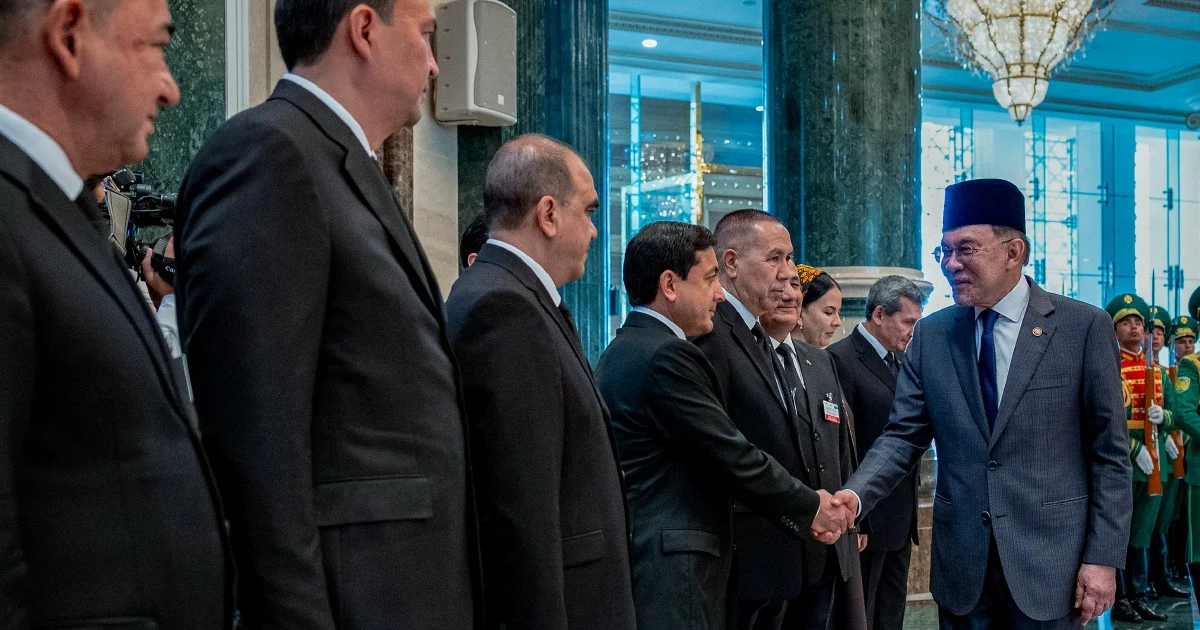
Prime Minister Datuk Seri Anwar Ibrahim's sustained diplomatic engagement across multiple countries is being viewed as a strategic tool for anchoring Malaysia's economic resilience as the world navigates a landscape marked by geopolitical tensions, trade friction, and shifting investment patterns. An academic assessment suggests that the government's proactive foreign policy approach has resonated with Malaysians who recognise the critical importance of deepening international commercial relationships in an era when regional stability and cross-border economic cooperation are under strain.
The timing of the Prime Minister's diplomatic initiatives carries particular significance for Malaysia, a nation whose prosperity has historically depended on maintaining balanced relationships with major powers while nurturing bilateral and multilateral trade arrangements. With superpowers competing for influence and supply chains undergoing fundamental reorganisation, Malaysia's positioning as a reliable partner in Southeast Asia becomes increasingly valuable to trading partners seeking to diversify their economic footprint away from concentrated risk zones. Anwar Ibrahim's visits and high-level engagements with counterparts across Asia, the Middle East, and beyond are part of a deliberate strategy to remind international investors and policymakers of Malaysia's competitive advantages.
The economic dimension of diplomatic engagement extends beyond symbolic gestures and political courtesy. Foreign direct investment flows, trade agreements, and technology partnerships often emerge from the foundation of strong bilateral relationships established through ministerial visits, state visits, and sustained official dialogue. Malaysia's experience over recent decades demonstrates that economic breakthroughs frequently follow periods of diplomatic warming and consistent high-level engagement. By maintaining an active diplomatic calendar, the Prime Minister is effectively working to keep Malaysia in the consciousness of international business leaders and government decision-makers when investment and trade opportunities arise.
Among Malaysian observers, there appears to be recognition that economic vulnerability in uncertain times demands more rather than less international engagement. The nation's manufacturing sector, financial services, and petrochemical industries all depend on stable access to global markets, reliable supply chains, and investor confidence. When global conditions deteriorate, countries that have cultivated strong relationships and demonstrated diplomatic sophistication tend to weather the storm more effectively than those perceived as isolated or uncommitted to regional cooperation. Anwar Ibrahim's diplomatic footprint reflects awareness that Malaysia cannot retreat inward during challenging periods but must instead amplify its presence on the world stage.
The academic perspective supporting these diplomatic efforts also considers the multiplier effects of successful foreign policy. When the Prime Minister secures agreements on trade facilitation, investment promotion, or technology transfer with other nations, the benefits ripple through Malaysia's entire economy. Workers in manufacturing benefit from export orders resulting from trade relationships. Engineers and technicians gain access to cutting-edge knowledge and partnerships. Small and medium enterprises gain exposure to international markets and supply chains. This ecosystem effect explains why Malaysians across different economic strata generally view diplomatic success as something that touches their own livelihood prospects.
Regionally, Malaysia's diplomatic activism carries particular weight because the country occupies a central position in Southeast Asia geographically and economically. As chair of ASEAN or during periods of significant regional influence, Malaysia's diplomatic credibility and international relationships directly affect ASEAN's collective negotiating power with major trading partners and geopolitical powers. By strengthening Malaysia's international relationships, Anwar Ibrahim is simultaneously strengthening Southeast Asia's bargaining position in discussions with China, India, Japan, the United States, and the European Union. This regional amplification effect makes Malaysia's diplomatic efforts relevant not just domestically but across the wider region.
The concept of economic diplomacy, where foreign policy decisions are explicitly designed to advance commercial and investment objectives, has become central to how modern governments approach international relations. Malaysia's adoption of this framework under Anwar Ibrahim's leadership reflects a pragmatic understanding that in an interconnected global economy, the distinction between traditional diplomacy and economic statecraft has become blurred. Trade negotiations, investment treaty frameworks, and technology partnerships all require the groundwork of solid political relationships and mutual understanding established through sustained diplomatic engagement at the highest levels.
Global economic uncertainties manifest in Malaysia through multiple channels: disrupted supply chains affecting manufacturing competitiveness, volatile commodity prices impacting palm oil and petrochemical exports, and shifting investment patterns as multinational corporations recalibrate their regional strategies. Against this backdrop, Malaysia's diplomatic initiatives represent an attempt to influence its own economic destiny rather than passively waiting for global conditions to improve. By actively strengthening relationships with key trading partners and potential investors, the government is working to secure Malaysia's position in emerging supply chains, particularly those related to semiconductors, electric vehicles, and renewable energy technologies.
The breadth of Malaysia's diplomatic engagement under Anwar Ibrahim's tenure extends across traditionally important economic partners in East Asia while simultaneously developing relationships with emerging economies and new market opportunities. This geographic diversification in diplomatic focus mirrors economic diversification principles, reducing dependence on any single relationship or region for Malaysia's prosperity. The approach recognises that growth opportunities exist simultaneously in mature markets seeking stability and supply chain diversity, and in emerging economies offering rapid consumer growth and expanding trade potential.
Supporters of the Prime Minister's diplomatic strategy also point to the soft power dimensions of active international engagement. When Malaysia is visible and engaged in international forums, hosting high-level meetings, and participating in global problem-solving initiatives, the country's image improves among international investors and trading partners. This enhanced perception translates into concrete economic benefits as businesses factor country reputation, political stability, and government engagement quality into their investment decisions.
Looking forward, the success of Malaysia's diplomatic initiatives will be measured increasingly through economic metrics: growth in bilateral trade volumes, attraction of strategic foreign direct investment, participation in high-value supply chains, and advancement of domestic industries into global markets. The academic community's support for these diplomatic efforts reflects confidence that the connection between political engagement and economic prosperity remains as relevant in the twenty-first century as in any previous era.

