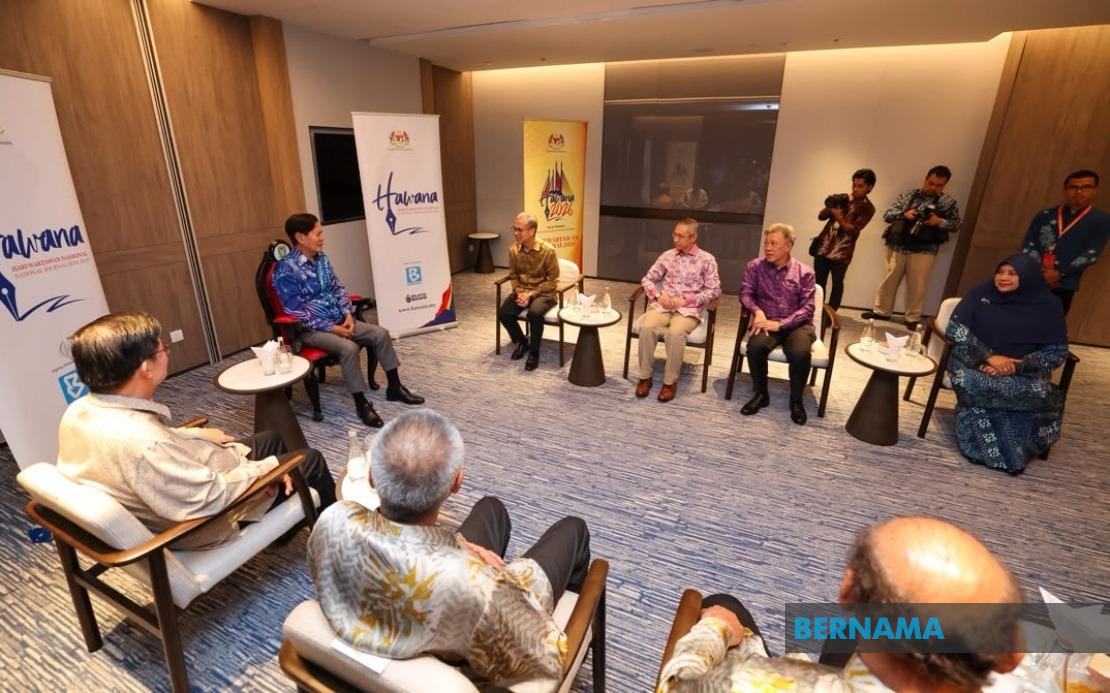
Malaysia's Communications Minister Datuk Fahmi Fadzil has issued a comprehensive call for the media industry across Southeast Asia to deepen collaborative efforts aimed at combating the proliferation of misinformation, emphasising that regional stability and prosperity depend on a shared commitment to factual, responsible journalism. Speaking during National Journalists' Day (HAWANA) 2026 celebrations in Butterworth, Fahmi outlined the strategic importance of building stronger networks between news organisations, journalists and communications professionals throughout the ASEAN region, arguing that the exchange of expertise and editorial standards represents a critical defence against the distortion and manipulation of public discourse.
The minister articulated a nuanced vision of journalism's foundational role in contemporary society, positioning the profession as far more than a simple conduit for information. He characterised media as essential infrastructure that connects citizens with factual accounts of unfolding events whilst simultaneously serving as a vital interface between government policymakers and the communities affected by their decisions. In an environment where information circulates at unprecedented velocity and competing narratives constantly vie for public attention, Fahmi contended that journalism anchored in verifiable facts, editorial integrity and professional responsibility has become increasingly indispensable to democratic functioning and informed citizenry.
The remarks were delivered during an official state government dinner that included Penang Governor Tun Ramli Ngah Talib and Penang Chief Minister Chow Kon Yeow, underscoring the event's significance as a government-level affirmation of media's societal importance. The gathering brought together senior government officials, including Communications Ministry secretary-general Datuk Abdul Halim Hamzah and senior communications officials, alongside representatives from Malaysia's major news organisations and delegations from fellow ASEAN nations' communications ministries. This composition reflected an intentional effort to position HAWANA 2026 as a platform for multilateral discussion about journalism's evolving challenges and the institutional structures required to sustain professional standards across borders.
Fahmi framed the HAWANA 2026 celebration as serving a dual purpose within Malaysia's national strategy. The event functions as formal recognition of journalism's instrumental partnership in the nation's development trajectory, acknowledging media's responsibility to inform public debate on issues ranging from economic policy to infrastructure projects to social welfare initiatives. Simultaneously, the celebration operates as a declarative statement about the government's commitment to supporting the journalism profession during a period of considerable disruption, when traditional revenue models have eroded, digital platforms have fragmented audiences and public trust in institutions including media has experienced documented decline across much of the region.
The emphasis on cross-border collaboration reflects distinctive challenges facing Southeast Asian journalism. Misinformation campaigns frequently operate across national boundaries, exploiting linguistic diversity and different regulatory environments to amplify divisive narratives designed to exploit social fault lines. Coordinated disinformation efforts targeting political elections, ethnic relations and religious sensitivities have demonstrated the capacity to inflame tensions within and between ASEAN nations. By contrast, professional news organisations often work in relative isolation, lacking systematic mechanisms for sharing information about emerging disinformation tactics, coordinating fact-checking efforts or establishing common standards for verification and attribution that could increase collective resilience against organised falsehood campaigns.
The minister's articulation of journalism's bridge function between government and implementation addresses a particular gap in Southeast Asian governance. Policy decisions made in capital cities frequently encounter unexpected resistance or fail to achieve intended outcomes when communication channels prove inadequate. Professional journalism can serve as a diagnostic tool, identifying friction points and unintended consequences in policy execution whilst simultaneously helping government agencies understand public concerns and priorities that might otherwise remain invisible to policymakers insulated within bureaucratic structures. Conversely, media can help citizens understand the rationale behind government initiatives, creating space for informed rather than reactive public engagement.
Fahmi's emphasis on knowledge exchange and best practice sharing acknowledges the considerable variation in journalistic capacity and institutional development across ASEAN member states. Malaysia's media industry, whilst facing pressures common to the region, retains established professional associations, journalism training programmes and news organisations with institutional memory and editorial resources. Other ASEAN nations face more acute resource constraints, limited access to professional development opportunities and institutional pressures that compromise editorial independence. Systematic knowledge-sharing could accelerate the adoption of proven editorial practices, verification methodologies and anti-misinformation protocols throughout the region, elevating standards without requiring each nation to independently rediscover solutions to common problems.
The timing of these remarks carries particular significance given the proliferation of artificial intelligence applications that can generate realistic synthetic media and the sophistication of automated disinformation networks that operate across the region. Traditional fact-checking and verification practices, developed for an earlier media environment, face strain when confronted with deepfakes, manipulated images and coordinated inauthentic behaviour on social media platforms. Regional collaboration offers potential for developing shared resources such as digital forensics expertise, collaborative fact-checking databases and early warning systems for coordinated disinformation campaigns that might otherwise overwhelm individual newsrooms operating independently.
The minister's appreciation for Penang's willingness to host the HAWANA 2026 celebration acknowledged the state government's broader commitment to positioning journalism and creative industries as economic and social priorities. Penang has developed a reputation as a progressive state on communications policy and media development issues. By hosting the national journalists' celebration, the state simultaneously elevated the profile of its own commitment to press freedom and professional journalism whilst providing a venue for the kind of cross-government, cross-sectoral dialogue that sustained institutional strengthening requires.
For Malaysian journalism specifically, Fahmi's remarks outlined an implicit expectation that the profession elevate its standards and expand its contributions during a period of democratic and institutional challenge. The communications minister effectively positioned support for journalism as aligned with government's broader development agenda, creating space for media to assert its professional autonomy and public service function whilst remaining integrated within national strategic priorities. This framing offers Malaysian news organisations an opportunity to advocate for policy measures that protect editorial independence, ensure sustainable revenue models and enable continued investment in investigative and public interest journalism that benefits not only Malaysian readers but contributes to regional knowledge and institutional capacity.
The call for strengthened ASEAN media collaboration ultimately addresses a structural imbalance in information power within the region. Whilst misinformation and disinformation operate fluently across borders, exploiting digital infrastructure and social networks to amplify falsehoods, professional journalism remains largely constrained within national frameworks and language communities. By developing mechanisms for regional collaboration, knowledge exchange and coordinated response to shared threats, ASEAN journalism can more effectively counter organised disinformation campaigns whilst simultaneously strengthening individual newsrooms' capacity to serve their particular audiences with accurate, contextualised and socially valuable reporting.

