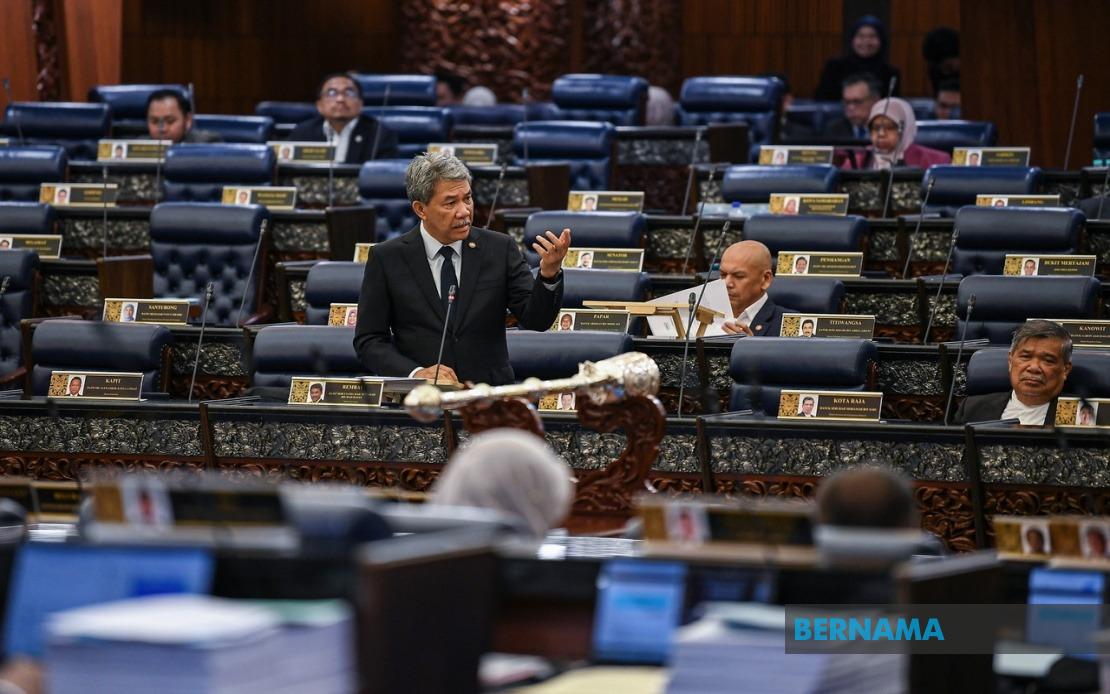
Malaysia's government has moved to dispel public concerns about the administration of its Humanitarian Trust Fund for the People of Palestine, with Foreign Minister Datuk Seri Mohamad Hasan providing assurances about transparency and rigorous oversight mechanisms. Speaking in Parliament during Question Time, the minister defended the fund's management and stressed that incorrect allegations have been circulating about how the money is handled.
The Humanitarian Trust Fund for the People of Palestine, known locally as AAKRP, functions as a state-controlled account rather than an independently operated entity, Mohamad clarified. This distinction is significant because it means the fund falls squarely under government accountability structures, subject to the same oversight requirements as other government financial mechanisms. The minister noted that the fund undergoes regular audits conducted by the Auditor-General's office, Malaysia's principal independent financial watchdog, and the Cabinet receives consistent reports on its operations.
Mohamad's statement came in response to a supplementary question from Ahmad Tarmizi Sulaiman, a parliamentarian from the Perikatan Nasional coalition representing Sik. The query reflected broader public interest in how Malaysia's humanitarian assistance reaches Palestinian beneficiaries, particularly given the heightened attention to Gaza's worsening conditions. The minister used the opportunity to outline the mechanisms that ensure aid reaches intended recipients rather than being diverted or misused.
Crucially, Malaysia has implemented a strategy of channelling humanitarian assistance through established international and regional organisations rather than direct transfers. The United Nations Relief and Works Agency for Palestine Refugees in the Near East, commonly known as UNRWA, serves as one primary conduit for Malaysian aid. Additionally, assistance flows through the Jordan Hashemite Charity Organisation and the Palestine Red Crescent Society, alongside partnerships with King Hussein Hospital. This multi-layered distribution network adds accountability layers and reduces risks associated with aid delivery in conflict environments.
Beyond cash transfers, Malaysia has sent substantial physical humanitarian shipments to Gaza, including food supplies, medical equipment and health-related materials. According to Mohamad, some consignments that faced earlier delays have now successfully reached Gaza following the reopening of overland humanitarian corridors. These routes have been reestablished through coordination with the Egyptian government, which controls the Rafah crossing—the primary humanitarian gateway into Gaza. The reopening represents a significant development for relief efforts that have been severely hampered by the broader security situation.
The humanitarian crisis in Gaza remains dire, Mohamad acknowledged, with civilian infrastructure extensively damaged throughout the territory. Hospitals, schools and religious buildings have suffered severe destruction, compounding the challenges facing the population. This context underscores why Malaysia and other nations continue prioritising humanitarian assistance despite the logistical and security complications involved in delivering aid into active conflict zones.
The minister's statement also addressed misinformation, particularly on social media platforms where unsubstantiated claims about the fund's management have circulated. Mohamad urged Malaysians to disregard inaccurate narratives, emphasising that the AAKRP operates with professionalism and responsibility. In an era where viral claims can quickly undermine public trust in government initiatives, the explicit warning against social media misinformation highlights how disinformation can affect development assistance programmes.
For Malaysia, this clarification matters beyond Gaza itself. As a Muslim-majority nation with significant soft power in the Middle East and developing world, Malaysia's approach to humanitarian assistance—particularly to Palestinians—carries diplomatic weight. Maintaining transparent, accountable aid structures strengthens Malaysia's international credibility and demonstrates to both domestic audiences and the international community that assistance programmes meet rigorous standards.
The broader Malaysian context also involves ongoing discussions about aid effectiveness and government accountability. Recent years have seen increased scrutiny of how government funds are managed across various programmes and sectors. By explicitly highlighting audit mechanisms and Cabinet oversight of the Palestinian aid fund, the ministry signals alignment with broader expectations for financial transparency in government operations.
For Palestinian beneficiaries and the organisations implementing relief programmes, Malaysia's continued assistance provides meaningful support amid escalating humanitarian needs. The combination of cash transfers through the trust fund and direct shipments of essential goods addresses multiple dimensions of the crisis. However, the scale of destruction and displacement in Gaza means that even coordinated international assistance struggles to meet the full scope of humanitarian requirements.
Looking forward, the minister's parliamentary statement establishes a clear record of government commitment to transparent aid management. This becomes relevant should scrutiny intensify or should Malaysia expand its humanitarian engagement with Palestinian territories. Establishing these accountability mechanisms early provides a foundation for scaling assistance if political circumstances permit.
The government's emphasis on working through UN agencies and established charitable organisations also reflects international best practices for humanitarian assistance in conflict settings. These partnerships allow Malaysia to leverage expertise in logistics and needs assessment while maintaining the oversight structure that domestic auditing requirements demand. The approach ultimately serves both Malaysian accountability standards and effective aid delivery objectives.

