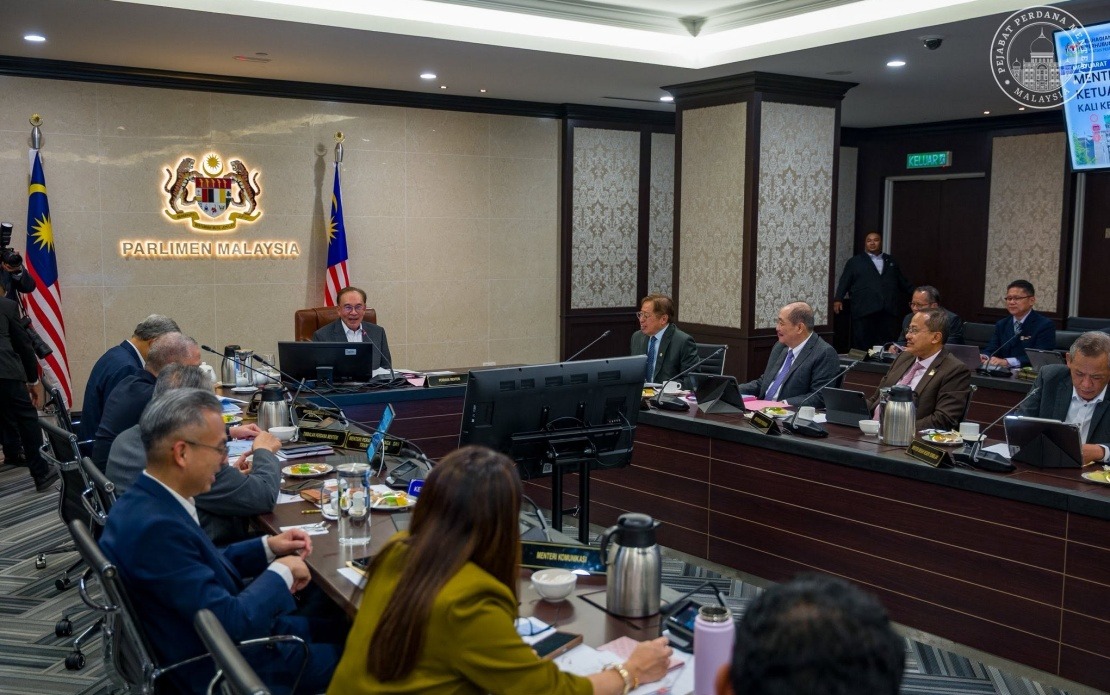
Prime Minister Datuk Seri Anwar Ibrahim brought together the country's Menteris Besar and Chief Ministers on June 23 for the 149th gathering of this crucial inter-governmental forum, with deliberations centring on revitalising Malaysia's economy against a backdrop of global turbulence and regional instability. The session, held at the Parliament Building in Kuala Lumpur, reflected the administration's determination to craft coordinated responses to multiple interconnected challenges threatening economic momentum and citizen welfare across the nation.
The geopolitical turmoil engulfing West Asia has reverberated through global markets and supply chains, imposing tangible pressures on export-dependent economies like Malaysia. During the meeting, state and federal leaders examined how these international disturbances might ripple through Malaysian commerce, investment flows, and employment sectors. The discussion underscored the administration's recognition that economic vulnerability in one region can swiftly transmit across borders, necessitating proactive planning rather than reactive crisis management.
Beyond immediate macroeconomic concerns, the forum concentrated heavily on Malaysia's vulnerability to the El Niño phenomenon, a climatic pattern that forecasters anticipate will intensify across the region in coming months. The atmospheric system poses multifaceted threats to Malaysia's development trajectory and food security architecture. Water supply systems, particularly in states dependent on seasonal rainfall patterns, face potential strain as drought conditions may compress available reserves. Agricultural productivity could contract significantly if precipitation declines as projected, directly affecting both farmers' livelihoods and domestic food production capacity.
Food security emerged as a critical concern within this climatic context. Malaysia, despite its agricultural heritage, imports substantial quantities of essential foodstuffs, making it susceptible to price volatility when regional production weakens. An El Niño-induced harvest shortfall across Southeast Asia could drive commodity prices upward, compressing household purchasing power and straining vulnerable populations. The Menteris Besar gathering acknowledged these interconnections, with participants likely discussing early warning systems, irrigation infrastructure investments, and strategic food reserves to mitigate potential disruptions.
The elevated risk of extreme heat and haze presented another dimension requiring coordinated response. Previous episodes of transboundary haze, originating from agricultural burning in neighbouring regions, have caused substantial public health crises and economic losses in Malaysia. Preparing healthcare systems, enforcing air quality monitoring protocols, and coordinating with regional partners to prevent biomass burning became implicit agenda items as leaders contemplated climate adaptation strategies.
Anwar's articulation of the meeting's outcomes emphasised a pivot toward integrated, efficient, and citizen-centred governance. This rhetorical framing reflects an understanding that siloed departmental approaches historically failed to address complex, multi-sector challenges. Economic competitiveness requires harmonised policies across federal and state jurisdictions, eliminating regulatory friction that burdens investors while maintaining standards protecting workers and the environment. The emphasis on people-centric implementation suggests acknowledgment that macroeconomic growth divorced from tangible improvements in living standards breeds public dissatisfaction and social instability.
Attracting quality investments figured prominently in the leadership discussion. Malaysia competes fiercely with Indonesia, Thailand, and Vietnam for manufacturing and technology sector investment, particularly as multinational corporations reassess supply chain geography following pandemic disruptions. The Menteris Besar forum recognised that investors increasingly examine regulatory consistency, infrastructure quality, and workforce development across jurisdictions. Inconsistency between state and federal policies creates operational uncertainty that deters long-term capital commitments. The meeting's emphasis on coordinated implementation signals commitment to presenting Malaysia as a predictable, coherent investment destination.
The broader question of federal-state relations underlay these discussions. Malaysia's constitutional framework distributes economic responsibilities across multiple tiers of governance, creating inherent coordination challenges. States control land policy, local taxation, and certain sectors like agriculture and tourism, while the federal government manages monetary policy, major infrastructure, and international commerce. Friction between these levels can sabotage economic initiatives. The Menteris Besar platform provides crucial opportunity for consensus-building, enabling leaders to align state-level implementation with federal strategic objectives while preserving state autonomy.
Anwar's invocation of "spirit of togetherness and consensus" reflects political realisation that Malaysia's economic challenges exceed any single party's or government level's capacity to resolve independently. The diverse political composition of Malaysia's states—some governed by ruling coalition parties, others by opposition coalitions—necessitates pragmatism transcending partisan boundaries when national interests require unified action. Successfully implementing economic revival strategies demands cooperation from state governments that may harbour political differences with the federal administration.
The 149th Menteris Besar meeting arrives at a delicate juncture in Malaysia's economic narrative. Growth momentum has steadied following pandemic turbulence, yet structural challenges persist. Youth unemployment remains elevated, productivity growth lags regional peers, and income inequality continues widening. Against this backdrop, externally generated shocks—whether geopolitical conflict disrupting markets or climatic extremes disrupting production—threaten fragile recovery trajectories. Leaders recognised that weathering these headwinds requires simultaneously implementing short-term stabilisation measures and undertaking longer-term structural reforms that enhance resilience.
The gathering's focus on multi-level governance coordination also reflects evolving international experience. Successful economies increasingly recognise that centralised, top-down development models prove insufficient for managing 21st-century complexity. Solutions addressing climate adaptation, economic competitiveness, and social welfare require bottom-up innovation and local knowledge integration alongside national strategy. State governments, closer to communities and local conditions, possess insights that federal planners lack. Effective economic revival thus depends on genuine partnership rather than mere compliance.
Moving forward, stakeholders will scrutinise implementation fidelity across the nine states and three federal territories. Whether states actualise federal economic initiatives, adapt them to local contexts, or deprioritise them in favour of parochial interests will significantly determine whether this meeting catalyses genuine economic momentum or remains ceremonial. The El Niño preparedness agenda similarly requires tangible resource allocation and coordination mechanisms rather than rhetorical acknowledgment. Success ultimately hinges on translating consensus expressed in the Parliament Building into concrete actions that strengthen Malaysia's economic resilience, safeguard citizen welfare, and position the nation competitively within an increasingly uncertain global landscape.

