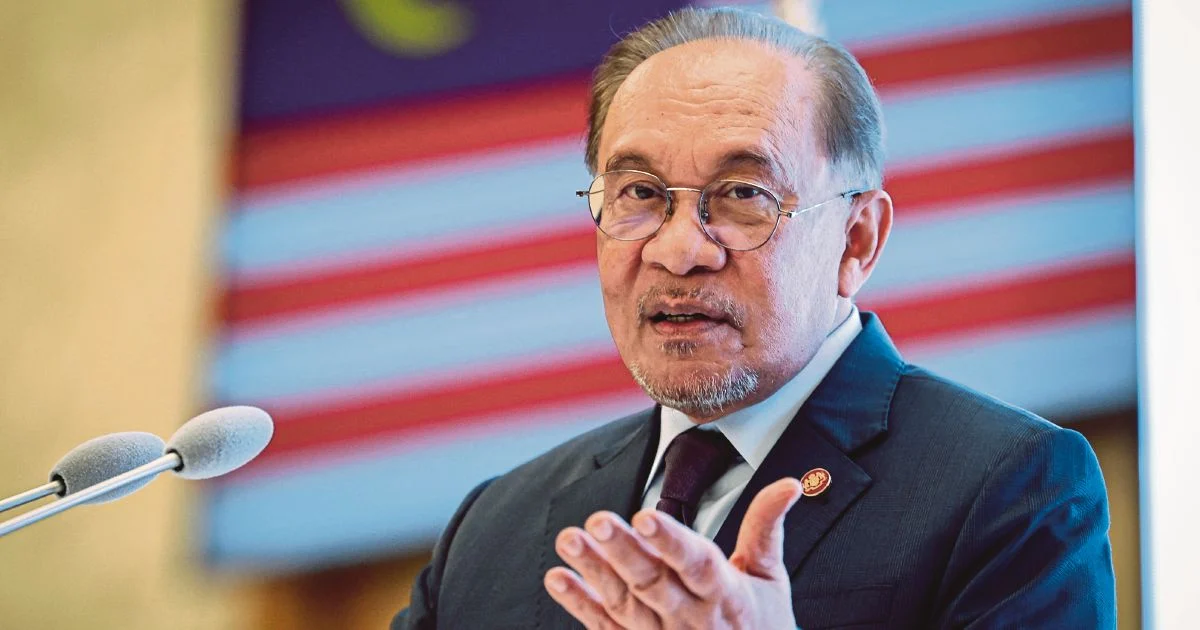
Turkmenistan's move to grant Petroliam Nasional Bhd a significant position in one of the world's largest gas reserves represents far more than a simple commercial transaction—it underscores mounting international confidence in Malaysia's institutional strength and economic trajectory, Prime Minister Datuk Seri Anwar Ibrahim said during remarks in Batu Kawan. The upstream energy assignment, according to the Premier, serves as external validation of Malaysia's political cohesion, macroeconomic resilience, and technical proficiency in managing complex petroleum infrastructure.
The decision by the Central Asian nation to partner with Petronas holds particular significance for Malaysia at a time when the country has been working to reestablish its credentials in the global investment community. Over recent years, Malaysia faced scrutiny over governance standards and political transition concerns that created uncertainty among international partners. This latest development suggests that such preoccupations may be receding as foreign investors gain renewed assurance regarding the country's direction and management.
Petrolas's expansion into Turkmenistan's gas sector builds on the national oil company's long track record as an operator of world-class hydrocarbon projects across multiple jurisdictions. The participation in such a strategically important asset pool amplifies Petronas's footprint in Central Asia, a region increasingly pivotal to global energy security discussions as geopolitical tensions continue to reshape traditional supply chains and dependency patterns.
For Malaysia specifically, the arrangement carries multi-layered benefits. Securing a foothold in one of Earth's largest natural gas reserves enhances the country's role as a reliable participant in international energy markets, while simultaneously securing long-term revenue streams for Petronas shareholders and the federal government. Energy security underpins economic stability, and diversified holdings in gas-rich regions insulate Malaysia against supply disruptions that could otherwise impair industrial competitiveness.
The timing of this accord arrives as the global energy sector grapples with conflicting pressures: the accelerating transition toward renewable sources contrasts sharply with near-term demand for conventional hydrocarbons to fuel economic growth across developing nations. Malaysia, as both an energy producer and an energy consumer with manufacturing-intensive economic structure, navigates this intersection strategically. Natural gas serves as a critical transition fuel, less carbon-intensive than coal yet more flexible than renewable sources, allowing countries to meet climate commitments without sacrificing industrial baseload power requirements.
Turkmenistan's confidence in Petronas reflects the company's reputation for operational excellence and financial reliability—qualities that matter enormously when international energy partnerships involve billions of dollars of capital expenditure and decades-long production timelines. The Central Asian nation's deliberate selection from among competing bidders demonstrates that technical competence and stable governance carry decisive weight in the global energy marketplace, regardless of geopolitical fault lines or regional competition.
Anwar's framing of the transaction as validation of Malaysia's unity and stability carries political resonance domestically as well. The coalition government formed following the 2022 elections faced questions about durability and coherence, particularly given Malaysia's history of fluid political alignments. Securing high-profile international commercial achievements helps reinforce the administration's narrative of restored confidence and effective governance, factors that matter for investor sentiment and domestic morale alike.
The gas sector's importance to Malaysia extends beyond Petronas operations. Natural gas dominates electricity generation across the country and feeds petrochemical complexes that support downstream industrial clusters. Access to reliable, cost-effective supply remains fundamental to Malaysia's competitive position as a manufacturing hub and energy exporter. Petronas investments abroad ultimately strengthen domestic energy security through improved cash flows and technical expertise that flow back to home operations.
Broader Southeast Asian implications also merit attention. Regional energy demand continues climbing as Indonesia, Vietnam, Thailand, and other neighbours industrialise at rapid pace. Turkmenistan's participation in expanding Central Asian gas supply has regional ripple effects, with pricing, supply adequacy, and infrastructure development directly affecting neighbouring states. Malaysia's position within this supply ecosystem thus carries significance extending well beyond national borders.
The diplomatic dimension warrants consideration too. Central Asia occupies an increasingly prominent position in great power competition, with Russia, China, and Western powers all competing for influence over energy corridors and resource partnerships. Malaysia's deepening engagement in this region through Petronas positions the country as a neutral, technically-focused partner whose presence contributes to supply diversification without threatening established regional powers—a role aligned with Malaysia's longstanding foreign policy orientation toward non-alignment and pragmatic engagement across ideological divides.
Looking ahead, this Turkmenistan partnership may catalyse further downstream opportunities for Malaysian contractors, engineering firms, and service providers. Major energy projects typically generate extended supply chains and employment across multiple sectors, extending benefits throughout the domestic economy. The decision by Petronas to expand significantly in Central Asia could therefore mark the beginning of deeper Malaysian commercial and technical involvement across the region's energy infrastructure.
Prime Minister Anwar's public emphasis on international confidence in Malaysia's fundamentals serves dual purposes: it reassures domestic constituencies and foreign investors simultaneously that the country remains on a steady course. Against a backdrop of regional economic competition and lingering global uncertainties, such external validation—particularly from consequential partners like Turkmenistan possessing vast energy resources—becomes an asset in Malaysia's ongoing effort to attract capital, talent, and technological partnerships essential for sustained prosperity.

