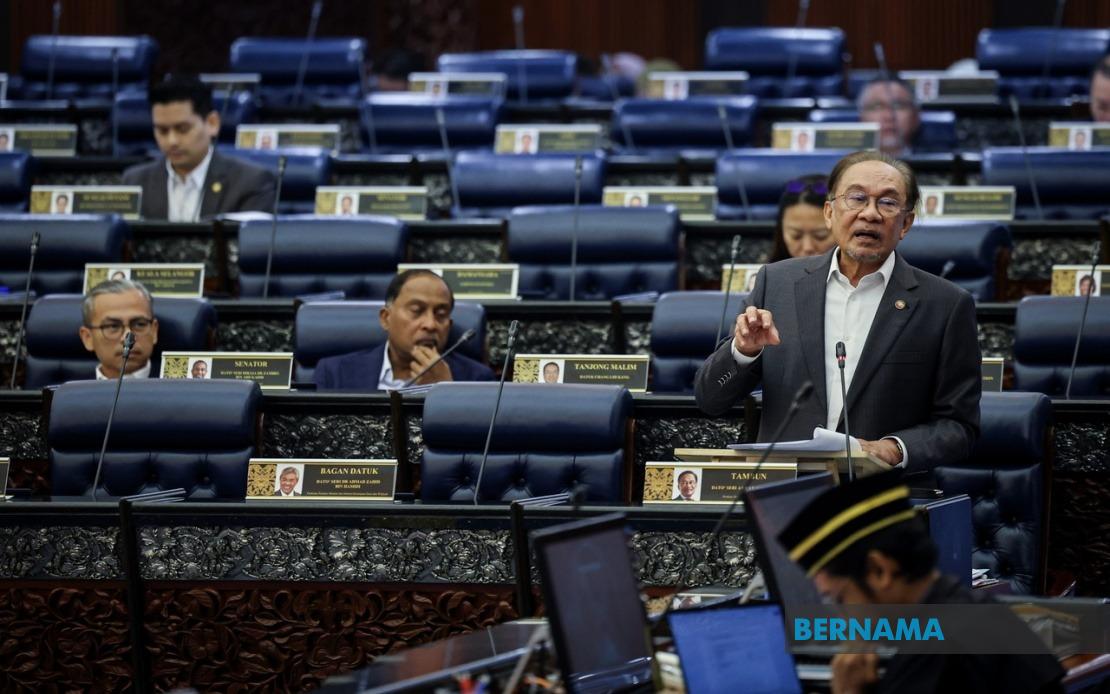
Malaysia's drop in the 2026 World Press Freedom Index, falling from 88th to 95th place, reflects enforcement decisions against several media outlets rather than a systematic suppression of press freedom, according to Prime Minister Datuk Seri Anwar Ibrahim. Speaking during parliamentary question time, the Prime Minister acknowledged that international observers have scrutinised Malaysia's regulatory actions, but emphasised that these measures target specific categories of content rather than political criticism or factual reporting.
Two high-profile cases have drawn particular international attention and contributed to the country's declining ranking. Sin Chew Daily faced enforcement action over its publication of an inaccurate illustration of the Jalur Gemilang, while Sinar Harian was addressed regarding content related to the Inspector-General of Police's biography. Anwar noted that such action against established media organisations carries significant weight in international press freedom assessments, as the global journalism community views enforcement against major news outlets as particularly consequential for overall media environment evaluations.
The Prime Minister drew a distinction between the government's approach to press freedom and international expectations, highlighting a fundamental tension in how different societies weigh competing values. He acknowledged that issues concerning national symbols carry weight in Malaysia that may not resonate with foreign observers, suggesting a clash between Malaysia's constitutional framework and international human rights norms. This distinction matters considerably for Southeast Asian audiences, many of whom operate within similar legal and cultural constraints regarding sensitive national institutions.
At the core of the government's enforcement strategy lies what officials refer to as the 3R framework—content touching on religion, race, and the royal institution. Anwar stressed that regulatory action in these domains operates under a mandate established by the Conference of Rulers, the body comprising Malaysia's sultans and constitutional monarchs. This arrangement reflects Malaysia's unique constitutional architecture, where the Yang di-Pertuan Agong and state rulers hold special constitutional positions that the government treats as requiring protection from certain forms of scrutiny or criticism.
The government maintains a distinction between permissible criticism and prohibited content. According to Anwar's parliamentary statement, action is not triggered by political dissent, factual inaccuracy alone, or commentary critical of government policies. Rather, enforcement targets material deemed to threaten national security or content that could intensify communal tensions along religious or ethnic lines. This nuance proves important for understanding how Malaysia's media regulatory environment functions—it is not a blanket censorship regime but rather a targeted approach focused on specific categories deemed sensitive within Malaysia's multi-ethnic, multi-religious framework.
The government has also undertaken legislative reforms aimed at recalibrating press freedom protections. Amendments to Section 233 of the Communications and Multimedia Act 1998 represent a significant shift, decriminalising satirical remarks directed at the Prime Minister and other political leaders. This reform suggests government acknowledgment that overly broad restrictions on political expression damage both press freedom rankings and democratic health, and indicates a willingness to distinguish between protected political speech and prohibited content in sensitive categories.
Anwar highlighted additional complexity in Malaysia's press freedom equation by noting that social media platforms themselves remove content based on their own policies and user complaints, independent of government directives. This dynamic, often overlooked in international assessments, affects Malaysia's standing in ways beyond direct government control. The Prime Minister cited his own experience, noting that social media companies removed posts related to Hamas despite the government's disagreement with such removal, demonstrating that private platform moderation policies can shape the regulatory landscape alongside government action.
The Malaysian Communications and Multimedia Commission, while empowered to request content removal, ultimately depends on cooperation from international social media platforms. These platforms retain final decision-making authority, meaning requests from Malaysian authorities are not automatically implemented. This structural limitation means that Malaysia's apparent enforcement activity may understate the complexity of online content governance in Southeast Asia, where regional authorities must negotiate with tech companies headquartered thousands of kilometres away.
Reporters Without Borders, the organisation behind the World Press Freedom Index, employs a multifaceted assessment methodology extending beyond direct government censorship. Their evaluation considers the political environment, legal framework, economic conditions, socio-cultural context, and security situation. Malaysia's decline reflects cumulative judgments across these dimensions rather than a single policy change, suggesting that improving the ranking requires sustained attention to multiple governance and institutional factors simultaneously. The assessment reflects international journalists' perceptions and experiences, which themselves can be influenced by high-profile enforcement cases even if these represent narrow applications of regulatory authority.
For Malaysia and comparable Southeast Asian democracies, this debate underscores the persistent tension between protecting national symbols and institutions on one hand and maintaining international credibility as open societies on the other. The government's position reflects a view that certain constitutional protections remain non-negotiable, particularly regarding the monarchy and inter-communal harmony. However, international observers increasingly expect democracies to accommodate criticism of all institutions, including those with traditional or constitutional significance. Bridging this gap requires careful calibration: maintaining legal protections for genuinely sensitive areas while expanding space for legitimate political and social discourse.
The government indicated its preference for public clarification over enforcement, including explanations delivered directly in Parliament. This approach suggests recognition that transparency and dialogue can address concerns without triggering the international press freedom community's negative assessment that accompanies formal regulatory action. As Malaysia continues navigating these tensions, its experience provides instructive lessons for other developing democracies attempting to balance institutional protection with press freedom and democratic participation—a balance that international indices increasingly require.

