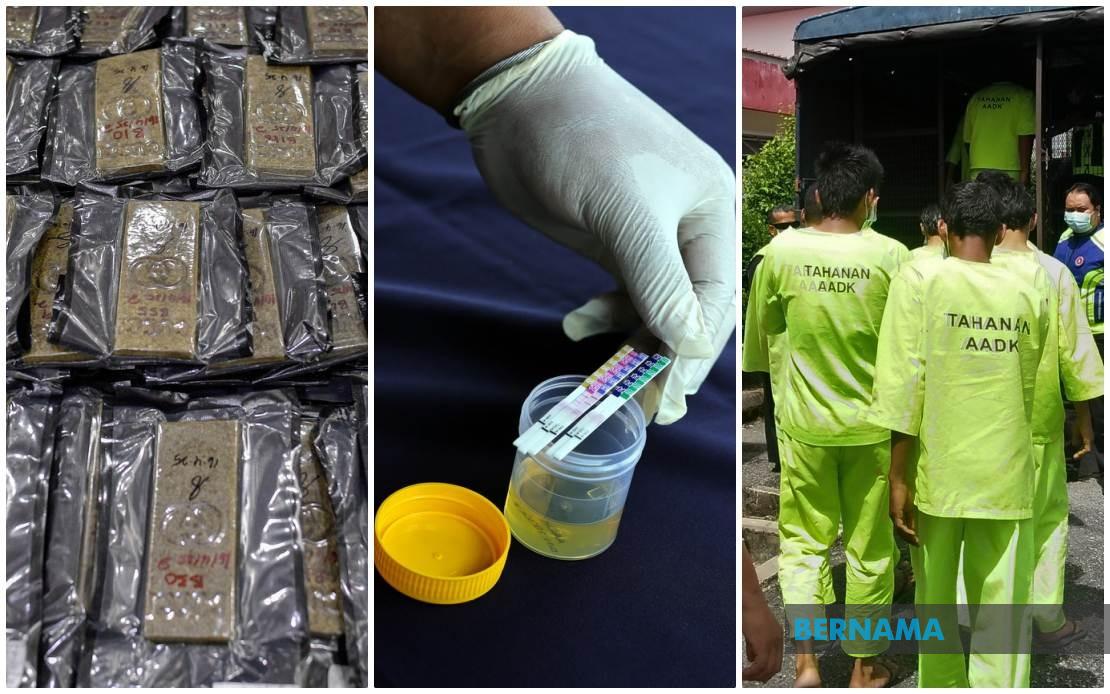
Malaysia's struggle with synthetic drug abuse has reached crisis proportions, with Home Minister Datuk Seri Saifuddin Nasution Ismail revealing that 141,817 cases were documented in 2024—a figure that underscores the persistent and worsening nature of the country's drug problem. Speaking during Ministers' Question Time in Parliament, Saifuddin Nasution painted a sobering picture of a nation grappling with substance abuse at an unprecedented scale, with synthetic drugs now accounting for approximately 70 per cent of all recorded drug offences nationwide.
The trajectory of synthetic drug abuse over recent years demonstrates an alarming trend. The statistics reveal 145,526 cases in 2023, followed by 192,852 cases in 2024—a year-on-year escalation that demands urgent strategic intervention. What distinguishes the current crisis is not merely the volume of cases but the composition of substances driving the epidemic. Amphetamine-type stimulants, commonly referred to as ATS, have become the drug of choice for the vast majority of abusers, displacing traditional narcotics that once dominated Malaysia's drug scene.
The geographic concentration of synthetic drug abuse presents a particularly troubling pattern. Data compiled from the Ministry of Health, the National Anti-Drugs Agency (AADK), Narcotic Addiction Rehabilitation Centres (Puspen), and the Royal Malaysia Police (PDRM) reveals that east coast states have become epicentres of the crisis. Within this corridor, the nature of drug abuse has fundamentally shifted. Substances like cannabis, heroin, ketum, and morphine—once prevalent—have largely ceded ground to methamphetamine, known colloquially as syabu, which offers users a more potent and accessible high. This transition reflects broader changes in drug manufacturing and trafficking networks, with organised syndicates optimising their product mix to maximise both profitability and market penetration.
District-level analysis exposes the granular reality of this crisis. Pendang in Kedah has emerged as the worst-affected locality, followed closely by Kuala Krai and Bachok in Kelantan. Besut and Mersing in Terengganu similarly rank among Malaysia's most impacted areas. These concentrations suggest that synthetic drug distribution networks have established particularly robust supply chains and customer bases in economically vulnerable or geographically isolated communities, raising questions about why certain regions have proven more susceptible to penetration by traffickers.
An ominous new dimension to Malaysia's drug crisis involves the detection of fentanyl, a synthetic opioid of extraordinary potency. Police operations targeting adulterated vaping products have uncovered fentanyl residues, marking the first significant appearance of this substance within Malaysian drug markets. Fentanyl's danger lies in its extreme potency—it is dozens of times more powerful than morphine and carries a dramatically elevated risk of fatal overdose. While Saifuddin Nasution acknowledged that fentanyl prevalence has not yet reached critical mass compared to methamphetamine, the very emergence of this substance in Malaysian supply chains represents a watershed moment, signalling that international trafficking networks are now attempting to penetrate the local market with substances that have devastated communities across North America and other regions.
Recognising the gravity of this threat, the government has moved to update its legislative framework. Fentanyl has been formally added to the list of scheduled substances through amendments to the Drug Dependants (Treatment and Rehabilitation) Act and the Dangerous Drugs Act 1952. This legislative action enables enforcement agencies to pursue and prosecute fentanyl distribution with the full weight of Malaysian law, though the effectiveness of such measures will depend heavily on intelligence-gathering capabilities and inter-agency coordination.
The demographic reach of synthetic drug abuse extends alarmingly into Malaysia's youth population. Approximately 75 per cent of the 192,000 drug abuse cases recorded thus far in 2024 involve individuals aged between 15 and 39 years—a statistic that reveals how synthetic drugs have penetrated schools, universities, and workplaces with particular effectiveness. This youth concentration threatens to create generational damage to Malaysia's human capital and represents a profound challenge to social cohesion and economic productivity.
The carceral dimension of Malaysia's drug crisis cannot be overlooked. Within the prison system, drug-related cases have become overwhelming. Approximately 70 per cent of all inmates maintain some connection to drug offences, whether as convicts or detainees awaiting trial. In certain facilities, such as Machang Prison, the figure approaches near-universality, with drug-related cases constituting nearly 100 per cent of the inmate population. This reality suggests that Malaysia's criminal justice system has become substantially transformed by the drug epidemic, with implications for rehabilitation, institutional capacity, and societal reintegration prospects.
The rise of digital commerce has introduced a novel enforcement challenge. Saifuddin Nasution highlighted how technological advancement has enabled drug transactions to migrate online, with unregulated platforms facilitating purchases without meaningful oversight or verification mechanisms. These digital marketplaces operate across jurisdictional boundaries, complicating enforcement efforts and allowing traffickers to reach customers while maintaining substantial operational security. The migration of drug commerce to online spaces suggests that traditional law enforcement strategies focused on street-level interdiction may prove increasingly inadequate.
In response to these multifaceted challenges, the AADK has adopted a diversified approach spanning prevention, education, and enforcement. Community-based prevention initiatives, educational programmes deployed across schools and educational institutions, and targeted family and workplace interventions form the preventive pillar. These efforts are complemented by collaborative enforcement operations involving the PDRM and Customs Department. However, the scale of the problem—with 560 cases per 100,000 Malaysians recorded in 2024—suggests that current interventions may be insufficient to reverse trajectory or even stabilise the situation.
The emergence of synthetic drugs as Malaysia's primary drug threat represents a fundamental shift in the country's substance abuse landscape. Unlike heroin or cannabis, which have established treatment protocols and public health frameworks, synthetic drugs present novel challenges regarding toxicology, addiction mechanisms, and therapeutic intervention. The shift toward methamphetamine and now fentanyl demands that Malaysia's public health, law enforcement, and rehabilitation sectors fundamentally recalibrate their approaches. Without substantial increases in prevention funding, treatment capacity, and enforcement resources, Malaysia faces the prospect of an expanding crisis that will increasingly consume criminal justice resources while exacting mounting social costs across affected communities.

