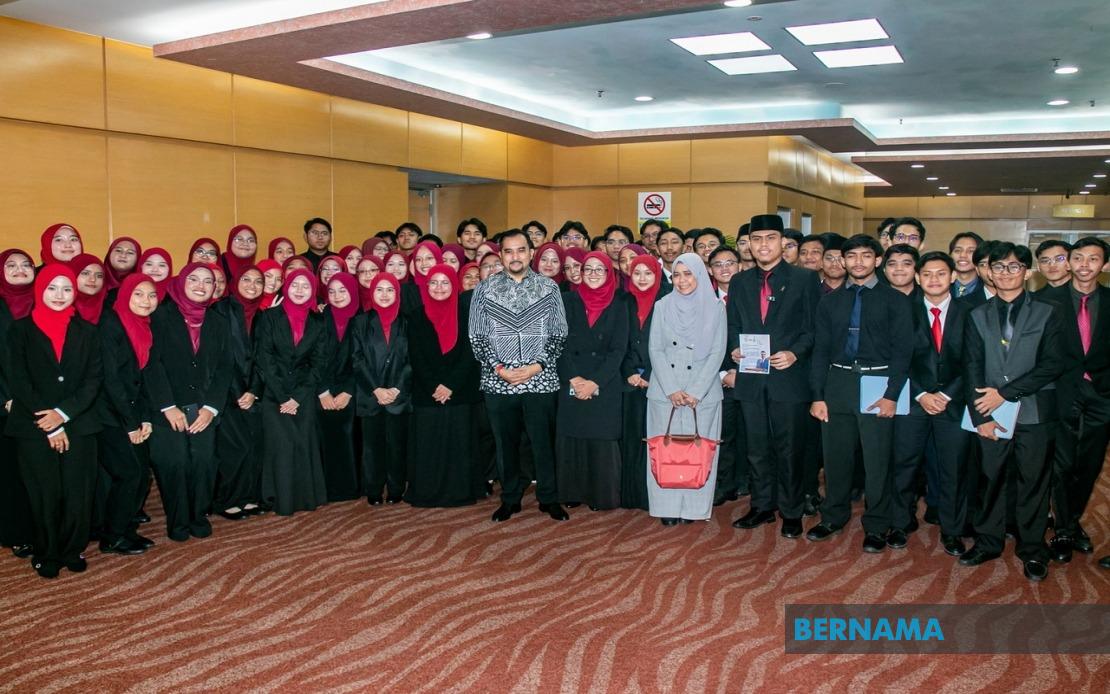
Majlis Amanah Rakyat (MARA) has formally reopened its medical training partnership with Al-Azhar University in Egypt, welcoming 78 students as the first intake following a seven-year suspension that began in 2019. The decision to revive this flagship scholarship route represents a significant recalibration of Malaysia's strategy for developing medical professionals abroad, particularly at one of the Islamic world's most prestigious institutions. MARA chairman Datuk Dr Asyraf Wajdi Dusuki unveiled the programme at a pre-departure briefing in Kuala Lumpur, crediting Cabinet endorsement and Prime Minister Datuk Seri Anwar Ibrahim's personal approval for enabling the initiative to proceed.
The financial architecture underpinning the Al-Azhar programme demonstrates pragmatic cost management in the context of Malaysia's commitment to expanding higher education access. Each participant will receive comprehensive sponsorship totalling RM350,000 to cover the five-year medical curriculum and accommodation expenses. This figure reflects a substantial concession negotiated with Al-Azhar University, which granted a 50 per cent discount to the Malaysian cohort. By contrast, pursuing medical qualifications domestically commands fees ranging between RM700,000 and RM800,000 per graduate, rendering the Egyptian option a compelling alternative for aspiring physicians from modest socioeconomic backgrounds who might otherwise face prohibitive barriers to entry.
The resumption carries broader implications for Malaysia's international educational positioning and regional standing within the Arab world. Al-Azhar, founded in 970 CE, maintains formidable credentials as a leading research and teaching institution in medical sciences across the Middle East and North Africa. Malaysian medical graduates trained there will emerge with qualifications recognized across Muslim-majority nations and beyond, creating pathways for subsequent specialization or professional mobility throughout the Organisation of Islamic Cooperation member states. This strategic consideration likely informed government approval, particularly given Malaysia's diplomatic emphasis on strengthening ties with Egypt and enhancing cooperation across educational, religious, and cultural domains.
The broader MARA scholarship ecosystem is simultaneously undergoing substantial expansion. Beyond the Al-Azhar medical cohort, the organization is dispatching 600 students in staged departures commencing the following week to pursue tertiary qualifications across multiple continents. This larger contingent draws from MARA's three residential preparatory colleges: Kolej MARA Seremban in Negeri Sembilan, Kolej MARA Banting in Selangor, and Kolej MARA Kuala Nerang in Kedah. The geographic diversity of receiving destinations—encompassing New Zealand, Canada, Australia, South Korea, the United Kingdom, and Egypt—reflects MARA's calibrated approach to distributing scholars across varied academic ecosystems and labour markets.
The calibre of institutional placements achieved by MARA beneficiaries underscores the selection rigour and academic preparation embedded within the sponsorship ecosystem. Eleven students have secured admissions to Imperial College London, an institution consistently ranked among the globe's elite scientific and engineering universities. More expansively, forty MARA-sponsored scholars have gained entry to institutions positioned within the world's top ten rankings, whilst an additional 107 have been accepted by universities occupying top-twenty positions. These metrics demonstrate that MARA's gatekeeping mechanisms successfully identify and nurture high-performing candidates capable of competing for positions at the most selective and demanding academic environments.
For Malaysian policymakers, the revitalization of the Al-Azhar medical programme addresses long-standing concerns regarding the adequacy of domestic medical school capacity. Malaysia faces persistent challenges in meeting physician workforce demands whilst simultaneously maintaining rigorous admission standards. External scholarship schemes function as a countervailing mechanism, enabling talented candidates who might face application bottlenecks domestically to pursue validated medical credentials overseas. Crucially, many such graduates subsequently return to Malaysia to contribute to the healthcare sector, either through mandatory service obligations or voluntary career choices driven by familial and national attachments.
The programme's reactivation also signals government confidence in Egypt's institutional integrity and the durability of bilateral educational cooperation despite geopolitical fluctuations in the Middle East. The seven-year hiatus likely reflected budgetary constraints or administrative recalibrations rather than fundamental concerns regarding Al-Azhar's academic standing or graduate employment outcomes. Reinstatement suggests that fiscal conditions have improved sufficiently to reinvest in this established channel, and that policy review has reaffirmed the institution's suitability for Malaysian medical education.
For prospective medical students from lower and middle-income Malaysian households, the RM350,000 sponsorship package represents transformative access to a profession conventionally associated with substantial financial investment and upper-middle-class privilege. MARA's merit-based selection processes theoretically ensure that talent rather than family affluence determines participation, democratizing pathways to medical qualification. The Al-Azhar option becomes particularly relevant for candidates residing outside major urban centres where private medical colleges concentrate, levelling geographic disparities in educational opportunity.
The international context surrounding this decision merits consideration as well. Global medical education has experienced significant restructuring in recent years, with multiple nations reassessing overseas training partnerships in light of employment outcomes, regulatory alignment, and quality assurance frameworks. Malaysia's reactivation of the Al-Azhar scheme suggests confidence that Egyptian qualifications remain portable and recognized within Malaysia's regulatory apparatus, particularly the Medical Council and professional licensing authorities. This institutional confidence likely reflected positive historical performance data from cohorts who completed their training and integrated into Malaysian medical practice prior to 2019.
Looking forward, the success of the 2024 cohort will substantially influence the trajectory of the programme. Stakeholders will monitor graduation rates, performance on Malaysian medical licensing examinations, and subsequent employment patterns among Al-Azhar alumni. Should this inaugural batch achieve outcomes consistent with or exceeding domestic medical graduate benchmarks, the precedent will likely support sustained or expanded allocations to the Egyptian partnership. Conversely, underperformance could prompt renewed scrutiny regarding overseas medical training quality and reinvestment priorities. MARA's reputational stakes in programme viability remain considerable given the substantial per-student fiscal commitment and the public nature of the announcement.

