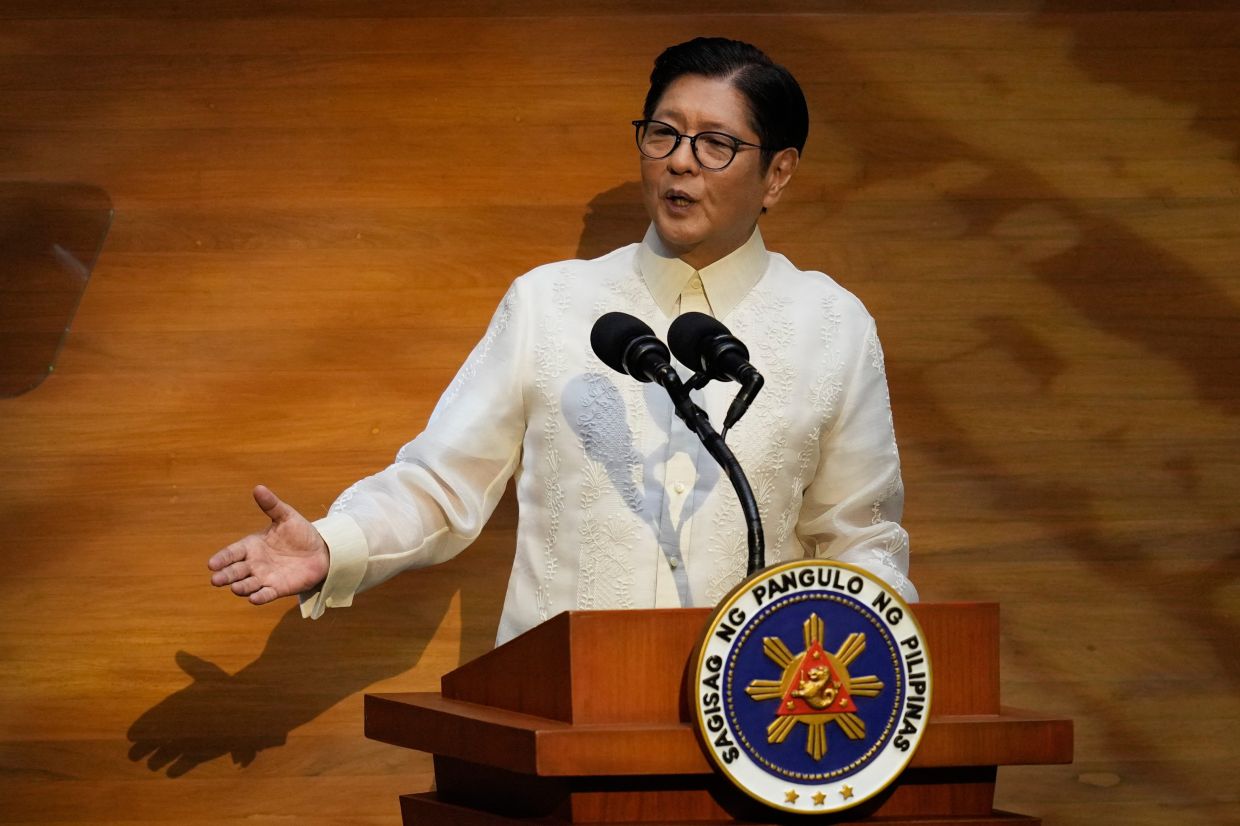
Philippine President Ferdinand Marcos Jr. has mounted a spirited defence of the 2016 South China Sea arbitration ruling in his state of the nation address, delivering a carefully worded but pointed rebuke of China's rejection of the tribunal's decision. Speaking before lawmakers on Monday, Marcos vowed that Manila would exhaust every peaceful and legal avenue to uphold the award, which invalidated Beijing's sweeping territorial assertions across the disputed waterway. Though the president studiously avoided naming China directly, his remarks drew thunderous applause from many in Congress, signalling broad political backing for his stance on one of Southeast Asia's most intractable geopolitical disputes.
The timing of Marcos's speech reflects mounting tensions between Manila and Beijing over maritime conduct in the South China Sea. Just days before his address, Marcos summoned Chinese Ambassador Jing Quan to discuss deeply offensive AI-generated imagery released by China Daily, a state-run media outlet, that depicted Filipinos as monkeys in a campaign mocking the arbitration decision. The Philippine government denounced the animations as racist and dehumanizing, demanding their removal. Marcos's invocation of Filipino dignity and national character in his speech appeared to be a direct response to this provocative incident, reasserting Philippine pride and rejecting what he characterised as unfounded attacks on the Filipino people.
China's response to Marcos's speech has remained characteristically defiant. Beijing's Foreign Ministry spokesperson Lin Jian dismissed the arbitration process as a political charade masquerading as legal proceeding, reiterated that the award is "illegal, null and void," and stated it carries no binding force whatsoever. This hardline position reflects Beijing's longstanding refusal to acknowledge the tribunal's legitimacy, a stance China has maintained since the Philippines initiated arbitration in 2013 following a tense naval confrontation at Scarborough Shoal. The 2016 decision, rendered under the 1982 UN Convention on the Law of the Sea, effectively dismantled China's nine-dash line concept that had underpinned its expansive claims across much of the strategic waterway.
For Malaysia and other Southeast Asian nations with interests in the South China Sea, Marcos's rhetorical firmness carries significant implications. The arbitration ruling provides the clearest international legal framework currently available for resolving overlapping territorial claims, benefiting not only the Philippines but also Vietnam, Malaysia, and Brunei. Malaysia, which has competing claims in the region and participates in ongoing territorial standoffs with Chinese vessels, has similarly sought to invoke the ruling in its dealings with Beijing. Marcos's commitment to defending the award through peaceful means suggests the Philippines will continue pushing for international law-based solutions rather than surrendering to Beijing's assertion that such disputes should be resolved through bilateral negotiations favourable to China.
Recent years have witnessed a marked escalation in confrontations across the contested waters, with encounters between Chinese maritime forces, Philippine and Vietnamese fishing fleets, and other claimant states occurring with alarming frequency. These incidents, while generally remaining below the threshold of armed conflict, create persistent risks of miscalculation and unintended escalation. Marcos's reassurance that Manila will pursue only legal and peaceful remedies may partially reflect the administration's desire to manage these risks while simultaneously signalling unwavering commitment to the rules-based international order. This balancing act carries obvious political risks, as domestic constituencies expect robust defence of Filipino interests while prudent statecraft demands restraint.
Beyond maritime disputes, Marcos used his speech to address a significant domestic political crisis involving his cousin Martin Romualdez, the former House Speaker and current congressman. Without explicitly naming Romualdez, Marcos disclosed that anti-graft prosecutors would shortly file corruption charges against him, acknowledging the personal difficulty of pursuing legal action against a family member and close political ally. The president declared that he is "not a president for my family" and "not a president for my friend," signalling that governance principles supersede familial loyalty. This statement carries particular weight given the prominence of political dynasties in Philippine public life and the perception that clan loyalty often trumps institutional integrity.
Romualdez faces accusations of receiving substantial kickbacks from flood control projects through government and congressional investigations. Multiple other officials and private sector figures implicated in this same corruption scheme have already been charged and detained, including an incumbent senator, a former senator, a former public works secretary who served under Marcos, and numerous government engineers and construction company executives. The asymmetry in prosecutions—with numerous lower-ranking officials facing justice while Romualdez remained untouched—had become increasingly difficult to sustain politically. Romualdez's legal exposure extends beyond mere parliamentary resignation; nearly 25 billion pesos in cash and property belonging to various suspects have been recovered, frozen, or returned to the national treasury by authorities.
In a brief statement responding to the president's speech, Romualdez maintained his innocence and expressed confidence in vindicating himself through the legal process. His defence strategy appears to rest on denying violations of law rather than contesting the underlying facts of the corruption investigation. The congressman's willingness to face charges publicly suggests either genuine confidence in his legal position or, alternatively, a calculation that defiance would prove more costly to his political standing than submission to prosecution. The coming months will test both the impartiality of Philippine institutions and the credibility of Marcos's commitment to fighting corruption regardless of personal or political consequences.
The simultaneity of Marcos's South China Sea rhetoric and his targeting of Romualdez reveals the president attempting to consolidate political legitimacy on multiple fronts. By defending national sovereignty against external pressure while simultaneously pursuing domestic corruption suspects, Marcos positions himself as a leader willing to act against powerful interests—whether foreign adversaries or family members—in service of national interests. Whether this carefully choreographed dual campaign succeeds in rebuilding public confidence in presidential governance may depend substantially on how thoroughly prosecutors pursue the graft case and whether Marcos subsequently applies similar anti-corruption vigour to other political allies and interests.
For regional observers, particularly Malaysian policymakers, Marcos's speech underscores the Philippines' deepening security dependence on established international law frameworks, given the asymmetry in raw power between Southeast Asian nations and China. The emphasis on legal remedies and peaceful means reflects not naive idealism but rather a pragmatic recognition that military confrontation would favour Beijing overwhelmingly. This calculus aligns closely with Malaysia's own approach to South China Sea disputes, though Malaysia has generally maintained lower public rhetorical profiles on maritime issues. How effectively the Philippines can rally international support for arbitration-based dispute resolution while managing actual confrontations in contested waters will substantially shape the region's trajectory.

