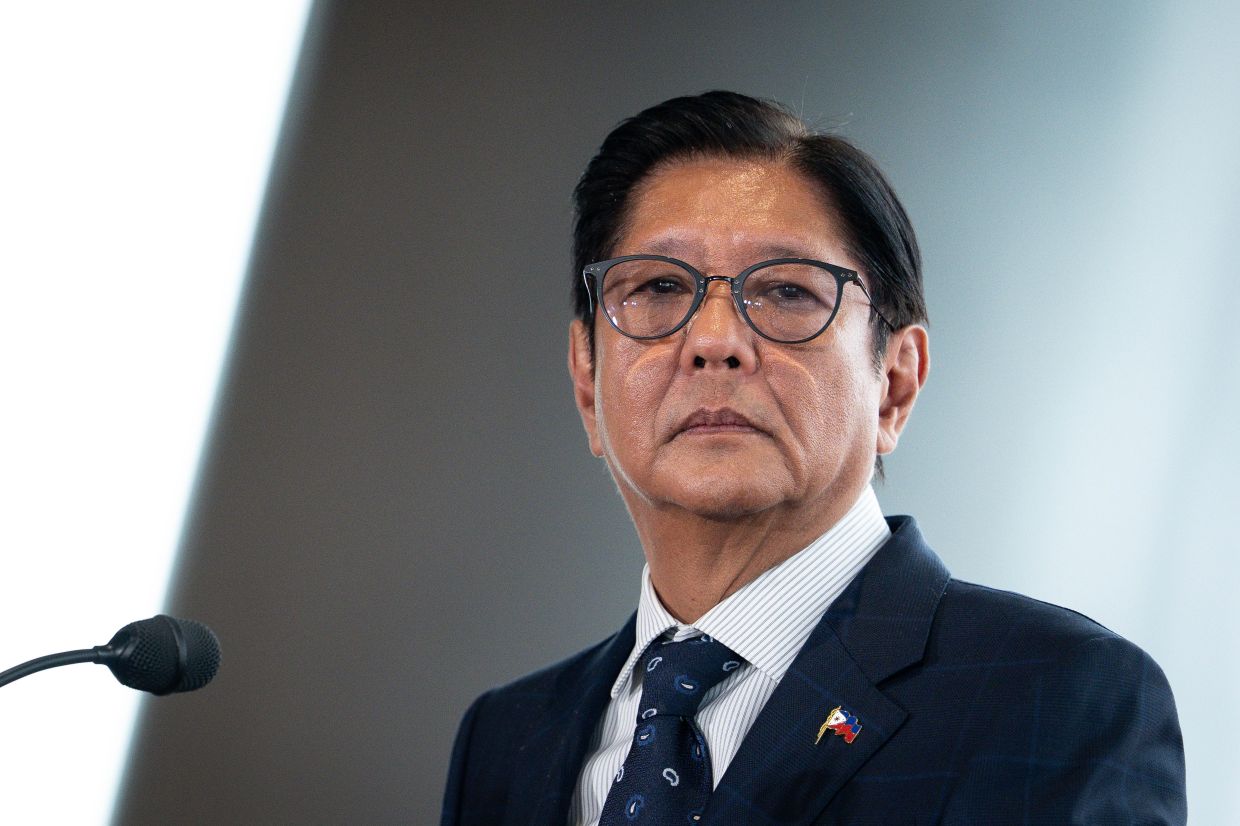
Philippine President Ferdinand Marcos Jr stands at a pivotal crossroads as he prepares to address Congress, seeking to restore confidence in his administration after a year marked by economic deterioration and the exposure of massive corruption within government infrastructure projects. The president's credibility has taken a severe battering since his previous State of the Nation address revealed billions of dollars siphoned through flood-control schemes, a disclosure that sent shockwaves through the economy and triggered a cascade of spending cutbacks among both consumers and businesses.
The timing of Monday's address could prove decisive for Marcos's remaining tenure. With just two years left in his presidency, the 68-year-old leader must navigate multiple political pressures whilst attempting to reverse the economic trajectory that has left his approval ratings at historic lows. The irony is not lost on observers: the self-styled corruption fighter, whose late father Ferdinand Marcos Sr was notorious for accumulating vast ill-gotten wealth during his dictatorship, now finds himself under mounting scrutiny for his perceived inaction against the very wrongdoing he publicly exposed.
The economic picture has darkened considerably since the graft revelations. Growth forecasts for 2026 have been slashed dramatically to a range of 3.5 to 4.5 percent, down from projections as high as 6 percent before the Middle East conflict disrupted regional stability. This represents a troubling divergence from the nation's Southeast Asian peers, as Philippines growth of just 2.8 percent in the first quarter of 2026 lagged significantly behind neighbours including Malaysia and Singapore. The benchmark stock index has declined 1.5 percent since last year's address, whilst the peso has depreciated by nearly 8 percent against the US dollar, reflecting investor anxiety over the government's capacity to stabilise the economy.
Experts emphasise that Marcos must move beyond rhetorical commitments and demonstrate concrete action. Hansley Juliano, a political science instructor at Ateneo de Manila University, argues that the president faces mounting frustration from citizens who perceive minimal progress on the flood-control scandal and accountability measures. The public expects "more explicit, decisive action and greater visibility," according to Juliano, particularly given the persistent vulnerability of communities to typhoons and the stalled infrastructure projects ostensibly designed to protect them. In villages like Calumpit, located 50 kilometres from Manila, broken dikes and barely commenced flood mitigation work exemplify the disconnect between government promises and tangible results.
The administration's internal divisions compound these difficulties. Marcos finds himself at odds with Vice President Sara Duterte, currently facing Senate trial on graft allegations and accusations of threatening the president's life—charges she categorically denies. Meanwhile, the president's own sister, Senator Imee Marcos, has repeatedly distanced herself from his policy direction, symptomatic of broader fractures within the ruling coalition. According to Rodel Taton, dean of the San Sebastian College-Recoletos Graduate School of Law, these "internal fractures have strained the cohesion of the ruling coalition," creating an environment of political uncertainty that further undermines investor confidence.
The credibility challenge extends beyond economic metrics. Among those accused in connection with the graft schemes are a sitting senator and a former public works secretary, raising questions about the government's willingness to pursue accountability through its own ranks. Citizens have grown weary of unfulfilled promises and incremental progress on corruption investigations, demanding visible consequences for wrongdoing and accelerated completion of essential infrastructure. The Management Association of the Philippines has articulated a delicate balance that policymakers must strike: fighting corruption decisively whilst avoiding the perception that anti-corruption efforts become an impediment to economic recovery and business confidence.
Investors and business leaders are signalling specific expectations for the address. They seek clarity on comprehensive economic revival strategies, particularly regarding how the administration intends to boost industrial capacity and integrate the Philippines more effectively into regional and global supply chains. Radhika Rao, a senior economist at DBS Bank, notes that the Philippines captured less than 5 percent of investment flows to Southeast Asia last year, a worrying indicator that demands policy attention. She emphasises that addressing governance issues and improving project execution quality will be essential to enhancing the investment climate and attracting the capital inflows necessary to sustain growth.
The energy sector presents a particularly acute challenge. The Philippines sources more than 90 percent of its oil requirements from the Middle East, making the nation acutely vulnerable to regional geopolitical instability and crude price volatility. High oil prices have cascaded through the economy, exacerbating inflation pressures that have severely eroded the purchasing power of ordinary citizens, particularly those in lower income brackets. April Lynn Tan, chief equity strategist at COL Financial Group Inc, emphasises that investors want to hear concrete proposals addressing oil price impacts, permanent inflation control mechanisms, and comprehensive strategies to attract foreign investment.
The political environment on Monday will be charged with competing voices and demonstrations. The address coincides with the founding anniversary of Iglesia ni Cristo, the large religious organisation that has orchestrated prominent anti-Marcos protests in recent months. Hundreds of thousands of church members are expected to converge in the capital, with their headquarters located mere kilometres from Congress, prompting authorities to deploy more than 21,000 police personnel. Additional protests are anticipated from marginalised sectors represented by groups including Sanlakas, whose members contend that despite the government's optimistic narrative, ordinary Filipinos face deepening impoverishment and powerlessness.
Marcos has asserted that his speech will demonstrate the effectiveness of his administration's policies in navigating "this very difficult period in our history, where we are buffeted by all of these external forces." However, analysts suggest that attributing challenges solely to external shocks may ring hollow to audiences confronting the tangible consequences of domestic policy decisions and governance failures. The president must offer more than explanations for difficulties beyond his control; citizens and investors alike demand evidence of proactive measures, accelerated project timelines, and visible consequences for those responsible for the massive graft exposure.
The coming months will likely determine whether Marcos can salvage his presidency's legacy and restore sufficient economic momentum to provide a foundation for his successor. His remaining two years present a window to demonstrate decisive leadership on both corruption and economic revival, but time is narrowing rapidly. The July address represents a crucial opportunity to reframe the narrative and reassure both domestic stakeholders and international investors that the administration retains the capacity and commitment to deliver substantive progress on fronts that matter most to ordinary Filipinos and the business community alike.

