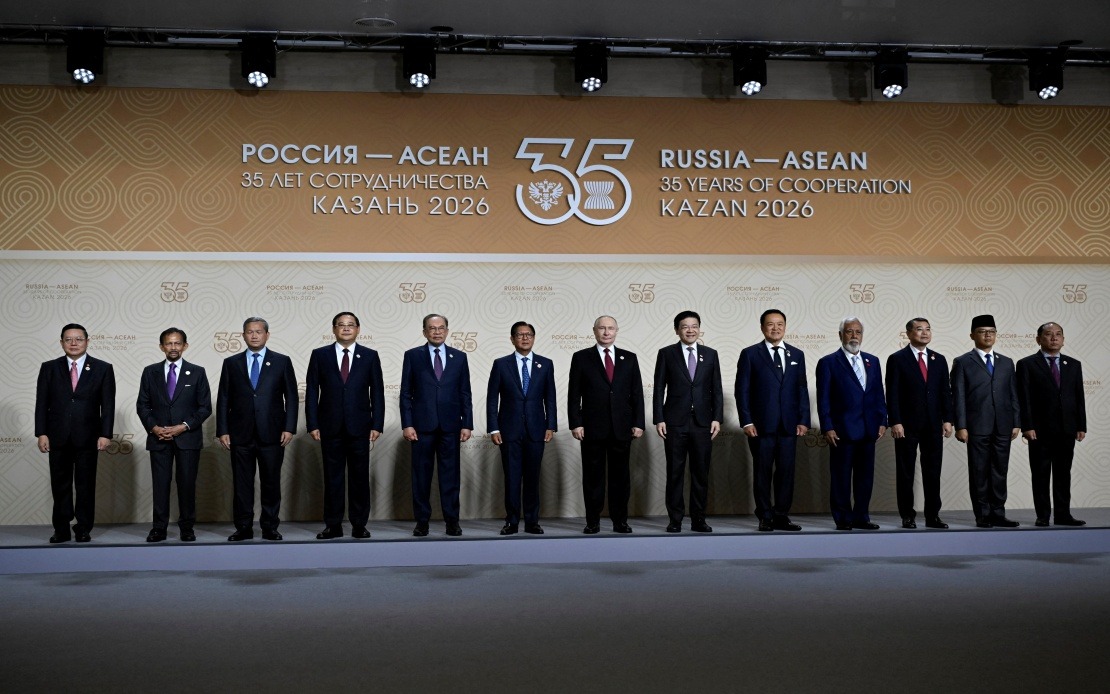
Philippine President Ferdinand R. Marcos Jr has identified substantial room for growth in the relationship between ASEAN and Russia, arguing that despite more than three decades of diplomatic engagement, the two sides have barely scratched the surface of their collaborative potential. Speaking following his attendance at the ASEAN-Russia Commemorative Summit in Kazan, Marcos outlined a vision for partnership that moves beyond conventional trade patterns into frontier sectors where both blocs possess complementary strengths and shared interests.
While acknowledging that ASEAN-Russia relations have developed steadily over recent decades, Marcos stressed that the trajectory has been modest and uneven across the ten-member regional bloc. Some member states have pursued significantly deeper ties with Moscow than others, creating a patchwork of bilateral engagements rather than a cohesive regional approach. This disparity reflects differing geopolitical orientations within ASEAN, where countries balance relationships with multiple great powers according to their own strategic calculations and regional positions.
The Philippine leader identified several sectors primed for expanded cooperation that scarcely existed in previous decades of diplomatic relations. Advanced technology, artificial intelligence, data centres, and power generation represent frontier areas where Russia possesses competitive advantages and expertise that could complement ASEAN's growing digital economies and rising energy demands. These fields offer pathways to collaboration that sidestep traditional trade dynamics and instead build on technological exchange and capacity development.
Marcos emphasised that Russia's expanding capabilities in these emerging domains create windows of opportunity for deeper engagement. Rather than viewing the partnership through a zero-sum lens shaped by great power competition, he framed regional diversification of partnerships as a natural evolution reflecting ASEAN's increasing economic maturity and independence. The bloc's willingness to cultivate relationships across traditional Cold War divides signals confidence in managing multiple great power relationships simultaneously.
The president characterised ASEAN's evolving diplomatic approach as reflecting the region's transition from a bipolar world order. Southeast Asian nations are increasingly comfortable engaging with diverse partners based on pragmatic assessments of mutual benefit rather than rigid ideological alignments. This flexibility allows ASEAN to harness capabilities from various quarters while maintaining autonomy in decision-making, a balancing act that has become central to regional strategy.
Marcos described the current moment as a "new day" for ASEAN, marked by expanding dialogue initiatives and shifting priorities that prioritise science and technology collaboration. This reorientation responds to genuine regional imperatives: Southeast Asia's rapid digitalisation, growing energy requirements from industrialisation and rising living standards, and the need to develop local technological capacity rather than remaining perpetually dependent on external providers. Russia's positions itself as one potential partner among several for addressing these challenges.
The momentum behind ASEAN-Russia engagement reflects mutual recognition that previous cooperation frameworks had captured only a fraction of available opportunities. Traditional economic partnerships focused on resource extraction, manufacturing, and agriculture—sectors that remain important but operate within established patterns and relationships. Technology and energy cooperation, by contrast, represent greenfield territory where both sides can negotiate frameworks tailored to contemporary needs without being constrained by historical precedents.
The Kazan summit produced substantive documentation designed to structure this expanded partnership. The Kazan Declaration 2026 and the comprehensive Action Plan for 2026–2030 establish roadmaps for cooperation across multiple dimensions. Notably, joint initiatives addressing culture and energy security reflect efforts to build people-to-people connections alongside state-level engagement, recognising that sustainable partnerships require both institutional architecture and broader societal support.
For Malaysia and other ASEAN members, Marcos's vision carries several implications. It suggests the regional bloc is consciously pursuing diversified partnerships as a strategic imperative, rather than viewing such engagement as provocative or destabilising. This approach reflects confidence that ASEAN can manage complex relationships without compromising stability or allowing external powers to dictate regional outcomes. Energy cooperation holds particular relevance for Southeast Asia, where growing demand for reliable power supplies and the transition toward cleaner energy require diverse sourcing and technological solutions.
The emphasis on technology and artificial intelligence also resonates with ASEAN-wide digitalisation agendas. Several member states, including Malaysia, have prioritised developing domestic tech ecosystems and reducing vulnerability to supply chain disruptions. Expanding technological partnerships with multiple sources—including Russia alongside traditional partners—reduces dependency risks and creates competitive pressure that benefits regional companies and consumers through access to diverse solutions and innovations.
Marcos's comments reflect a broader regional sophistication about navigating contemporary geopolitical complexity. Rather than viewing partnership expansion as a zero-sum game where engagement with Russia necessarily diminishes relationships elsewhere, he frames it as a natural response to ASEAN's maturation as an economic bloc with diverse needs and capabilities. This framing appeals to regional actors seeking principled grounds for managing multiple partnerships without appearing to take sides in great power competitions.
The practical realisation of Marcos's vision will depend on sustained commitment from both ASEAN and Russia to translate declaratory statements into functioning cooperation mechanisms. Historical patterns suggest that ASEAN-level initiatives often progress unevenly, with individual member states pursuing parallel bilateral tracks. Success would require sufficient coordination to achieve economies of scale in technology transfer and investment while respecting member states' autonomy in foreign relations—a challenging balance that tests ASEAN's institutional capacity.
Ultimately, the Marcos statement signals that ASEAN is consciously positioning itself as an independent actor capable of engaging multiple partners based on contemporary strategic needs rather than inherited alignments. For Southeast Asia's development trajectory over the coming decade, this approach offers potential benefits through expanded cooperation choices, but also requires careful management to avoid undermining regional cohesion or creating security dilemmas with other major powers.

