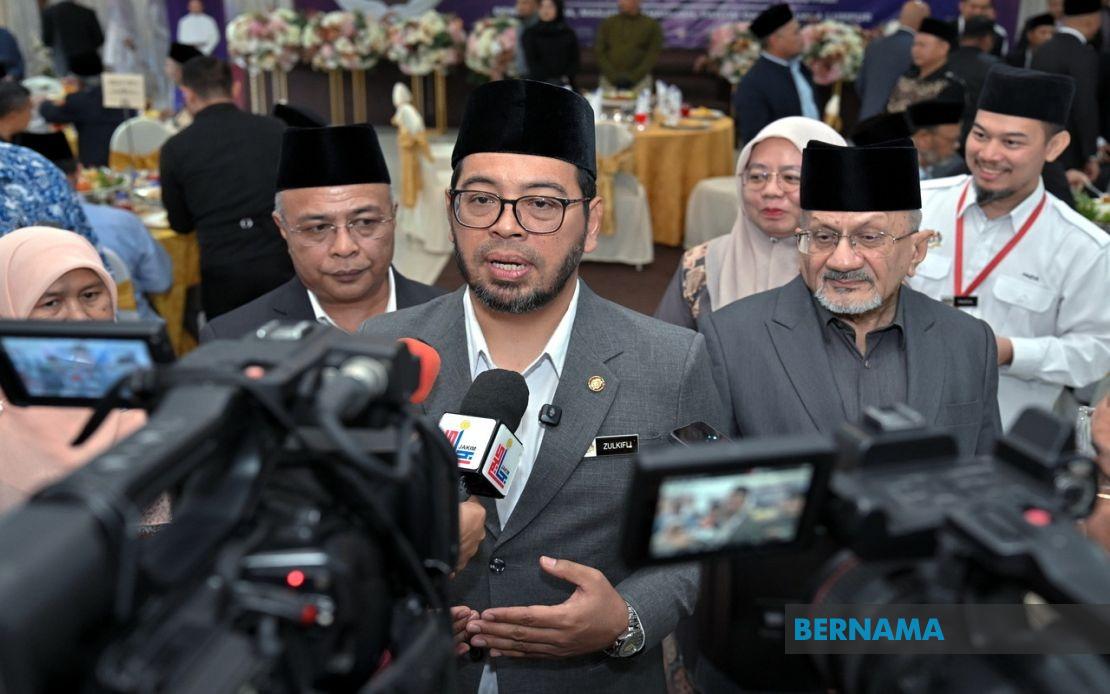
The construction of Masjid Warisan, situated opposite the Tun Razak Exchange (TRX) development in Kuala Lumpur, will advance according to schedule, according to Minister in the Prime Minister's Department (Religious Affairs) Dr Zulkifli Hasan. Speaking to journalists in the capital on June 23, he framed the undertaking as a long-standing commitment aimed at strengthening the role of mosques as anchors of community well-being and social cohesion throughout the nation.
Dr Zulkifli's public endorsement comes in response to earlier media reports suggesting some quarters have requested the project's abandonment, citing apprehensions about potential discord and public backlash. The minister's statement represents a clear signal that the federal government intends to proceed with the initiative despite these objections, underscoring the administration's confidence in the venture's merit and necessity.
For residents and stakeholders in the Tun Razak Exchange vicinity, the minister's assurance resolves uncertainty surrounding the prominent development. The TRX district, a modern urban hub in central Kuala Lumpur, has attracted considerable investment and attention from both domestic and international parties. Integrating a heritage mosque into this contemporary landscape reflects a deliberate effort to balance modernisation with spiritual and cultural preservation within one of Malaysia's most visible economic zones.
Those harbouring reservations about the mosque's construction have been directed to engage with the Federal Territories Islamic Religious Council (MAIWP) for comprehensive information and clarification. This pathway provides an official channel through which concerns can be aired, considered, and addressed by the body responsible for Islamic affairs in the federal territories. The approach suggests a commitment to transparency and dialogue rather than dismissal of legitimate questions.
Dr Zulkifli drew parallels with international practice, noting that mosques function as integral components of many world-class cities, with the Islamic call to prayer enriching urban environments rather than detracting from them. This perspective positions Malaysia within a broader global context where religious architecture and observance coexist harmoniously with contemporary metropolitan development. Cities from Istanbul to London, Dubai to Singapore feature prominent mosques, demonstrating that such institutions strengthen rather than undermine civic character.
The minister's remarks, delivered during a broader engagement with the Federal Territories religious establishment, occurred at Masjid Al-Khadijah in Kampung Pantai Dalam, where he formally presented appointment letters to committee members for the 2026-2029 term governing mosques and Friday prayer surau in federal territories. This ceremonial element underscored his personal investment in mosque administration and the professional management of Islamic institutions throughout the capital region.
The appointment process itself reflected substantial community participation and rigorous governance standards. The 2026-2029 committee selection drew 3,010 nominations spanning 91 mosques and 124 Friday prayer surau across federal territories. From this candidate pool, 2,914 individuals advanced following a comprehensive integrity vetting process involving the Royal Malaysia Police, the Malaysian Anti-Corruption Commission, and the Insolvency Department. This multi-agency screening ensured that individuals assuming leadership positions within religious institutions met stringent standards of trustworthiness and ethical standing.
The scale of nominations—nearly 3,000 candidates for mosque committee roles—indicates robust engagement within Malaysia's Islamic community and reflects the significance these institutions hold in local governance and religious life. The inclusion of anti-corruption and insolvency checks suggests a contemporary approach to committee management, treating mosque administration with the same accountability expectations applied to secular organisations. This professionalization of religious institution governance has become increasingly important as mosques expand their social welfare, educational, and community service functions.
For Malaysian policymakers, the Masjid Warisan project represents an opportunity to demonstrate that economic development and religious observance need not exist in tension. The positioning of this heritage mosque at TRX, adjacent to corporate towers and modern commercial infrastructure, sends a message about national identity and values. Rather than relegating religious expression to peripheral locations, the project embeds spiritual life within the country's economic narrative, suggesting that material progress and religious commitment advance together rather than competitively.
The controversy surrounding the project, though not elaborated in detail, likely reflects concerns some sections hold about noise, traffic, or land use priorities in an increasingly congested urban area. Such objections are common in major cities worldwide where new institutional projects face neighbourhood opposition. However, the minister's decision to press ahead indicates government confidence that careful planning and community engagement can address operational concerns while delivering genuine community benefit.
Regional implications extend beyond Kuala Lumpur's borders. Other Southeast Asian cities grappling with rapid urbanisation, demographic change, and the integration of religious institutions within modern cityscapes may observe Malaysia's experience. How the Masjid Warisan project unfolds—its architectural integration, operational management, and community reception—will likely inform approaches in regional metropolitan areas similarly seeking to balance contemporary development with spiritual and cultural continuity.
The appointment of competent committee members through rigorous selection processes supports successful mosque operations, which depend on effective administration and community trust. The minister's presentation of these letters symbolised not merely bureaucratic procedure but validation of individuals committed to serving their religious communities with integrity and professionalism. These leaders will shape how mosques engage with their constituencies, particularly in contexts like TRX where institutional practices intersect with diverse urban populations.
Ultimately, Dr Zulkifli's commitment to proceeding with Masjid Warisan reflects a broader policy direction positioning Islamic institutions as essential rather than incidental to Malaysia's national development. This framing suggests that future major urban projects will similarly integrate religious and spiritual dimensions, ensuring that growth encompasses not only economic and infrastructural advancement but also the preservation and enhancement of cultural and religious life central to national identity.

