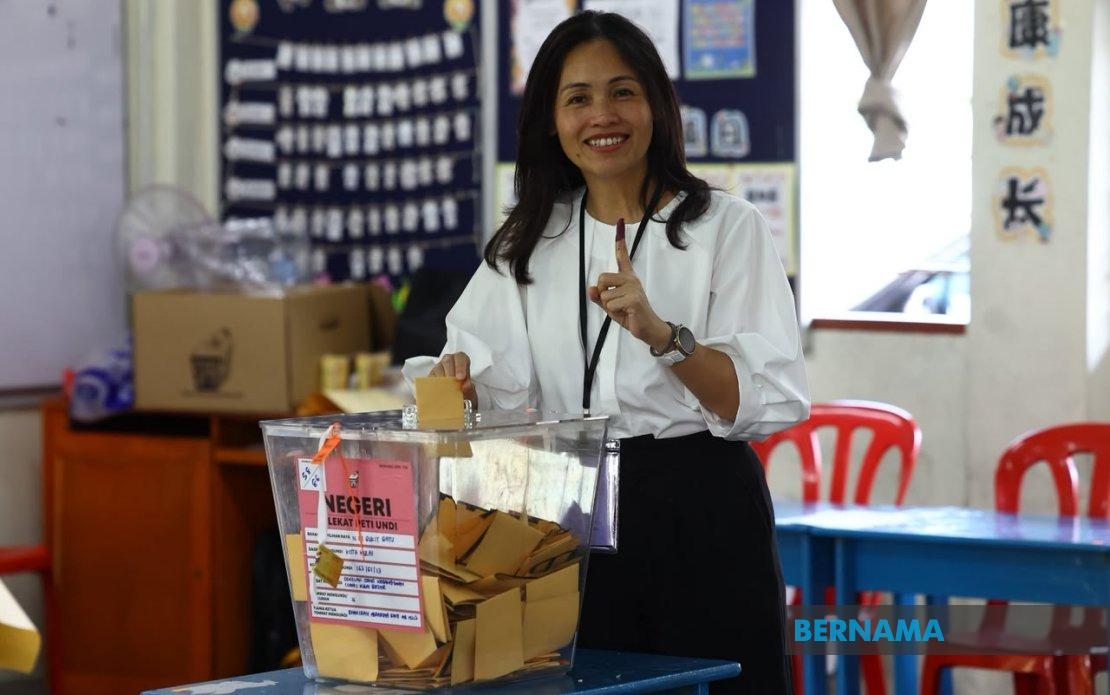
Malaysia's communications watchdog intercepted substantial digital misconduct during the Johor state election campaign period, with authorities identifying 29 separate complaints spanning fake news, hateful content and fraudulent accounts. Deputy Communications Minister Teo Nie Ching disclosed the figures after voting in Kulai on the polling day, offering a window into the volume of problematic online activity that emerged across platforms as voters prepared to cast ballots for the 16th Johor state assembly elections.
Breaking down the complaints by category reveals the diverse nature of digital threats that emerged during the campaign. Seventeen cases centred on the dissemination of unverified information and misleading narratives, while eleven involved expressions of hate speech targeting various groups. A single complaint documented the operation of fraudulent accounts designed to impersonate legitimate users or organisations. This distribution underscores how election periods activate multiple vectors of online abuse, from coordinated disinformation campaigns to identity fraud schemes.
Within the hate speech category, officials identified specific patterns that warrant particular attention under Malaysia's regulatory framework. Nine incidents involved racial content, while separate cases touched on religious material and content related to the monarchy. Collectively classified under the 3R designation—referring to race, religion and royalty—these cases represent attempts to exploit electoral tensions by triggering communal sensitivities during a politically charged period. The concentration of racial complaints suggests that election cycles intensify divisive narratives along ethnic lines, a recurring concern in Malaysian electoral contests.
Teo's intervention reflects the communications ministry's push for greater digital responsibility among voters and political actors. Rather than announcing enforcement actions or penalties, the deputy minister framed the findings as an opportunity to educate the public on information literacy and critical consumption of online material. Her emphasis on digital citizenship speaks to a broader recognition that technical regulation alone cannot address the underlying demand for sensational or divisive content that drives the spread of problematic material during high-stakes political moments.
The appeal for public vigilance carries particular resonance in Malaysia's context, where social media has become the primary information source for significant voter segments. Elections in Malaysia have increasingly been shaped by online narratives, with WhatsApp and Facebook serving as channels through which unverified claims circulate with remarkable speed. By encouraging voters to pause before sharing or believing unverified information, authorities attempt to create friction within the viral mechanics that allow false narratives to compound in impact.
The Johor state election itself represented a substantial democratic exercise involving 172 candidates competing for 56 legislative assembly seats. With more than 2.6 million registered voters participating, the contest determined governance of one of Malaysia's most economically significant states and offered voters the opportunity to shape political direction in a region historically influential in national politics. The sheer scale of voter participation meant that even modest percentages of the electorate exposed to false or inflammatory content could theoretically influence electoral margins in close contests.
Teo, who represents Kulai at the federal level, also acknowledged the role of election officials in maintaining the integrity of the polling process itself. Her comments praising the conduct of election personnel recognised the distinction between online-sphere misconduct and the physical administration of voting. While digital disinformation campaigns operate in a relatively uncontrolled environment, the actual mechanics of voting—ballot distribution, counting procedures, observer oversight—remained subject to institutional checks that the Election Commission implements across Malaysian elections.
The complaints documented by MCMC likely represent only a fraction of problematic content circulating during the campaign. Many voters may have encountered false information without reporting it to authorities, while others may have shared misleading content without realising its inaccuracy. The official count therefore captures primarily flagged content that moved through formal complaint channels, suggesting the actual volume of electoral misinformation may have considerably exceeded the 29 documented cases.
For Malaysian policymakers and platform operators, the Johor experience highlights the escalating challenge of managing online information environments during electoral periods. Unlike traditional media, which operates under regulatory oversight and editorial standards, social media platforms facilitate peer-to-peer distribution of content with minimal verification. The timing of complaints during campaign periods suggests that political competition activates both the supply of false narratives and their circulation through networks motivated by partisan interest.
Looking forward, the MCMC's experience during the Johor election offers precedent for monitoring future electoral contests across Malaysia. As state and federal elections recur across the Malaysian calendar, similar patterns of online misconduct likely will emerge, requiring sustained attention from both regulatory authorities and digital platforms themselves. The case for proactive content moderation and rapid complaint resolution during electoral periods grows more compelling as voters increasingly rely on digital sources for political information.
Teo's broader message about digital citizenship addresses a systemic vulnerability in Malaysia's information ecosystem. As election periods concentrate both stakes and misinformation, cultivating a population capable of distinguishing credible sources from rumour becomes essential to electoral legitimacy. This responsibility extends beyond government and platforms to voters themselves, who must develop habits of scepticism toward unverified claims and commitment to verifying information before amplifying it within their networks.

