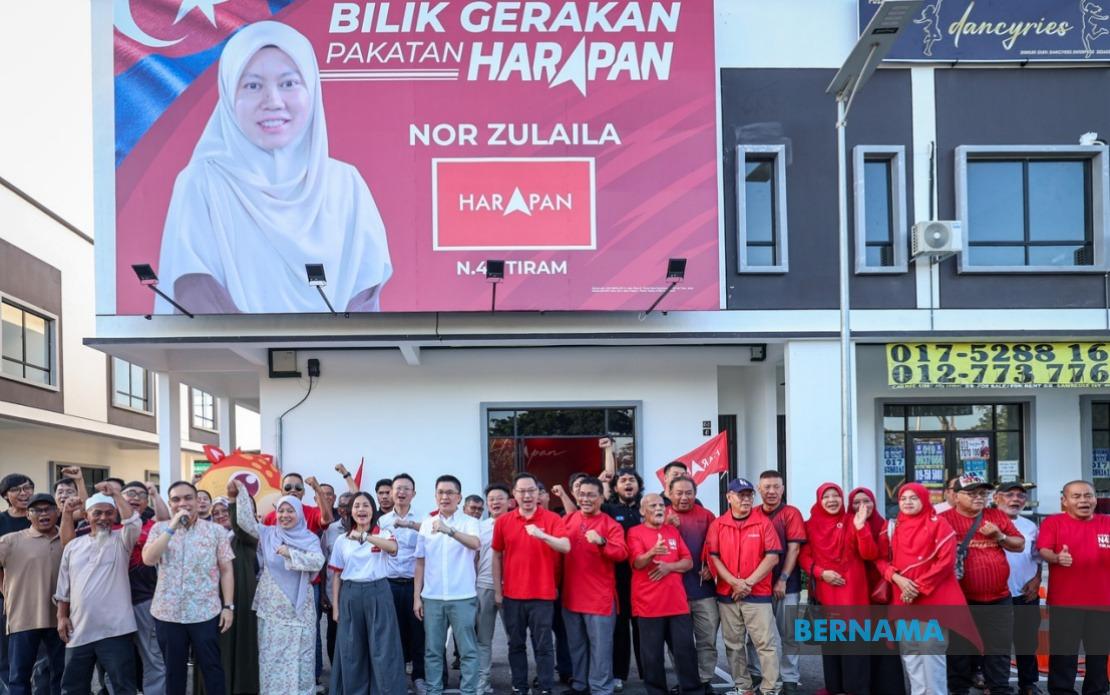
The Malaysian Communications and Multimedia Commission will implement continuous monitoring of internet connectivity across Johor during the state election campaign, Deputy Communications Minister Teo Nie Ching announced on Wednesday. Speaking at the launch of Pakatan Harapan's operations room for the N40 Tiram constituency in Pasir Gudang, Teo emphasised that reliable broadband access is essential for facilitating campaign activities and ensuring voters receive timely information during the crucial weeks ahead.
Teo has directed the MCMC to pay particular attention to areas anticipated to host large campaign gatherings, recognising that connectivity issues could undermine the effectiveness of political rallies and voter outreach efforts. She framed stable internet access as a foundational element for conducting an orderly and efficient campaign, reflecting the growing role of digital platforms in modern electoral processes. The focus on high-traffic venues underscores awareness that congestion in telecommunications networks can occur when crowds congregate, potentially disrupting communications critical to campaign operations.
As both Deputy Communications Minister and Johor DAP chief, Teo highlighted positive momentum among voters in the state. Ground-level feedback from party operations suggests strong engagement, with constituents demonstrating commitment to participating in the democratic process. Notably, Teo observed heightened interest from voters residing outside their home constituencies, many of whom have indicated willingness to return to their hometowns specifically to cast their ballots on election day, signalling elevated voter participation expectations.
DAP's campaign strategy in Johor reflects a cautious, comprehensive approach rather than selective concentration of resources. The party is contesting 17 seats across the state but has deliberately avoided classifying any as politically secure or uncontested territory. Teo explained that designating seats as "safe" risks cultivating organisational complacency and diminishing campaign intensity in those areas, potentially leaving openings for opposition advances. This philosophy demands disciplined resource allocation and sustained ground presence across all contested constituencies.
The blanket strategy recognises that each constituency presents distinct demographic and political characteristics requiring tailored campaign responses. Rather than assuming predetermined outcomes in certain areas, Pakatan Harapan intends to address the specific challenges and opportunities present in individual seats. This methodical approach contrasts with traditional campaign wisdom that often concentrates effort on marginal constituencies while maintaining minimal presence in supposedly predictable areas.
The timing of electoral activities remains tightly scheduled. Nomination day is set for June 27, followed by early voting on July 7, with the main polling day occurring on July 11. This compressed calendar means candidates and parties have limited weeks to build voter support and address constituency concerns. The emphasis on internet infrastructure thus becomes more critical, as digital channels offer efficiency gains when time is constrained and campaign resources must stretch across multiple constituencies.
Teo's announcement also reflects broader recognition within Malaysia's political establishment that digital infrastructure has become integral to modern election management. Beyond campaign organisation, internet connectivity enables voter registration updates, distribution of candidate information, livestreaming of campaign events, and rapid response to rival campaign messaging. Ensuring technical reliability removes potential hindrances to these activities and prevents situations where technical failures create perceptions of organisational dysfunction.
The involvement of multiple political figures at the Tiram operations room launch—including Deputy Education Minister Wong Kah Woh, Bangi MP Syahredzan Johan, Tebrau MP Jimmy Puah Wee Tse, and Tiram candidate Nor Zulaila Abdul Ghani—demonstrates the attention Pakatan Harapan is directing toward this election. Johor, as Malaysia's second-largest state by population and a economically significant region, represents crucial political territory. Success here could provide coalition partners with legislative strength and influence over state resource allocation affecting millions of Malaysians.
For Malaysian observers, the focus on digital infrastructure during campaigning illustrates how elections increasingly depend on reliable telecommunications networks. Voters increasingly expect seamless access to candidate information, campaign schedules, and voting logistics through online channels. Technical disruptions or connectivity gaps could disadvantage parties unable to reach constituents effectively, making MCMC's role in ensuring service reliability a matter of genuine democratic importance rather than mere administrative routine.
The election follows Malaysia's broader pattern of frequent state-level contests, with Johor's previous election occurring in 2018. State elections serve as significant barometers of national political sentiment, influencing federal-level dynamics and coalition positioning. Johor's outcome will likely resonate across Malaysian politics, affecting how both government and opposition calibrate strategies heading into potential future general elections.

