The annual Vivatech festival in Paris has become a magnet for venture capital and innovation seekers from across Europe and beyond, with emerging companies showcasing technologies that could reshape industries within the next few years. Among the standout innovations drawing investor interest are solutions addressing longstanding challenges in orthopedic surgery, autonomous flight, voice authentication and athletic performance monitoring—each reflecting how European and international startups are tackling real-world problems with biotechnology and artificial intelligence.
Berlin-based Blueprint Biomed is pursuing a solution to one of medicine's persistent complications: bone graft failures that occur when surgeons harvest bone tissue from patients themselves. Rather than relying on autologous grafts, which can deteriorate, trigger rejection responses or necessitate costly revision surgery, Blueprint has engineered artificial replacement structures that mimic natural bone architecture. The company's approach employs three-dimensional printing to create custom scaffolds from polycaprolactone, a biodegradable polyester that gradually dissolves within two years, combined with collagen that resorbs in just three months. Chief executive Aaron Herrera explained that this dual-material framework allows physicians to abandon the need for extracting bone from patients' bodies altogether, eliminating a significant source of surgical complications and post-operative pain. The venture is currently seeking US$2.5 million to accelerate progress toward human clinical trials, with an ambitious target of placing its first implants into patients by 2028.
The engineering of this solution represents a fundamental shift in how surgeons approach skeletal reconstruction, particularly relevant across Asia where ageing populations face rising rates of fracture injuries and degenerative bone conditions. Malaysia's healthcare system has invested substantially in orthopaedic services, and materials like Blueprint's could eventually reduce patient recovery times and hospital readmission rates—metrics that directly impact public health budgets and quality of life.
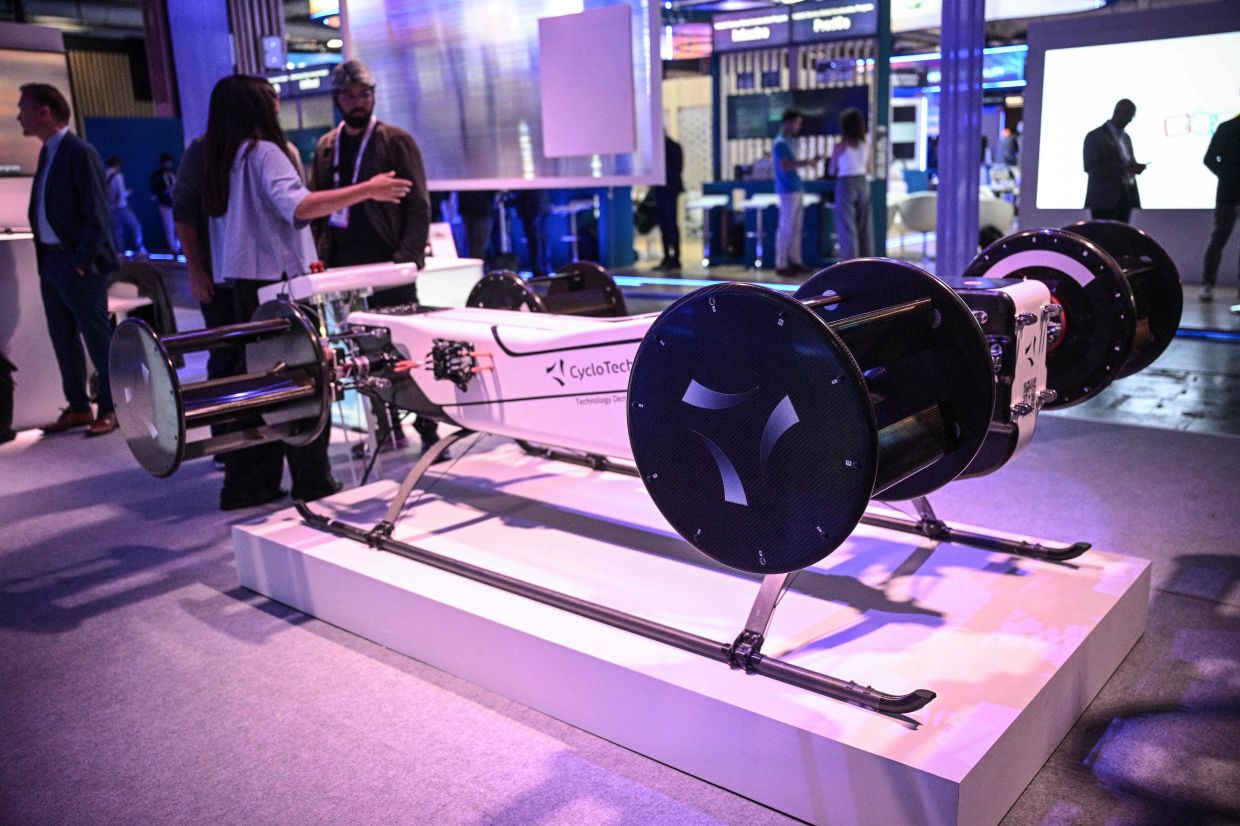
Meanwhile, the unmanned aerial vehicle sector continues expanding beyond military and surveillance applications into civilian logistics and urban mobility. Austrian startup CycloTech is advancing this transition with an unconventional motor design featuring an open cylindrical structure lined with wing-shaped blades. Unlike conventional propeller-driven drones, these motors deliver exceptional manoeuvrability, allowing aircraft to hover motionlessly, accelerate forward, decelerate mid-flight and even reverse direction with precision. Marketing chief Andrea Marchsteiner told AFP the technology opens possibilities for parcel delivery in congested city centres, where traditional fixed-wing aircraft cannot land, as well as passenger transport applications that remain largely speculative. The 65-person company has already accumulated €40 million in funding and is now negotiating with established aerospace manufacturers to integrate its motors into their platforms. For Southeast Asian cities grappling with traffic congestion and logistics bottlenecks—Singapore, Kuala Lumpur and Bangkok chief among them—such vertical mobility solutions represent a potential long-term answer to last-mile delivery challenges.
Security threats have evolved dramatically with advances in voice synthesis. French cybersecurity startup Whispeak began as a voice-biometric authentication tool for financial services, helping banks confirm customer identity during telephone transactions. Yet the emergence of sophisticated generative artificial intelligence has transformed the threat landscape. Audio deepfakes can now convincingly replicate almost anyone's voice within seconds, often using publicly available software. Recognising this shift, Whispeak pivoted toward developing detection systems that identify fraudulent audio in real time. Chief executive Florent Van Calster stated the company has achieved what he describes as the world's most accurate audio deepfake detector following three years of refinement, claiming less than one percent error rates on available test datasets. The technology is already undergoing deployment with French telecom operator Bouygues, which will flag potentially spoofed calls to subscribers. Yet Calster acknowledged an inherent limitation: as deepfake technology improves, detection systems must continuously evolve—a perpetual technical arms race.
This dynamic mirrors challenges facing banks, telecommunications providers and government agencies across Malaysia and the region, where voice-activated transactions and customer service channels remain vulnerable to sophisticated fraud. Deepfake audio combined with social engineering poses escalating risks to both institutional security and individual consumers.
Athletic performance monitoring represents another frontier where sensor technology and artificial intelligence converge. Hong Kong-based startup PointFit has developed an adhesive patch equipped with microscopic sensors that analyse biomarkers in perspiration, measuring glucose and cortisol levels without requiring blood draws or invasive procedures. Chief executive Kenny Oktavius began researching the concept in 2019 while still studying, motivated by observations that traditional heart-rate monitoring provides incomplete performance data. The company's proprietary algorithm constructs an AI-generated "personal sweat index" that adjusts benchmark expectations based on individual demographic characteristics, ambient temperature and other contextual variables. The concept challenges conventional sports science wisdom that heart rate remains the primary indicator of physical stress and recovery. Oktavius noted that even elite marathon runners monitoring expensive, sophisticated wearables experience unexpected collapses during competitions, suggesting traditional metrics miss critical physiological signals. Sweat biomarkers, conversely, offer windows into metabolic and endocrine function comparable to what physicians examine in hospital blood work.
PointFit has already engaged with high-performance athletic organisations including Red Bull's Athlete Performance Centre and Puma's Nitro Labs innovation division. Oktavius indicated ambitions to eventually transition from professional sports into mainstream consumer markets, with potential partnerships under discussion with retailers like Decathlon and optics companies such as EssilorLuxottica. For Southeast Asian markets with expanding sports science infrastructure and rising participation in endurance athletics, such accessible performance-monitoring tools could democratise data previously available only to elite professional athletes.

