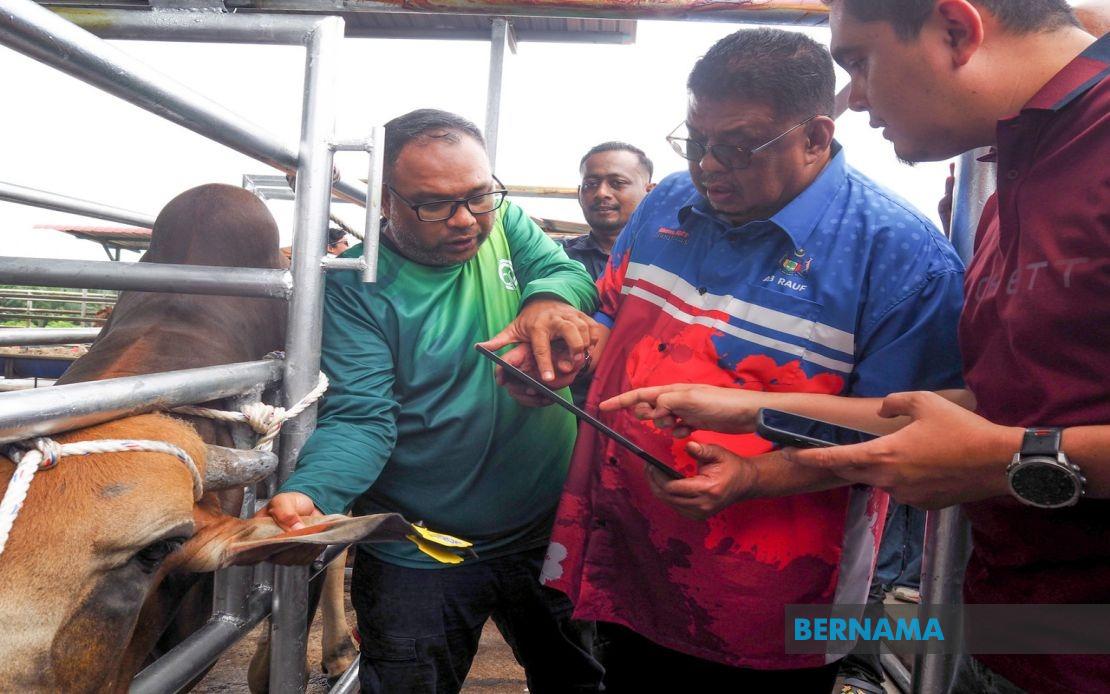
Melaka has rolled out a digital livestock identification initiative that exemplifies how technology can solve persistent agricultural management challenges in Malaysia. The Livestock QR Tag system, unveiled by the state government in collaboration with the Melaka Veterinary Services Department, represents a strategic response to mounting incidents involving stray animals that have disrupted public safety and community harmony. By equipping registered livestock with scannable QR codes, state authorities aim to fundamentally reshape how animal ownership is verified and enforcement actions are coordinated across the region.
Chief Minister Datuk Seri Ab Rauf Yusoh conceived the initiative as part of a broader effort to position Melaka as a smart and technologically responsive state. The execution falls under the purview of the Local Government Unit, with Mahathir Mustafa, chief assistant secretary of the Melaka Chief Minister Department, overseeing implementation details. Each tag carries a unique identification number and QR code linking to essential farming data accessible through smartphone scanning, eliminating the friction that has historically plagued livestock ownership verification. This approach transforms what was previously a labour-intensive, paper-dependent process into an instantaneous digital lookup.
The urgency driving this initiative reflects documented challenges that have plagued Melaka's communities. Since 2023, the state recorded 835 accidents involving livestock and fielded more than 50 complaints about stray animals roaming residential and commercial areas. These incidents create compound risks: road hazards for motorists, property damage affecting homeowners, and reputational damage to the livestock farming sector. By enabling rapid identification of animal owners through smartphone technology, authorities can now assign accountability and enforce compliance far more effectively than under previous manual systems. The QR Tag system essentially closes a critical governance gap that has allowed irresponsible animal husbandry to persist without meaningful consequences.
As of early June, approximately 2,000 livestock had received QR Tags, representing the programme's initial phase. The state government envisions eventually covering the entire registered cattle and buffalo population, estimated at over 32,000 animals statewide. This incremental rollout reflects realistic implementation constraints, yet demonstrates commitment to universal coverage. The expansion trajectory matters significantly for neighbouring states like Johor and Negeri Sembilan, which contend with similar stray livestock problems. Should Melaka's system prove operationally effective, other state governments may adopt comparable frameworks, creating potential for regional interoperability in animal tracking and enforcement coordination.
The technology's architecture incorporates features that address livestock ownership disputes and transfer complications. Each tag remains the permanent identifier throughout an animal's life, functioning similarly to livestock passport documentation. Critically, when ownership changes through sale or transfer, breeders need only update records within the eVetPermit Malaysia system rather than physically replacing tags. This design minimises friction for legitimate agricultural transactions while maintaining audit trails for regulatory oversight. The dual-system approach—physical tag plus digital registry update—creates accountability checkpoints that discourage casual non-compliance.
Cost consideration has shaped the programme's takeoff trajectory strategically. The Melaka state government committed to fully subsidizing installation fees at RM6.50 per tag through the end of 2024, removing financial barriers to breeders' participation during the critical adoption phase. This temporary subsidy significantly increases enrolment likelihood among smallholder farmers operating on tight margins. After the promotional period concludes, implementation costs transition to breeders at RM5 per head commencing in 2027, establishing a user-pay model that reflects principle. This pricing structure balances fiscal responsibility with market fairness, though smaller farming operations may experience affordability challenges once subsidies expire.
Farmer acceptance has reportedly been positive, with breeders recognizing how the system protects their commercial interests and enhances industry reputation. Systematic identification and ownership verification strengthen enforcement against rustling and illegal animal trading, safeguarding legitimate farmers' investments. By formalizing the livestock population through digital registration, Melaka's farming community gains legitimacy and standing in policy discussions. This reputational uplift matters in Malaysian agricultural politics, where farming communities frequently feel ignored by urban-focused policymakers. The QR Tag system signals genuine state commitment to sector modernization rather than merely punitive regulation.
The enforcement dimension directly addresses public safety concerns that transcend agricultural policy. When stray livestock cause traffic accidents or property damage, rapid owner identification enables immediate liability assignment and compensation mechanisms. Previously, victims often absorbed losses because tracing animal ownership consumed excessive investigative resources. Now, scanning a tag at incident scenes provides owner contact information and farm location within seconds. This operational efficiency transforms enforcement from reactive complaint-handling into proactive accountability, fundamentally reshaping incentive structures facing breeders regarding animal containment and responsible husbandry practices.
Disease monitoring and livestock movement control represent additional system benefits that extend beyond ownership identification. The QR Tag infrastructure enables veterinary authorities to track animal movements, monitor vaccination records, and coordinate rapid response to disease outbreaks. These public health dimensions proved critical during avian flu concerns and other zoonotic disease threats that periodically affect Southeast Asian livestock populations. By documenting which animals moved between locations and when, officials gain epidemiological tools previously unavailable. This capability strengthens Melaka's resilience against future agricultural health crises that could impact neighbouring states through animal trade networks.
Successful implementation requires sustained coordination among the Local Government Unit, Veterinary Services Department, and municipal authorities across all local councils. This interagency cooperation structure reflects recognition that livestock management is fundamentally a governance challenge requiring integrated deployment of regulatory, technical, and enforcement capacity. The three-institution framework distributes responsibilities appropriately: UKT manages programme administration, JPV handles veterinary technical aspects, and PBT conducts field enforcement. Maintaining this collaborative momentum through budget cycles and political transitions will determine whether the system becomes institutionalized or withers into administrative obscurity.
Malaysia's broader digital transformation agenda positions Melaka's livestock initiative within a larger narrative about technology adoption in public administration. Rural and agricultural sectors frequently experience slower digital uptake compared to urban services, yet livestock management exemplifies how targeted digital solutions address genuine community problems affecting quality of life. As Melaka demonstrates operational feasibility, other state governments may prioritize similar initiatives. The scalability potential extends beyond Malaysia; livestock identification challenges plague agricultural regions throughout Southeast Asia, suggesting that successful Melaka implementation could inform regional best practices and attract international development interest in technology transfer and adaptation.
Looking forward, the system's evolution will likely incorporate additional features as digital infrastructure matures. Integration with blockchain technology could strengthen supply chain transparency for livestock products, addressing consumer concerns about food authenticity and safety. Mobile application development could enable breeders to manage their registrations and receive alerts about animal health reminders or regulatory deadlines. Expansion of the basic QR Tag framework demonstrates how initial technological investments create platforms for subsequent innovation and value creation. For Malaysian policymakers navigating the tension between rural development and urban modernization, Melaka's approach offers a compelling model of technology serving agricultural communities' genuine interests rather than imposing technocratic solutions disconnected from farmer realities.

