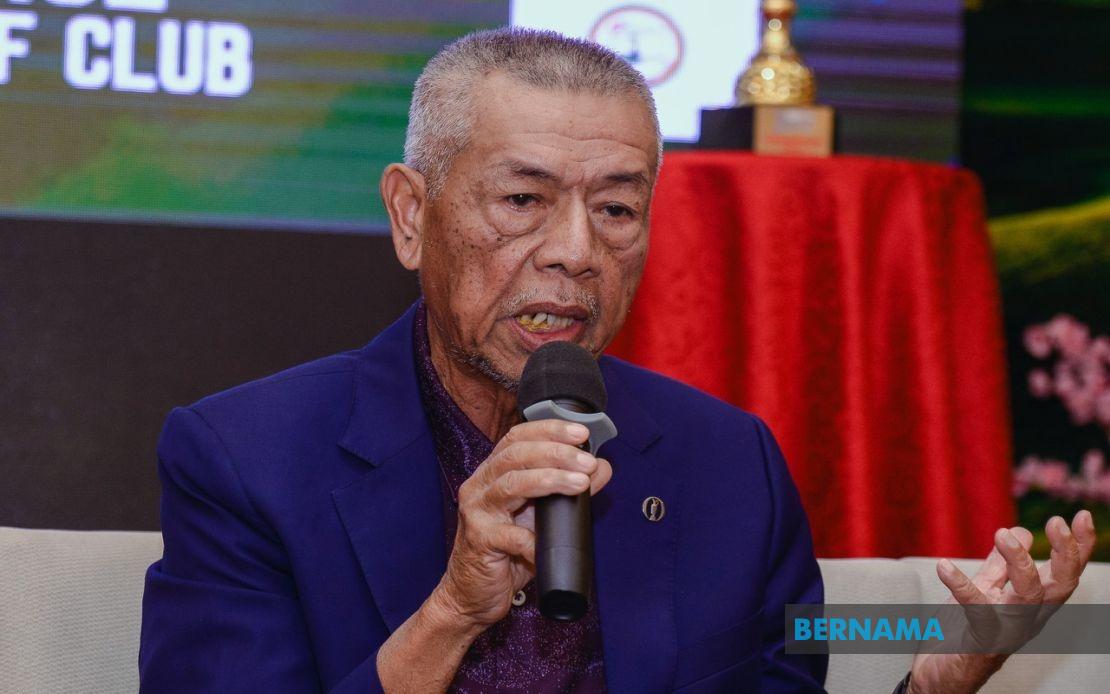
The Malaysian Golf Association has escalated its push for a dedicated full-time national coach, identifying the position as essential to Malaysia's competitive readiness when the nation hosts the Southeast Asian Games in September 2027. During discussions with the Ministry of Youth and Sports, MGA leadership outlined how a permanent coaching appointment would enable the national programme to operate with greater strategic coherence and continuity, moving beyond the constraints of temporary arrangements that have historically hampered long-term athlete development in the sport.
Tan Sri Mohd Anwar Mohd Nor, who heads the MGA, brought the matter directly to Datuk Rahimi Ismail, secretary-general of the ministry, signalling the association's determination to secure high-level backing for the initiative. The appeal reflects a broader Malaysian sports development challenge: establishing sustainable infrastructure that allows coaching staff to implement multi-year athlete development pathways rather than managing crisis-to-crisis preparation cycles. With roughly two-and-a-half years until competition, the timing of this request suggests the MGA recognises that recruitment and onboarding of a quality coach cannot be rushed if coherent team preparation is to succeed.
The MGA's requirements extend beyond simply appointing someone to the role. The association is specifically seeking a golf coach of demonstrable international calibre, indicating that the organisation understands that hosting the Games places Malaysian golf under heightened scrutiny. Domestic audiences will expect the home nation's players to perform strongly, and neighbouring countries will arrive with their own high-quality programmes. A coach brought in at the last minute, without sufficient time to implement systems and build athlete confidence, would likely underperform against such competition.
Coordination with government agencies forms a critical element of the MGA's strategy. By involving both the Ministry of Youth and Sports and the National Sports Council, the association is attempting to embed golf within Malaysia's broader national sports ecosystem rather than treating it as an isolated federation. This collaborative approach could unlock various forms of support—funding pathways, facility access, athlete welfare services, and integration with sports science resources—that individual bodies cannot provide alone. Such alignment is particularly important for golf in Malaysia, where the sport lacks the mass participation base of football or badminton and therefore depends more heavily on targeted government investment.
Beyond the coaching position, the MGA has begun developing a multifaceted preparation strategy designed to build depth and skill across the national squad. Training camps in Sarawak represent one dimension of this approach, offering access to different course conditions and facilities while potentially benefiting Sarawak's own golf development infrastructure. The MGA president's recent engagement with Sarawak's Minister of Youth, Sports and Entrepreneur Development, Datuk Seri Abdul Karim Rahman Hamzah, indicates that the association is thinking territorially about where expertise and resources exist across Malaysia and how to mobilise them.
The formal launch of the 100PLUS MGA National Junior Development Programme Junior Series 2026 during this period provides both a platform for the coaching announcement and a concrete demonstration of the MGA's commitment to systematic talent identification and nurturing. Junior development programmes create the pipeline of future national representatives, and their success depends partly on the quality of coaching infrastructure available at elite senior levels. Young golfers are more likely to remain committed to the sport if they can see clear pathways to national representation, and those pathways become credible when full-time professional coaches oversee preparation.
The 2027 SEA Games hosting duty carries both opportunity and pressure for Malaysian golf. As the home federation, the MGA will benefit from playing conditions familiarity, reduced travel fatigue, and home crowd support—advantages that can translate to medals if the team arrives in genuinely competitive form. However, hosting also means that underperformance becomes a visible national disappointment rather than a distant international result. Other Southeast Asian nations, particularly Thailand and Indonesia, have invested substantially in golf programmes in recent years, creating a competitive environment that demands Malaysian responses.
Social media and online sports commentary will amplify scrutiny of whether Malaysia's golfers performed credibly on home soil. A full-time national coach becomes not merely a technical necessity but also a signal to domestic audiences that the MGA is serious about the challenge ahead. The very act of appointing such a position sends a message about commitment that can build confidence within the player cohort and justify continued public and private sector support for the sport.
The timing of these preparations also reflects Southeast Asian sports development realities. Unlike established programmes in Europe or North America, many Asian federations operate with relatively constrained budgets and must make deliberate choices about where to invest. By securing a full-time coach and building structured preparation pathways now, the MGA is essentially choosing to prioritise golf's development in the crucial 2027-2030 window. This decision will shape whether Malaysian golf emerges from the SEA Games with momentum and international profile or remains a niche sport without sustained competitive presence.
Success in securing the coaching position and implementing comprehensive preparations would place Malaysian golf on a stronger trajectory beyond 2027. International coaching appointments often bring networks, training methodologies, and player development insights that outlast individual tournament cycles. A coach retained for multiple years can build institutional knowledge about Malaysian player psychology, local playing conditions, and effective communication styles—assets that prove invaluable across successive competitions.
The collaboration framework outlined by the MGA suggests recognition that modern sports development requires multi-stakeholder engagement. Junior development feeds into senior preparation; regional training venues support national squad building; government resources enable athlete support services; and professional coaching ties everything together into coherent progression. Malaysia's experience hosting major sporting events in recent years has demonstrated that such integrated approaches yield better outcomes than siloed federation efforts.
As the MGA pursues these initiatives over the coming months, the association faces a practical timeline. Recruiting and vetting a high-calibre international coach, integrating that person into Malaysian golf culture, developing and implementing training programmes, and bringing national squad players to competitive readiness all demand sustained attention and resources. The conversation with government agencies represents the formal beginning of this process, but success depends on follow-through, funding commitments, and genuine partnership between the MGA, ministry, and council structures that support athlete development across Malaysia.

