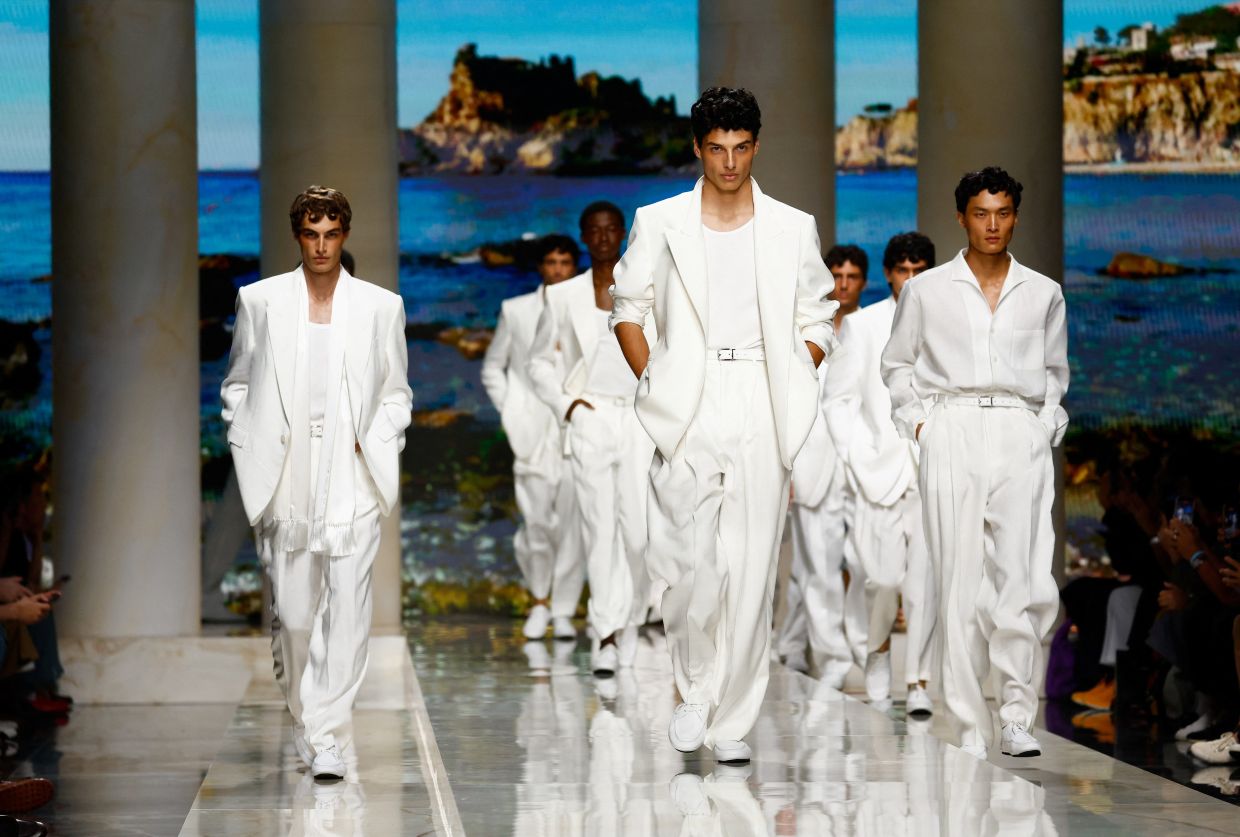
Milan's menswear designers took a step back from excess this season, offering collections that prioritise simplicity and practicality even as the Italian fashion capital sweltered during Fashion Week. The Spring/Summer 2027 presentations, which concluded on June 22, reveal a deliberate toning down of ornamentation and a return to fundamentals—a direction that reflects broader industry concerns about economic uncertainty and global geopolitical tensions. Rather than surrender to the summer heat with radical departures from tradition, the menswear establishment chose to reimagine familiar garments through smarter proportioning, more thoughtful fabric selection, and innovative construction techniques that marry formality with comfort.
Prada emerged as the season's philosophical guide, with co-creative directors Miuccia Prada and Raf Simons championing an approach centred on restraint and reimagination. Their presentation demonstrated that luxury needn't translate into visual heaviness; instead, the house focused on how proportion and fabrication could elevate straightforward pieces. This intellectual foundation resonated across Milan's runways, establishing an aesthetic that values clarity over complexity. The message proved particularly resonant for a global audience grappling with uncertainty—the notion that elegance survives simplification, and that what matters most is execution rather than embellishment.
Yet Milan's answer to summer dressing remained paradoxical. Despite the heat, designers persisted in featuring leather and knitted fabrics throughout their collections, suggesting that the wearer would require either exceptional climate control, high-altitude refuges, or relocation to cooler regions to fully inhabit these looks. This apparent contradiction between aspiration and practicality became one of the season's defining tensions. Prada addressed this paradox creatively by drawing inspiration from the universal functionality of denim—translating that utilitarian spirit into slim five-pocket trousers paired with cropped, flat-pocketed jackets that functioned almost as shirts. Other manufacturers tackled the challenge through technical innovation, employing woven and perforated leather techniques that enhanced breathability without abandoning the material's inherent luxury and prestige.
The most significant trend emerging from Milan was the decisive embrace of tailored silhouettes that hug the body. After years of oversized, deliberately slouchy proportions dominating menswear, designers orchestrated a visible return to formfitting cuts. This shift represents more than aesthetic preference; it signals confidence in structured tailoring as a foundation for contemporary menswear. The consensus among Milan's establishment was emphatic: the suit remains non-negotiable for a properly dressed man. The challenge, therefore, was engineering that suit to function in rising temperatures without sacrificing its formal authority or cultural significance.
Designers pursued this challenge through strategic ventilation and unexpected transparency. Dress shirts remained present on the runway, but frequently unbuttoned to permit air circulation, sometimes rendered semi-transparent through careful fabric choice, or occasionally eliminated entirely in favour of exposing the torso beneath tailored jackets. Dolce & Gabbana pushed this bodily exposure furthest with microshorts that prominently displayed the leg, while other brands experimented with cutaways and strategic openings. Long trousers continued to dominate, yet moved noticeably closer to the body rather than the voluminous cuts of previous seasons. The tailoring itself softened, with designers deliberately loosening traditional construction methods, opening necklines, and selecting materials that permitted greater airflow while maintaining the essential character of formal menswear.
Thom Browne's return to Milan for the first time since 2008—now operating under Zegna ownership—exemplified this sophisticated adaptation. The American designer's layered suiting drew heavily on seersucker and men's pleated skirts, materials and silhouettes traditionally associated with summer comfort rather than high fashion. This reclamation of warm-weather fabrication as a legitimate component of luxury menswear signified a broader maturation in how the industry approaches seasonal dressing. The suit, Milan's collections insisted, is evolving rather than disappearing; it is learning to breathe.
However, not every designer embraced the season's dominant aesthetic of restraint. Philipp Plein presented crystal-encrusted denim pieces that demanded days of meticulous handwork to complete, while Dolce & Gabbana leaned enthusiastically into beaded embellishment and coral-inspired ornamentation. These maximalist visions stood in deliberate counterpoint to Prada's reductionist philosophy, offering glamour and conspicuous luxury to those inclined toward visual spectacle. The coexistence of these opposing approaches—minimalism and maximalism, restraint and exuberance—reflected the industry's ongoing dialogue about what luxury menswear should communicate in contemporary culture.
A condensed Milan calendar created unexpected opportunities for emerging designers to share the spotlight alongside established houses. Martin Quad made his Milan debut with unconventional tailoring techniques that had previously garnered attention in Copenhagen, while Domenico Orefice's co-ed collection explored leather and richly textured fabrics with considerable sophistication. Japanese designer Shinya Kozuka's Shinyakozuka label demonstrated particular poetic sensibility with a collection characterised by one arresting image: a bare-chested model enveloped in a billowing sheer teal coat, paired with generous white trousers. These emerging voices suggested that Milan's menswear calendar, even compressed, retained sufficient space for fresh perspectives to penetrate the consciousness of industry gatekeepers.
For Malaysian and Southeast Asian readers, Milan's Spring/Summer 2027 direction carries particular relevance. The region's tropical climate presents its own set of menswear challenges, and the Italian industry's renewed focus on breathability, formality maintained through proportion rather than volume, and the legitimacy of lighter materials addresses concerns that extend far beyond Europe's summer months. The shift toward ventilated tailoring and strategic transparency offers templates that regional designers and consumers can adapt to equatorial conditions. Moreover, the season's prevailing aesthetic—clean lines, confident simplicity, emphasis on fabrication and construction—aligns with broader contemporary tastes that favour understated sophistication over conspicuous luxury, making these collections particularly instructive for developing menswear markets in Asia.

