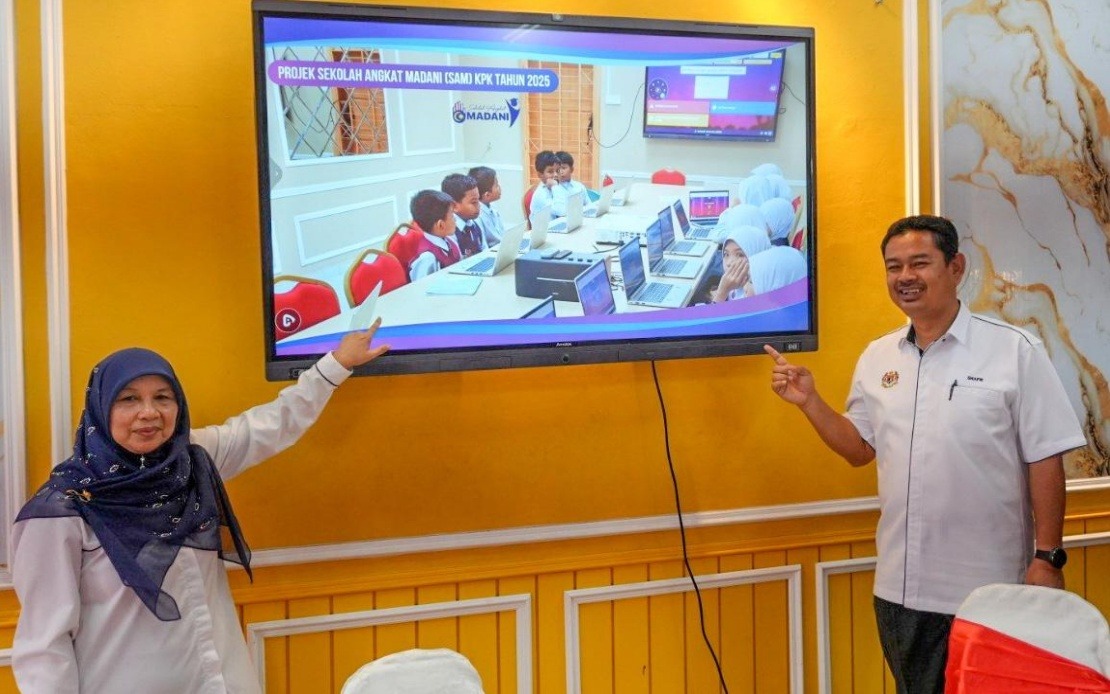
The Ministry of Plantation and Commodities has invested RM100,000 in modernising SK Bendang Kering in Kuala Kangsar, Perak, as part of its school adoption scheme designed to enhance educational infrastructure in underserved communities. The funding commitment, formally handed over during a ceremony attended by Shafie Taib, KPK's deputy secretary-general for Strategic Planning and Management, represents the ministry's broader strategy to ensure equitable access to quality education across the country's rural regions.
Operating through the Malaysian Rubber Board as its implementing agency, the KPK's adoption programme seeks to bridge the infrastructure gap between urban and rural schools while simultaneously supporting the government's wider agenda of developing human capital and strengthening educational outcomes. This approach reflects an understanding that sustainable development requires investment in foundational services, particularly in regions where resource constraints have historically limited access to contemporary teaching environments and learning technologies.
The physical improvements funded by the allocation demonstrate a comprehensive approach to school development. SK Bendang Kering's assembly and main hall spaces have undergone substantial refurbishment, creating more conducive environments for students to gather and participate in school-wide activities. Reading corners have been established to foster a culture of independent learning and literacy engagement, whilst dedicated preschool classrooms now provide age-appropriate facilities for the school's youngest learners. These infrastructure investments address basic facility gaps that often characterise rural educational institutions.
Equally significant is the technology integration component of the upgrade programme. Interactive smartboards have been installed in teaching spaces, enabling educators to employ digital learning methodologies that enhance student engagement and comprehension. Complementing these technological additions are climate control installations—air conditioning units that create comfortable learning environments, particularly important in Malaysia's tropical climate where classroom temperatures can significantly impact concentration and learning effectiveness. Contemporary educational signage and refurbished classroom furniture complete the modernisation effort, collectively establishing an environment that reflects contemporary standards for teaching and learning infrastructure.
Beyond physical facilities, the KPK has embedded comprehensive academic support mechanisms into the adoption programme. An academic performance scheme targeting proficiency in Malay, English, Science, and Mathematics provides structured monitoring and incentivisation of student achievement in these foundational subjects. Students demonstrating exceptional academic progress receive recognition and support, creating positive reinforcement for educational attainment. This targeted approach addresses specific skill gaps that often persist in rural educational settings, where access to qualified tutoring and specialised teaching resources may be limited.
Character and leadership development forms another pillar of the programme, reflecting recognition that education encompasses dimensions beyond academic knowledge. SK Bendang Kering students now have access to structured initiatives including a Student Leadership Motivation Camp and a Student Talent Development Camp. These programmes create platforms for students to discover aptitudes, develop confidence, and cultivate the interpersonal and organisational capacities essential for navigating increasingly complex workplace and civic environments. Such initiatives are particularly valuable in rural contexts where extracurricular opportunities may otherwise be scarce.
The selection of SK Bendang Kering for this pilot adoption initiative carries symbolic significance within the Malaysian educational landscape. Kuala Kangsar's rural character has historically meant lower investment in school infrastructure compared to urban counterparts, and the explicit recognition that rural students deserve facilities that keep pace with contemporary educational developments signals a policy shift toward genuine equity. The ministry's statement emphasising this commitment demonstrates awareness that the digital divide and infrastructure gaps between urban and rural schools can perpetuate educational disparities that accumulate into economic disadvantages across communities.
For Perak specifically, and for rural Malaysia more broadly, this initiative has implications extending beyond a single school. The adoption model establishes a replicable framework for government agencies to strengthen educational provision in their respective regions. Should the KPK's approach prove effective in generating measurable improvements in student outcomes and facility adequacy at SK Bendang Kering, it may encourage other ministries to launch comparable programmes, progressively expanding modern educational infrastructure across underserved areas.
The programme also reflects growing recognition of education's centrality to addressing regional development imbalances. Malaysia's Vision 2050 objectives and economic transformation ambitions depend fundamentally on developing a skilled, competitive workforce. Investments in rural schools help ensure that talent and potential are not constrained by geographical accident of birth. By providing contemporary facilities and developmental opportunities in Kuala Kangsar, the KPK contributes to a broader ecosystem supporting human capital development that transcends traditional urban-rural divides.
Looking forward, the effectiveness of this adoption initiative will likely be measured through both quantitative metrics—enrolment trends, academic performance indices, student retention rates—and qualitative assessments of school climate and community engagement. Should SK Bendang Kering demonstrate meaningful improvements across these dimensions, the model may provide a blueprint for expanded investment in rural educational infrastructure. For Malaysian policymakers committed to inclusive development and educational equity, the initiative represents a tangible expression of that commitment, even as broader systemic challenges—teacher recruitment in rural areas, curriculum localisation, and ongoing infrastructure maintenance—remain to be fully addressed.

