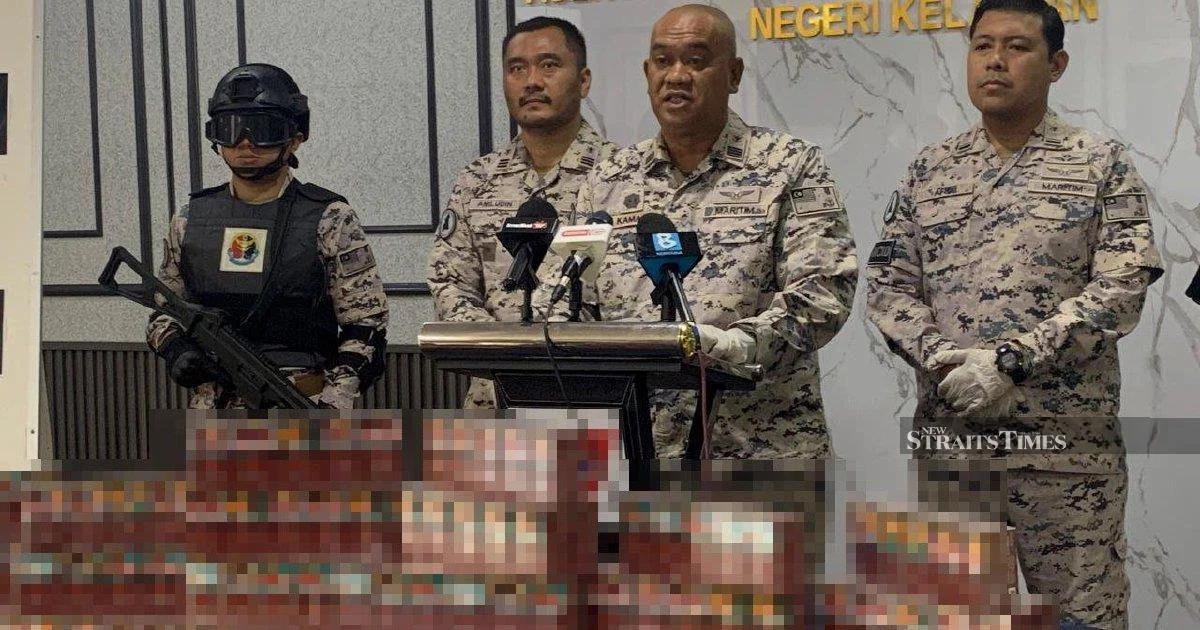
The Malaysian Maritime Enforcement Agency (MMEA) has intercepted a significant shipment of contraband cigarettes valued at roughly RM212,000 during a recent patrol operation in the waters near Kampung Penambang, in the Pasir Puteh district of Kelantan. The seizure, which involved 24 boxes of illegal tobacco products, represents another successful effort by the agency to combat smuggling activities in Malaysia's maritime zones.
Contrabanding of cigarettes continues to be a persistent challenge for Malaysian authorities, particularly in coastal and river areas that provide easy access routes for smugglers moving contraband between states and across international waters. The Kelantan operation highlights the ongoing vigilance required to police these waterways, where traffickers frequently attempt to move illicit goods under the cover of darkness or poor visibility conditions. These contraband cigarettes typically originate from sources outside Malaysia where taxation and regulation differ markedly, making them attractive for illegal importation due to their substantially lower cost compared to domestically taxed products.
The MMEA's interception underscores the agency's commitment to maritime law enforcement across peninsular Malaysia's extensive coastline and river systems. Kelantan, situated along the east coast, represents a historically vulnerable zone for smuggling due to its geographic positioning and complex network of waterways that extend inland. The enforcement action at Kampung Penambang demonstrates the agency's capacity to conduct operations in interior river locations, not merely in open waters, suggesting an expanded presence and coordination with local enforcement partners.
Cigarette smuggling generates substantial illicit profits while simultaneously undercutting government revenue through lost excise tax collection. Malaysia's domestic tobacco taxation regime includes significant levies designed to fund public health initiatives and government operations. When contraband cigarettes enter the market, they bypass these fiscal mechanisms entirely, creating unfair competition for legitimate retailers and manufacturers who operate under full regulatory compliance. The RM212,000 valuation of the seized consignment illustrates the commercial scale involved in even individual smuggling operations.
The broader context of contraband tobacco trafficking in Southeast Asia reveals systematic criminal networks that operate across multiple jurisdictions and often coordinate with international syndicates. Cigarettes remain among the most frequently smuggled commodities globally, competing with pharmaceuticals and electronics for volume. Malaysian law enforcement agencies, including the MMEA, Royal Malaysia Police, and Customs authorities, have progressively enhanced their intelligence-sharing and operational coordination to disrupt these trafficking chains at source, transit, and destination points.
Kelantan's vulnerability to smuggling extends beyond cigarettes to encompass other regulated goods and controlled substances. The state's lengthy river network, including tributaries of the Kelantan River, provides natural corridors that historically required minimal infrastructure investment for traffickers to establish operational routes. The MMEA's river operations therefore serve a critical function in extending maritime enforcement capabilities beyond coastal boundaries into inland waterways where smugglers frequently attempt to evade detection by operating small vessels during nighttime hours.
The seizure also reflects improving intelligence capabilities and coordination between MMEA personnel and intelligence units that identify high-risk areas and time periods for enhanced patrols. Successful contraband operations require detailed knowledge of patrol patterns, resource deployments, and enforcement capacity limitations. By conducting surprise operations and varying patrol schedules, maritime authorities disrupt smuggler planning and increase the operational costs and risks associated with trafficking attempts.
From a public health perspective, contraband cigarette seizures represent an indirect health benefit by preventing these products from reaching consumers, particularly youth populations that may be more price-sensitive and susceptible to addiction. Cheaper illegal cigarettes enable expanded consumption among demographics that might otherwise be priced out of the market by legitimate retail prices. The Malaysian government's tobacco control framework specifically incorporates taxation as a demand-reduction mechanism, making smuggling suppression integral to broader public health strategy.
Future enforcement effectiveness will likely depend on sustained investment in maritime patrol capabilities, including vessel acquisition, personnel training, and operational coordination mechanisms. The MMEA's expanded inland river operations require different tactical approaches compared to open-water enforcement, necessitating specialized training and equipment appropriate for narrow waterway operations. Intelligence gathering regarding smuggler methods, timing patterns, and commodity flows remains critical for anticipating future trafficking attempts and positioning enforcement resources strategically.
The Kampung Penambang operation represents routine yet significant enforcement activity that collectively contributes to degrading smuggling networks' operational capacity. Each successful seizure increases the financial risk premium associated with trafficking attempts and forces criminal organizations to adapt routes, methods, and supply chain structures. Over time, cumulative enforcement pressure raises barriers to entry for potential smugglers and demonstrates government commitment to maritime security and revenue protection across Malaysia's territorial waters and inland river systems.

