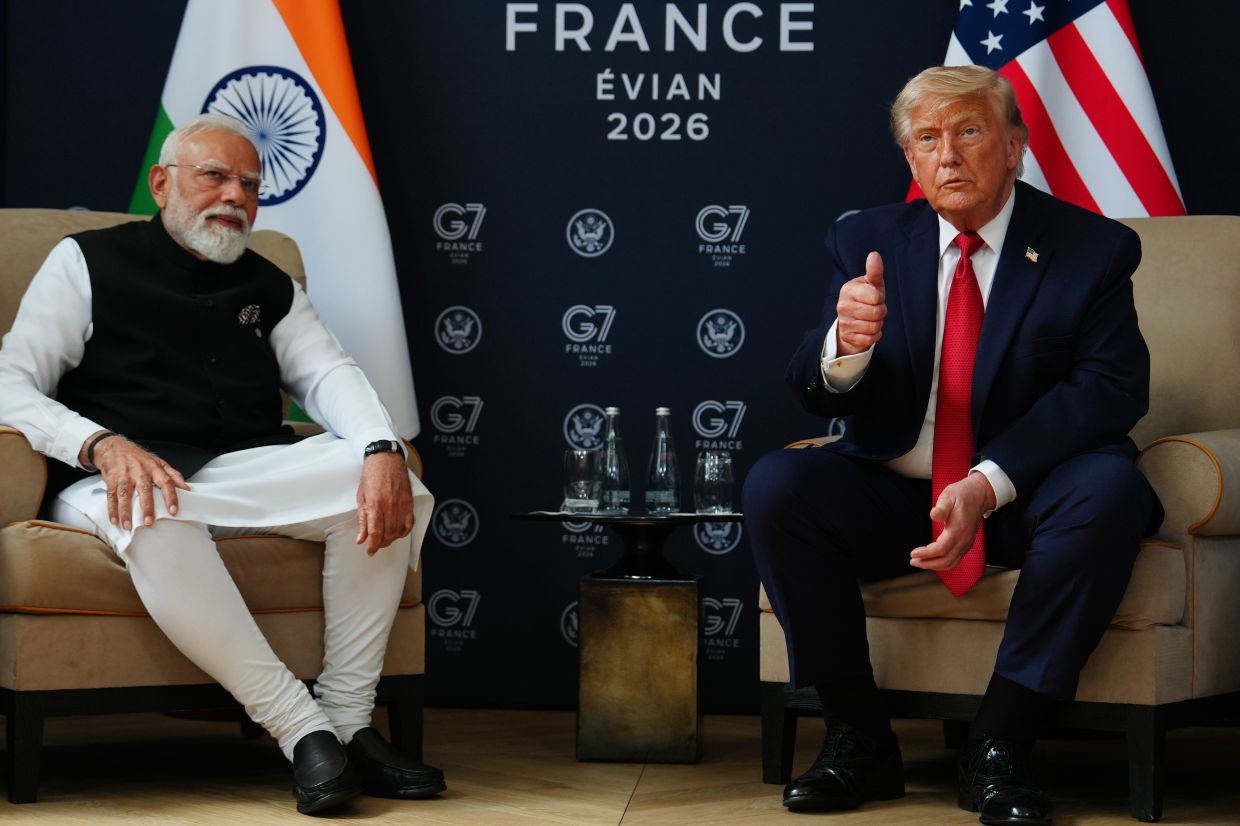
Stepping out of bilateral talks with President Donald Trump at the G7 summit in Evian, Indian Prime Minister Narendra Modi declared that New Delhi and Washington have achieved meaningful headway in their extended effort to forge a comprehensive trade agreement. The announcement from India's foreign ministry on Thursday June 18 underscored the leaders' "particular satisfaction" with progress recorded in ongoing negotiations toward an interim Bilateral Trade Agreement, signalling that months of technical discussions are bearing fruit at the highest political level.
The face-to-face meeting between Modi and Trump on Wednesday represented their first in-person encounter since February 2025, when the two leaders met in Washington. That earlier discussion had culminated in an initial framework understanding, though momentum subsequently slowed following significant legal and policy shifts in the American administration. At the French summit, Trump appeared bullish about the timeline, telling reporters in Evian that the two nations stood "very close" to finalizing a deal. The US president went further in his characterization of the Indian premier, describing Modi as an exceptionally tough negotiator whilst offering unusually effusive personal observations.
Both governments have now mandated their negotiating teams to accelerate work toward what they term a "commercially meaningful agreement at the earliest" opportunity. The urgency reflects the geopolitical calculus shaping US-India relations in the contemporary global environment. Jamieson Greer, the US Trade Representative, will lead a delegation to India in the coming weeks to continue substantive discussions, continuing a pattern of intensive high-level engagement that has characterized these protracted negotiations.
The bilateral trade ambition itself is substantial. Washington and New Delhi have publicly committed to expanding commerce between their economies to half a trillion US dollars by 2030, a target that would represent a historic deepening of their economic relationship. Achieving this requires resolving longstanding disputes over market access, tariff schedules, and sectoral protections that have previously impeded agreement. India's Commerce Minister Piyush Goyal signalled the advanced state of discussions in early June, suggesting that negotiators had resolved approximately 99 percent of the first component of what is envisioned as a multi-phase trade arrangement.
However, the trajectory of these talks has not been uniformly smooth. After the initial understanding in February, progress stalled following a major judicial intervention in the United States. The Supreme Court struck down several of Trump's expansive tariff measures, which had created uncertainty about America's trade policy direction. In response, the Trump administration initiated investigations targeting unfair trade practices by multiple countries, including India, whilst simultaneously imposing a broad ten percent tariff affecting numerous sectors. These actions created complications for Indian exporters and complicated the bilateral negotiating environment.
For Malaysian and Southeast Asian observers, the successful conclusion of a US-India trade agreement holds considerable significance. Such an accord would represent a major structural development in the Indo-Pacific economic architecture, reinforcing the importance of democratic market economies in regional commerce and potentially establishing precedents for other agreements. It would also signal American commitment to deepening engagement with significant partners beyond China-focused strategies, though the tariff measures implemented during negotiations suggest the administration remains willing to employ protectionist instruments even while negotiating broader frameworks.
Beyond trade mechanics, Modi raised humanitarian and security concerns stemming from the Middle East conflict during his discussions with Trump. The Indian Prime Minister specifically requested that the US administration ensure the safety of Indian seafarers as parties implement the Iran-US agreement intended to end Middle Eastern hostilities. This appeal followed the deaths of three Indian sailors in a US military strike on a commercial vessel operating near Oman on June 10, an incident that underscores the risks faced by maritime workers caught in regional tensions.
India's vulnerability to Middle East instability extends beyond individual incidents to systemic supply chain disruptions. The closure of the Strait of Hormuz by Iran has constrained energy supplies critical to the Indian economy, whilst disruptions to fertilizer and food shipments have rippled through agricultural sectors dependent on imported inputs. Modi emphasized during the summit that the consequences of Middle Eastern conflict would persist for an extended period, particularly affecting developing economies in the Global South that lack alternative supply sources or financial buffers to absorb price volatility.
The Indian Premier's highlighting of these vulnerabilities during trade discussions reflects the interconnected nature of contemporary geopolitics. Whilst India seeks to strengthen economic ties with Washington through expanded bilateral commerce, it simultaneously confronts supply security challenges originating from regional conflicts beyond its direct control. The Trump administration's focus on tariffs and trade rebalancing, whilst addressing American concerns about trade imbalances, does not directly resolve the structural energy and commodity supply challenges facing India and other South Asian economies.
For Indian policymakers, successfully concluding a trade agreement with the United States represents both a strategic achievement and a practical necessity. It would provide enhanced market access for Indian exporters, particularly in technology services and agricultural products, whilst formalizing the security partnership that has become increasingly central to US strategy in Asia. The timing also reflects broader efforts to strengthen democratic market economies as counterweights to state-directed economic models elsewhere in the region.
The path forward hinges on whether negotiating teams can transform the reported 99 percent progress into final text acceptable to both governments. The involvement of Trade Representative Greer in forthcoming discussions suggests that outstanding issues likely involve sensitive sectors where domestic constituencies in both countries maintain strong interests. Previous trade negotiations involving India and the US have demonstrated that final technical obstacles can prove surprisingly difficult to overcome, even when overall political will exists at leadership levels. The public commitments from Modi and Trump to accelerate timelines will now be tested against the bureaucratic and legislative realities that have historically complicated US trade agreements.