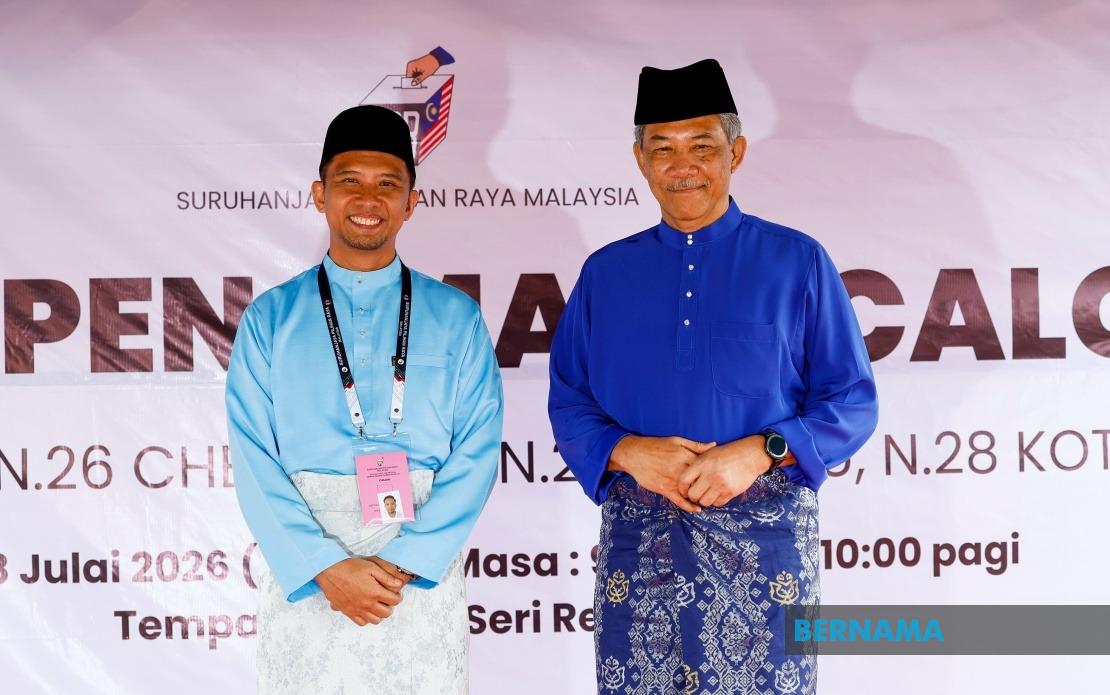
A closely watched battle is shaping up in the Rantau state constituency as Negeri Sembilan prepares for its 16th state election, with incumbency and fresh credentials colliding in what promises to be a pivotal race. The contest saw nomination papers accepted for all candidates following the conclusion of the nomination process at Dewan Sri Rembau on July 18, with returning officer Mohd Zamri Mohd Esa confirming a straight fight between two heavyweights representing opposing coalitions. On one side stands Datuk Seri Mohamad Hasan, the state Barisan Nasional chairman and Malaysia's Foreign Minister, whilst his challenger is Dr Azizul Hakim Mahdi, a healthcare professional fielded by Pakatan Harapan to represent an alternative vision for the constituency.
Modamad Hasan's dominance in Rantau extends back two decades, having secured the seat consistently since 2004 and commanding the position as UMNO deputy president. His electoral fortitude was underscored in the 2023 state election, when he amassed 16,957 votes against his opponent's 6,677, delivering a commanding 10,280-vote majority that illustrated the strength of his political machinery and local support base. The Rembau Member of Parliament has framed the upcoming campaign as an opportunity for Barisan Nasional to articulate its governance platform and secure renewed electoral endorsement. Speaking after nomination proceedings concluded, he emphasised the importance of systematic and organised campaigning, suggesting that meticulous groundwork would translate into electoral success for his coalition.
Dr Azizul Hakim Mahdi, at 35 years old, enters the contest as a professional alternative to the incumbent's long tenure. The medical practitioner brings a decade of clinical experience and operates three healthcare facilities across Senawang, Puncak Alam, and Melaka, positioning himself as someone with direct community engagement and understanding of grassroots healthcare disparities. His campaign platform centres on leveraging his professional expertise to advance healthcare access and quality within the constituency, framing his candidacy as responsive to local concerns about medical services and preventive health infrastructure. By emphasising his youth and professional credentials, the Pakatan Harapan candidate is attempting to appeal to voters seeking new leadership approaches, though he faces the considerable challenge of displacing an entrenched incumbent with substantial electoral machinery and institutional support.
The Rantau contest forms part of a broader reconfiguration of Negeri Sembilan's political landscape as the state embarks upon its biennial electoral cycle. The Negeri Sembilan State Legislative Assembly, comprising 36 seats, was dissolved on June 5, with the Election Commission scheduling early voting for July 28 and the main polling day for August 1. Across the state, multiple constituencies are emerging with varied competitive dynamics that will collectively determine the balance of power in Kuala Lumpur's neighbouring state. The contest in Rantau specifically carries significance beyond local concerns, given Mohamad Hasan's position within federal political structures and his ministerial responsibilities.
Elsewhere in the electoral field, the Paroi constituency has crystallised into a three-cornered contest featuring Ahmad Shahir Mohd Shah of Pakatan Harapan, who serves as press secretary to the Menteri Besar, competing against Perikatan Nasional's Kamarol Ridzuan Mohd Zin and Bersatu's Mohd Nazree Mohd Yunus. This fragmentation of the anti-Barisan Nasional vote across two opposition-aligned parties reflects broader coalition dynamics at play across Malaysia's political landscape. The Chembong seat presents a more straightforward two-candidate arrangement, with Barisan Nasional's Datuk Zaifulbahri Idris, the incumbent, contending against Pakatan Harapan's Danish Nazran Murad. Conversely, Kota has emerged as another three-way contest, featuring Barisan Nasional's Suhaimi Aini defending his seat whilst contending with challengers from both Pakatan Harapan and Bersatu.
The electoral machinery for this state election encompasses substantial voter participation, with 889,490 registered voters eligible to cast ballots across Negeri Sembilan. This voting population comprises 867,151 ordinary voters, supplemented by 16,884 military personnel and their spouses voting early, as well as 5,455 police officers participating through the early voting mechanism on July 28. These figures underscore the expanded voting constituency that contemporary Malaysian elections encompass, reflecting military and security personnel's integration into electoral processes and the logistical complexity involved in managing diverse voting schedules across institutional categories.
For Malaysian political observers, the Rantau contest encapsulates several compelling dimensions of current electoral competition. Mohamad Hasan's tenure as Foreign Minister introduces questions about whether ministerial responsibilities complicate local campaigning or conversely enhance his appeal through accumulated governmental prestige and access. His continued dominance in electoral contests, despite national political turbulence affecting other Barisan Nasional figures, suggests either exceptional constituent service or demographic resilience that protects his position from broader coalition fluctuations. Dr Azizul Hakim's positioning as a healthcare professional attempting to unseat an entrenched incumbent reflects broader patterns where opposition parties recruit candidates with professional credentials and local business ownership to challenge the experience and institutional networks of long-serving politicians.
The campaign period now officially commenced following nomination closure, with both camps preparing to mobilise their respective organisations. Barisan Nasional's approach, as articulated by Mohamad Hasan, emphasises systematic execution and articulation of the coalition's policy platform. Pakatan Harapan's strategy, particularly through Dr Azizul Hakim's candidacy, appears focused on presenting professional competence in a specific policy domain—healthcare—and contrasting youthful, solution-oriented governance against incumbency. These competing narratives will unfold across the coming weeks as both candidates engage with constituents, navigate local issues, and attempt to shape perceptions of their respective suitability for representation.
The outcome of the Rantau contest will contribute to determining Negeri Sembilan's governance direction and the balance of forces within the state legislative assembly. Beyond parochial state concerns, the race carries implications for Mohamad Hasan's standing within federal political structures and serves as a barometer for Barisan Nasional's electoral resilience in a significant peninsular state. Meanwhile, Dr Azizul Hakim's campaign functions as a test case for how professional credentialing and policy specialisation can challenge established political incumbency. As Negeri Sembilan enters its electoral cycle, the Rantau contest exemplifies the multifaceted competition unfolding across Malaysian constituencies, combining institutional advantage, personal networks, policy positioning, and demographic appeals in configurations that will ultimately determine representation and resource allocation for Rantau's constituents over the coming electoral term.

