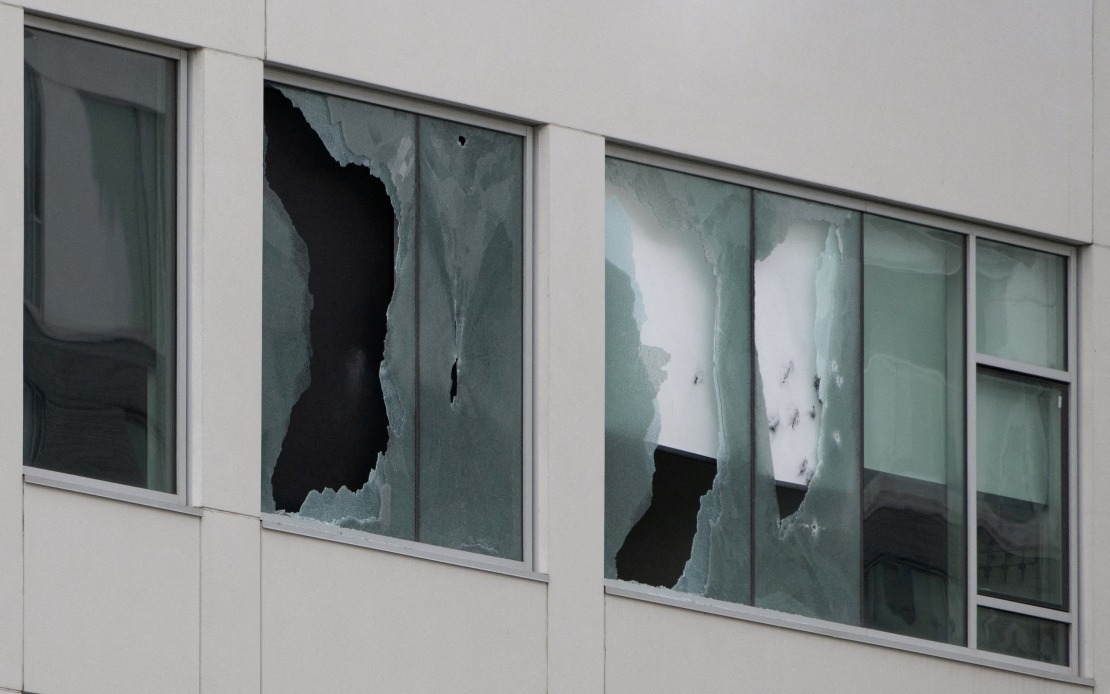
A fatal shooting in Montreal on Monday claimed the lives of a police officer, a civilian resident, and the suspected gunman in what has become another incident of lethal violence in Canada's second-largest city. The incident unfolded in the Côte-des-Neiges neighbourhood, prompting immediate emergency response and triggering a lockdown of the surrounding area. Montreal police confirmed the officer's death through a statement on social media platform X, describing the loss as occurring "while on duty" and pledging further information as the investigation advanced.
The sequence of events began when police responded to reports of an armed individual in the neighbourhood. Upon arrival at the scene, officers came under direct fire from the suspect, according to Montreal police chief Fady Dagher. The confrontation escalated rapidly, resulting in the suspect being "neutralised" during the armed exchange. The police chief indicated that investigators have determined the shooter was operating independently, with no indication of additional suspects remaining at large.
Beyond the fatality, the incident left two others wounded, though their conditions have since stabilised. One of the injured was a police officer, who authorities indicated was no longer facing life-threatening danger following medical treatment. The second injured individual's identity and condition were not immediately disclosed in official statements. The emergency alert system that had been activated to warn residents of the dangerous situation was subsequently lifted once the threat had been contained.
Security authorities moved quickly to investigate the motivations behind the attack. Investigators explicitly ruled out any connection to terrorism, a determination that suggested the incident stemmed from personal rather than ideological extremism of the jihadist variety. However, media reports emerged indicating that the deceased suspect may have left behind a manifesto containing language associated with the incel movement, an online community known for its virulently anti-feminist ideology and promotion of traditional gender hierarchies. Such manifestos have increasingly become focal points in investigations of mass casualty incidents, offering investigators insight into the psychological and ideological factors driving attackers.
The incel movement, short for "involuntary celibate," has emerged as a concerning phenomenon in recent years, particularly in North America. Comprised primarily of men who blame women and society for their romantic and sexual rejection, the movement has generated numerous online spaces where members share increasingly extreme and hostile rhetoric. While most adherents remain confined to digital discourse, security analysts have flagged cases where individuals have escalated from online participation to real-world violence. Several past mass casualty incidents in Canada and the United States have been linked to perpetrators with documented incel sympathies, raising questions about radicalisation pathways and the role of online communities in motivating violence.
For Malaysians and Southeast Asian observers, this incident carries particular relevance as online extremism transcends geographical boundaries. The incel movement, despite originating in North America, has found adherents across the region, with discussions occurring in local language forums and social media platforms. The Montreal shooting underscores how ideologies fostered in online spaces can translate into devastating real-world consequences, a pattern that local authorities and community leaders increasingly must contend with as digital connectivity expands.
The investigation into the Montreal incident remains ongoing, with authorities examining the contents of any manifesto or written materials left by the suspect. The claims regarding incel ideology have not been formally confirmed by security services, though media reports citing sources familiar with the investigation have suggested such connections exist. This investigative phase will determine whether the shooting should be classified as ideologically motivated violence or whether other personal grievances proved primary in driving the suspect's actions.
The loss of a police officer in the line of duty resonates deeply within law enforcement communities across North America and internationally. The Montreal police service, serving a city of over 4.2 million people and dealing with complex urban crime challenges, faces renewed questions about officer safety and response protocols to armed threats. The circumstances in which officers came under fire upon arrival suggest either that the suspect's hostile intent was immediate or that intelligence about the situation was incomplete when responders were dispatched.
Canada has experienced an elevated frequency of mass casualty incidents relative to other developed nations, though rates remain substantially lower than in the United States. Each incident prompts renewed debate about access to firearms, mental health services, and the regulation of online spaces promoting extremist ideologies. The Montreal shooting contributes to this ongoing conversation while raising specific concerns about how incel ideology circulates, radicalises potential adherents, and occasionally motivates violence.
The broader implications extend to how communities, law enforcement, and online platforms address the intersection of misogyny, social alienation, and access to weapons. The suspect's reported manifesto will likely be studied by researchers examining radicalisation patterns and the pathways through which individuals progress from online ideological consumption to violent action. For the families of those killed and injured, the investigation's findings offer little solace, yet may contribute incremental knowledge toward preventing similar incidents in the future.

