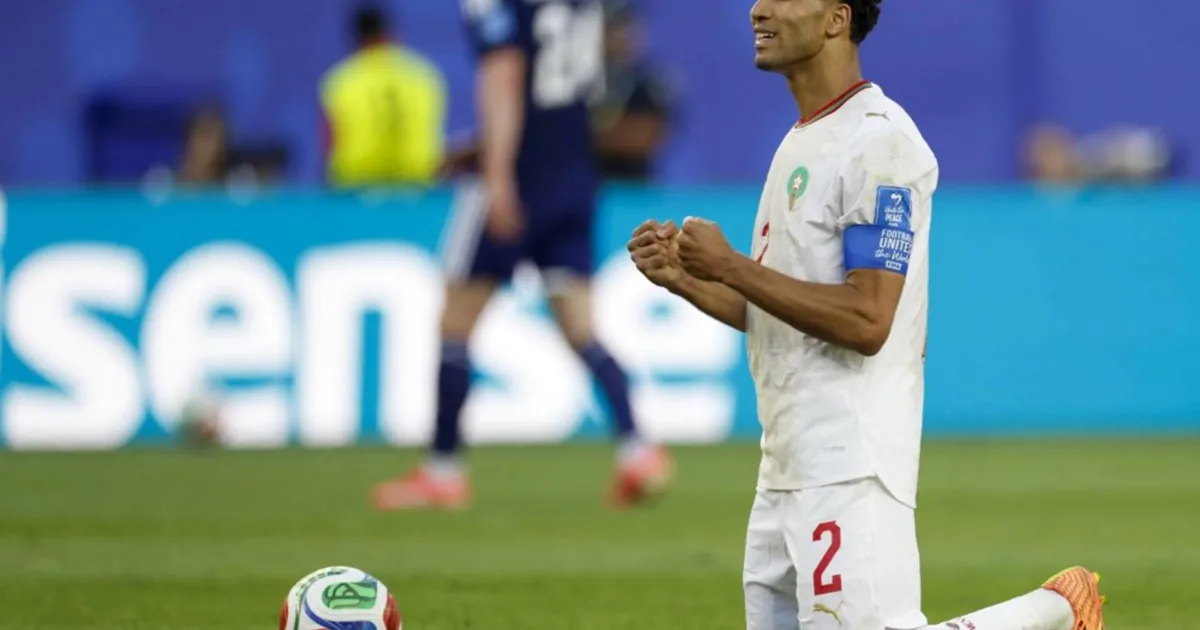
Achraf Hakimi, the Paris Saint-Germain defender who helped Morocco reach the World Cup semi-finals in Qatar, is navigating one of the most challenging periods of his professional career as he confronts serious legal allegations in France. The PSG player is facing rape charges connected to an incident allegedly involving a 24-year-old woman in the Paris region in 2023, though Hakimi has firmly denied the accusations against him. Despite the gravity of the situation and the media scrutiny that inevitably follows such proceedings, Morocco's World Cup coach has publicly characterised the player's demeanour as notably composed.
The allegations represent a significant development in what had been a meteoric rise for the 26-year-old right-back, who has become one of the most sought-after defenders in world football over the past five years. Hakimi's career trajectory has taken him from Real Madrid's academy through rapid ascents at Borussia Dortmund and Inter Milan before securing his lucrative move to PSG in 2021, establishing himself as a cornerstone of the French club's European ambitions. His performances at the Qatar World Cup in 2022 showcased his technical ability and attacking prowess from the right flank, contributing meaningfully to Morocco's improbable march through the tournament that captured global attention.
The coach's public statement suggesting Hakimi maintains emotional equilibrium during this turbulent period carries weight in sports circles, where the mental resilience of athletes confronting off-field crises often determines their ability to perform at elite levels. Legal proceedings of this magnitude typically exact a considerable toll on professional athletes, affecting concentration, confidence, and overall psychological wellbeing during competition. The coach's willingness to speak positively about Hakimi's mental state may signal either genuine conviction in the player's innocence or an attempt to stabilise the player's position within the national team structure during an uncertain time.
For Malaysian and Southeast Asian followers of elite football, the situation underscores the complex intersection of sport and law when high-profile athletes become entangled in serious allegations. The case highlights how the glare of international football can magnify personal difficulties, with proceedings conducted in the French legal system now drawing scrutiny from global media outlets and social media commentary spanning continents. Malaysian football enthusiasts, particularly those who watched Morocco's World Cup campaign unfold, are witnessing how institutional support systems around players function when reputational and legal crises collide.
PSG's institutional response to Hakimi's situation remains a critical factor in how this episode unfolds professionally. The club's handling of such circumstances—balancing their duty of care to the player with concerns about corporate reputation and fan sentiment—sets precedents for how European football organisations manage sensitive allegations involving star performers. The broader question of whether Hakimi's playing status might be affected by ongoing proceedings remains unaddressed, though such determinations typically follow rather than precede legal outcomes.
The timing of these allegations also carries implications for Morocco's football program and continental competitions. The Atlas Lions have emerged as a powerhouse in African football under recent coaching, and questions about squad stability during periods of legal uncertainty invariably arise. Should Hakimi's case extend across an extended timeframe, the national team must ensure competitive arrangements are not compromised by the absence or distraction of a key player in a crucial position.
Within the framework of international football governance, questions arise regarding how governing bodies like FIFA and UEFA address allegations against players under their purview. While such matters are primarily the domain of national legal systems, sporting organisations increasingly face pressure to establish clear policies delineating the relationship between criminal proceedings and competition participation. The absence of uniform standards across football creates ambiguity about how players should be treated during the investigative and trial phases.
The coach's characterisation of Hakimi's composure, whether intended or not, reflects broader patterns observed among elite athletes facing legal challenges. Many maintain focus on professional duties partly through psychological compartmentalisation, treating legal proceedings and sporting performance as separate domains requiring distinct mental engagement. This approach, while sometimes appearing incongruous to external observers, often proves essential for maintaining the normalcy that athletes depend upon during crisis periods.
Looking ahead, the resolution of these allegations will carry consequences extending far beyond individual careers. The outcome will influence discourse around accountability within professional football, the adequacy of existing support mechanisms for athletes facing serious allegations, and the extent to which sport can maintain separated from wider societal concerns about justice and responsibility. For Hakimi specifically, the path forward requires navigating simultaneous legal proceedings and professional expectations, a balancing act that will test his resilience and support network in the months ahead.

