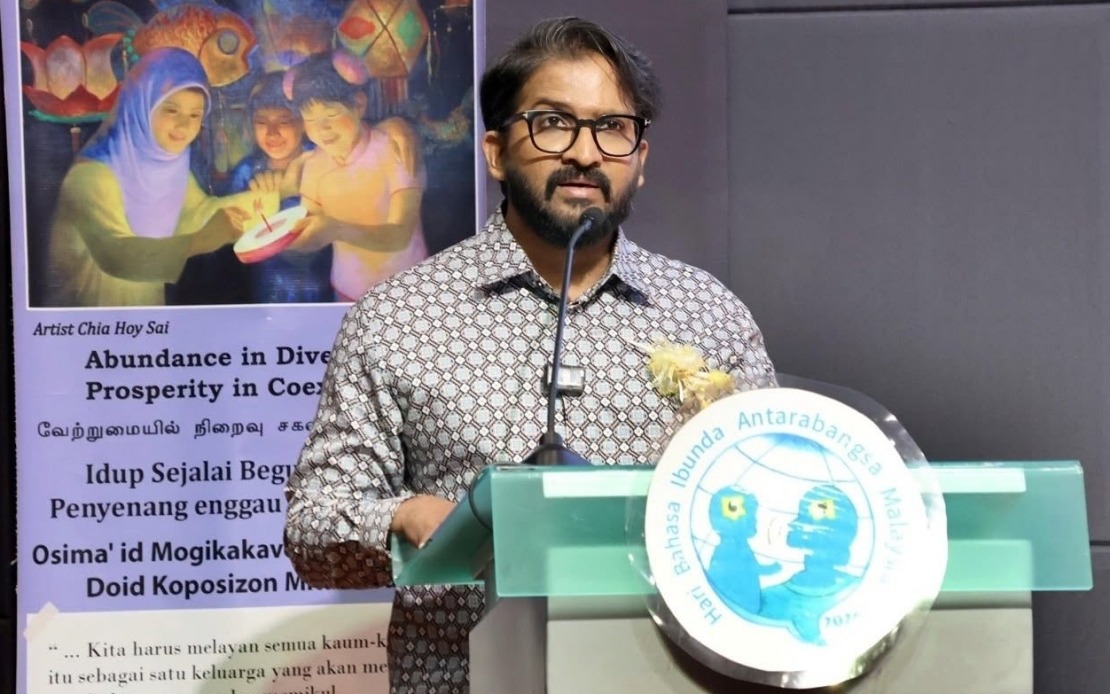
Deputy National Unity Minister R. Yuneswaran has advocated a deeper investment in mother-tongue education as a strategic response to the persistent tensions surrounding race, religion and royalty (3R) that regularly erupt across Malaysian social media platforms. Speaking on June 21, Yuneswaran contended that linguistic proficiency in one's heritage language serves as a foundation for intercultural understanding and could meaningfully reduce the frequency and intensity of these divisive online disputes that have become a hallmark of Malaysian digital discourse.
The minister's position reflects a nuanced perspective on Malaysia's complex multilingual landscape. Rather than viewing the nation's estimated 130 indigenous languages and dialects as a potential flashpoint, he framed linguistic diversity as an inherent strength that demands cultivation rather than suppression. This framing challenges the longstanding narrative that monolingual emphasis necessarily strengthens national cohesion, suggesting instead that cultural literacy across different communities creates stronger bonds of mutual respect and understanding.
Yuneswaran's analysis attributes many 3R controversies to fundamental gaps in cross-cultural knowledge and insufficient appreciation for the historical narratives and values embedded within different communities' languages. When individuals lack grounding in their own heritage language, he argued, they become more susceptible to misinterpretations and are less equipped to appreciate the legitimate concerns and perspectives of other groups. This educational deficit creates fertile ground for inflammatory rhetoric and deliberate mischaracterization that flourishes on social media platforms where nuance rarely survives algorithmic amplification.
The minister drew on his own multicultural background to illustrate his central thesis. Having studied in both Chinese and national school streams before pursuing higher education, Yuneswaran embodied the principle he advocated—that proficiency in one's mother tongue need not create barriers to mastering additional languages or embracing national identity. Rather, he suggested, such multilingual competency strengthens rather than weakens one's ability to navigate Malaysia's diverse society while maintaining authentic cultural connection.
This intervention from the National Unity Ministry carries particular significance given the portfolio's role under the 13th Malaysia Plan, which assigns substantial responsibility for nation-building efforts centred on mutual understanding and respect. The ministry's emphasis on language as a unifying mechanism rather than a divisive one represents a deliberate policy pivot away from approaches that historically treated minority languages as potential threats to national solidarity. Instead, the framework proposes that communities rooted in their own linguistic heritage become more secure and confident in engaging across cultural boundaries.
For Malaysian readers, the implications extend beyond rhetorical positioning. The proposal challenges educational policymakers to reconsider curriculum design, particularly regarding the balance between national language requirements and space for mother-tongue instruction in schools. While Bahasa Malaysia remains central to national identity and administrative function, Yuneswaran's argument suggests that diminishing mother-tongue education—whether in Tamil, Mandarin, or indigenous languages—may inadvertently undermine social cohesion by leaving young people culturally unmoored and vulnerable to the divisive narratives that proliferate online.
The emphasis on understanding language as a carrier of identity, heritage and community values rather than merely a communication tool reflects broader academic consensus about linguistic development. When young people possess authentic connection to their heritage language, research suggests they develop stronger sense of self-worth and belonging, which translates into greater confidence and generosity in cross-cultural interactions. Conversely, communities experiencing language erosion often exhibit heightened defensive reactions to perceived threats from other groups, a dynamic that 3R controversies frequently activate and exploit.
Yuneswaran's framing also addresses a persistent anxiety among certain segments of Malaysian society regarding linguistic diversity. By explicitly stating that mother-tongue proficiency does not impede learning Bahasa Malaysia or English, he directly counters the false zero-sum framing that has sometimes characterized language policy debates. The evidence from multilingual societies across the globe demonstrates that individuals who master multiple languages often achieve higher cognitive flexibility and communication competence across all their linguistic repertoires.
The timing of this intervention is notable given the sustained intensity of 3R controversies in recent years. Social media platforms have lowered barriers to content creation and distribution while simultaneously enabling rapid amplification of inflammatory content, often originating from bad-faith actors seeking to provoke inter-community tensions. The minister's suggestion that deeper cultural literacy and linguistic grounding could reduce susceptibility to such manipulation warrants serious consideration from educators, platform designers, and policymakers.
Implementing this vision would require coordinated action across multiple institutional domains. Schools would need adequate resources to offer mother-tongue instruction without compromising national language competency. Media literacy programs could emphasize the cultural and linguistic contexts that 3R controversies frequently misrepresent. Civil society organizations working on community cohesion could leverage language learning as a bridge-building mechanism. The National Unity Ministry's explicit mandate in this area positions it to coordinate such efforts across government agencies and civil society partners.
Beyond Malaysia's borders, Yuneswaran's approach offers a model relevant to other Southeast Asian nations grappling with linguistic diversity and digital-age communal tensions. Countries like Indonesia, the Philippines, and Thailand face similar challenges of maintaining national unity while respecting the legitimate place of regional and minority languages. Malaysia's experience navigating these tensions, while imperfect, provides valuable lessons for the region.
The practical challenge lies in translating principle into policy without creating new tensions or appearing to prioritize certain linguistic communities over others. The deputy minister's emphasis on mutual respect and openness to learning across differences suggests an inclusive approach rather than zero-sum competition between languages. Success would require sustained political commitment, adequate funding, and genuine partnership with communities whose languages require revitalization and whose cultural heritage deserves representation in the national conversation about belonging and identity in contemporary Malaysia.

