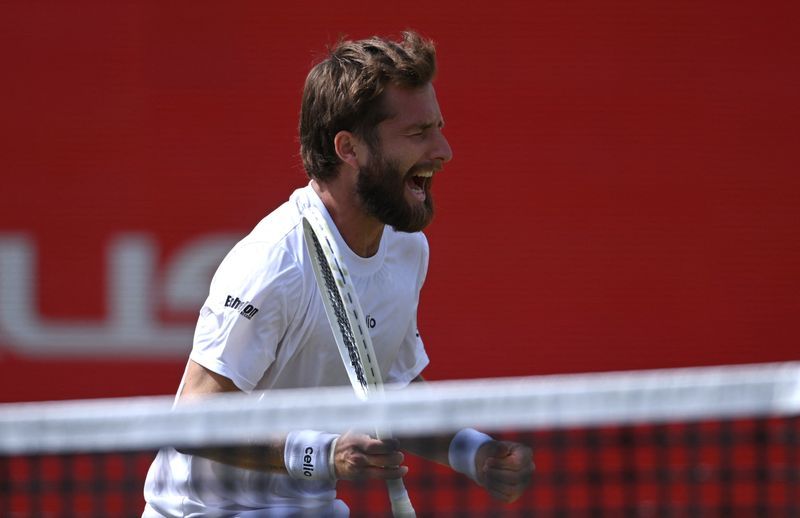
French tennis player Corentin Moutet's appearance at the prestigious Queen's Club tournament in London has turned into a costly lesson in broadcast conduct. The world number 36 was handed a $40,000 fine by the ATP for unsportsmanlike behaviour following a remarkably candid post-match interview with the BBC, effectively eliminating virtually all the prize money he earned by advancing to the second round.
Moutet's troubles stemmed from an on-court interview conducted by the BBC after he defeated fellow Frenchman Giovanni Mpetshi Perricard in the opening round. During the conversation, the 27-year-old used explicit language seven times, including after being asked by the interviewer to refrain from repeating a particular profanity. Rather than comply with the request, Moutet proceeded to utter the same expletive three additional times before the interview was curtailed. Network officials subsequently issued apologies to both the live crowd and television audience for the incident.
The financial consequences have been substantial. Moutet's reward for reaching the second round stood at $43,000, nearly matching the penalty imposed by the ATP. With the fine essentially negating his earnings from the tournament, the player finds himself in the unusual position of having competed at an elite event while seeing minimal financial benefit. The situation reflects the tennis tour's increasing commitment to enforcing standards of professional conduct, particularly in televised settings where broadcasters and sponsors expect a certain level of decorum.
In the aftermath of the interview, Moutet took to Instagram to characterise the incident as humorous, suggesting he had been joking throughout. However, neither the ATP nor the broader tennis establishment appeared convinced by this explanation. The tour's decision to proceed with the substantial fine demonstrates a hardline approach to player behaviour, especially when such conduct occurs in high-profile, live broadcast scenarios that reach millions of viewers globally. The ATP cited unsportsmanlike conduct as the basis for the penalty, and Moutet has subsequently lodged an appeal against the decision.
Moutet's dismissive social media response may have miscalculated the gravity with which modern tennis governing bodies treat public conduct issues. The sport has increasingly sought to position itself as family-friendly and sponsor-conscious, making on-air expletives particularly problematic regardless of the player's intent or tone. For a player ranked outside the top 30, the loss of six figures in prize money represents a meaningful financial setback that could impact career planning and tournament participation decisions.
The incident also reflects a curious moment in the match itself. Moutet's frustration appears to have been triggered when he was struck by an ace on match point, with the serve clocked at 142 miles per hour. The emotional reaction to such a tight moment is not uncommon in professional tennis, where emotions run high during critical junctures. However, the decision to continue swearing after being explicitly asked to cease by the interviewer suggests either a loss of composure or a miscalculation about the entertainment value of such behaviour on live television.
This is not Moutet's first encounter with disciplinary action within professional tennis. His disciplinary record reveals a pattern of conduct issues that extends beyond this Queen's Club incident. In 2022, he was defaulted from the Adelaide International after directing expletives at the umpire during a match against Serbia's Laslo Djere, a serious breach that prevented him from completing the tournament entirely. That same year, the French Tennis Federation distanced itself from Moutet due to broader behavioural concerns, signalling that concerns about his on-court and off-court demeanour extended beyond isolated incidents.
For Malaysian and Southeast Asian tennis followers, the Moutet case underscores how modern professional sports operate within strict frameworks of behavioural expectation, particularly in televised contexts. The ATP's willingness to levy six-figure fines for profanity demonstrates that player conduct is now treated as integral to the sport's commercial value and audience experience. As tennis seeks to grow its global fanbase and attract sponsors, maintaining broadcast standards becomes increasingly important.
The broader implications also extend to how younger players understand professional obligations. Moutet, at 27, is experienced enough to understand broadcasting standards, yet the incident suggests either deliberate boundary-testing or a significant lapse in judgment. Either interpretation raises questions about player development programmes and the education provided to touring professionals about their responsibilities as public figures representing both themselves and the sport.
As Moutet pursues his appeal, the tennis world will be watching to see whether the ATP provides any leniency or whether the penalty stands as issued. His subsequent loss to Spain's Alejandro Davidovich Fokina meant he did not progress beyond the second round, effectively ending his Queen's Club campaign with minimal financial reward and a substantial fine on his record. The lesson appears clear: for professional tennis players, particularly those dependent on tournament earnings, on-air conduct carries significant financial consequences that extend well beyond the momentary satisfaction of uninhibited expression.

