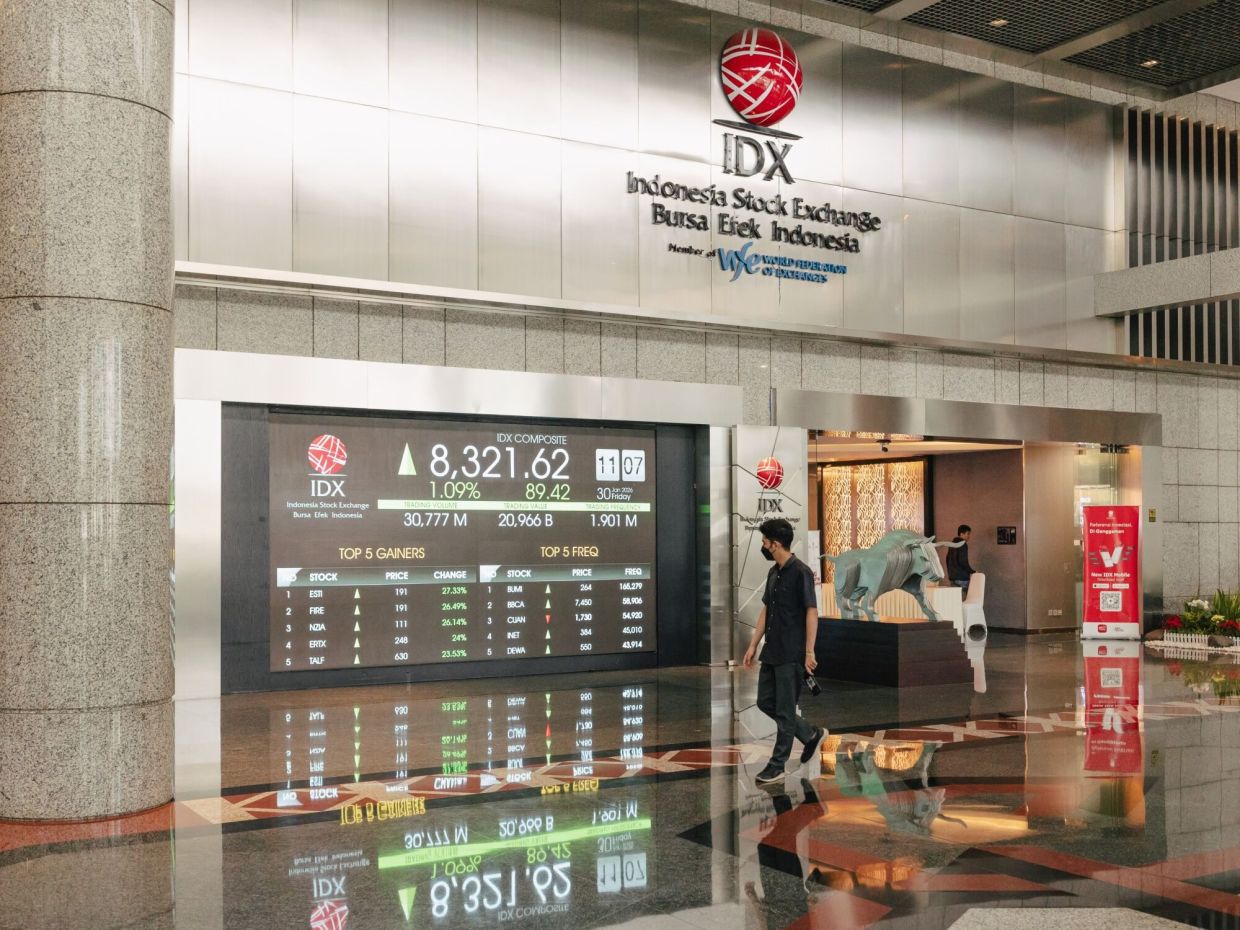
Indonesia's capital markets face mounting international pressure as MSCI, the world's most influential index provider, has deepened its concerns about the country's transparency standards and market integrity. The index operator disclosed on Thursday that it has downgraded Indonesia's information flow criterion to negative status, marking another significant setback for an economy already reeling from the worst stock market performance among major emerging markets. This assessment arrives just days before MSCI announces whether to strip Indonesia of its prized emerging market classification and demote it to frontier status—a verdict that could precipitate capital outflows exceeding $13 billion from a market already under severe pressure.
The core of MSCI's fresh criticism centres on opacity surrounding corporate ownership structures and patterns of coordinated trading activity that undermine the integrity of price discovery. According to the index provider's latest market accessibility review, the lack of visibility into shareholdings prevents global investors from accurately calculating the true free float of listed companies, a fundamental metric for assessing liquidity and determining appropriate index weightings. This problem extends to the structure of Indonesia's currency markets, where MSCI noted the conspicuous absence of an efficient offshore mechanism for the rupiah, while onshore trading faces operational constraints that limit the ability of foreign investors to execute large transactions without significant market impact.
Indonesia's travails on the international investment stage represent a dramatic reversal of fortune. As recently as a decade ago, the nation was celebrated as one of Asia's most dynamic emerging economies, attracting waves of portfolio capital and corporate investment. The $1.4 trillion economy, which was once heralded as a cornerstone of emerging market indices, has instead become a cautionary tale of institutional deterioration and governance concerns. The present crisis was triggered partly by MSCI's January warning about accessibility issues, but it has been compounded by broader economic headwinds and policy uncertainty under President Prabowo Subianto, whose administration's populist measures and fiscal management have raised questions among international credit agencies and capital markets participants about medium-term sustainability.
Authorities in Jakarta responded to January's initial MSCI warning with a series of hasty reforms designed to address the most glaring deficiencies. The financial services regulator doubled the minimum free float requirement for listed companies to 15 per cent, a move intended to reduce concentration risk and improve liquidity. Simultaneously, the chief executives of both the Indonesia Stock Exchange and the Financial Services Authority resigned in coordinated fashion on the same afternoon, signalling an acknowledgment that systemic change was necessary. Yet despite these remedial efforts, confidence has continued to erode. In April, MSCI extended its comprehensive review of Indonesian market accessibility, and in May the index provider took the dramatic step of removing six companies from its indices—most notably firms controlled by prominent tycoons whose ownership structures did not meet international standards for transparency and free float.
The May removals triggered another sharp decline in Indonesian share prices, underscoring how deeply the market's fate is now tethered to MSCI's assessment. This dependency reflects the structural reality of modern global investing, where trillions of dollars in passive capital flows are mechanically allocated based on index inclusion decisions made by a handful of gatekeepers. A formal downgrade would force index-tracking funds to liquidate their Indonesian holdings and pressure active fund managers benchmarked against MSCI indices to reduce their exposure, creating a self-reinforcing cycle of selling pressure that would make it difficult for the market to stabilize in the near term.
Not all market observers interpret MSCI's latest findings as uniformly negative. Mohit Mirpuri, a fund manager at SGMC Capital in Singapore, suggested that the accessibility review, despite its critical tone, was more nuanced than headline concerns might suggest. He noted that only one accessibility measure deteriorated in the latest assessment, while Indonesia maintained competitive scores relative to regional peers including South Korea, China, and India across several important criteria. Mirpuri emphasized that deterioration was not broad-based across the entire accessibility framework, and he maintained that his base case scenario still anticipates Indonesia retaining its emerging market status when MSCI announces its decision the following week.
Yet the broader macroeconomic context makes such optimism challenging to sustain. The rupiah has hit record lows against the US dollar in recent weeks, prompting Bank Indonesia to raise interest rates aggressively in a defensive measure to prop up the currency. This tightening cycle threatens to slow economic growth and increase debt servicing costs for the government and corporations alike. Compounding these pressures, Moody's and Fitch—two of the three major international credit rating agencies—both revised their debt rating outlooks for Indonesia to negative earlier in 2025, citing erosion in policymaking credibility as the primary concern. Their actions reflected alarm about the government's fiscal trajectory and questions about whether institutional constraints would limit the administration's ability to respond to emerging economic challenges.
The damage to investor sentiment has already been quantified in dramatic terms. Indonesia's benchmark Jakarta Composite Index has plummeted 29 per cent since the beginning of 2025, wiping out hundreds of billions of dollars in market value. International portfolio investors, who have historically provided crucial capital to fuel economic expansion, have turned net sellers. Through the early portion of this year, foreign investors have divested approximately $3.65 billion worth of Indonesian equities, a reversal that reflects the loss of confidence among the sophisticated investors who drive capital flows across the region.
This sequence of events has particular implications for Southeast Asia more broadly. Indonesia, as the region's largest economy and a critical node in regional investment flows, faces a test case scenario for how international capital markets respond to governance concerns and transparency shortfalls. A formal MSCI downgrade would not only damage Indonesia's reputation but could also raise questions about institutional quality across other regional markets. International investors might become more cautious in their approach to emerging Southeast Asian markets generally, tightening financial conditions and potentially reducing growth trajectories across the region.
The stakes for Indonesian policymakers in the days leading up to MSCI's decision are extraordinarily high. Beyond the immediate risk of massive capital outflows, a downgrade would carry long-term reputational costs that would make it significantly more difficult and expensive for Indonesia to access international capital markets. Companies seeking foreign investment would face higher borrowing costs, and the government's own refinancing needs would become more challenging. The pressure now falls squarely on Jakarta to demonstrate that the reform measures announced earlier represent genuine institutional change rather than superficial adjustments designed merely to satisfy international regulators.

