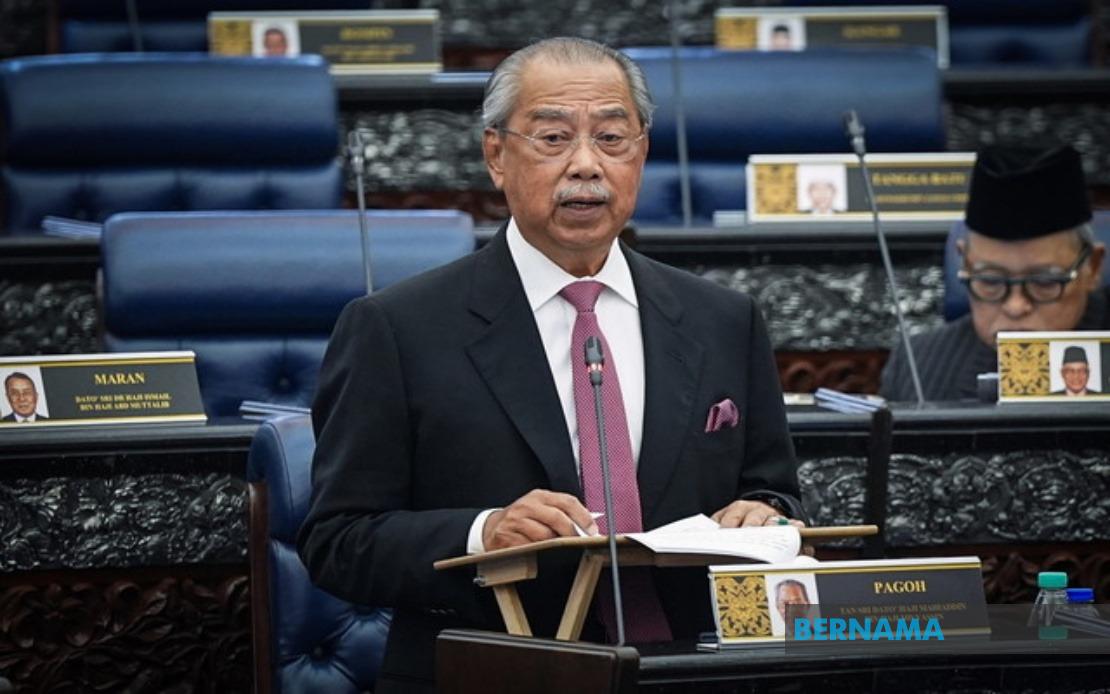
Tan Sri Muhyiddin Yassin, the Pagoh MP and former prime minister, has demanded that the government launch an immediate and thorough forensic audit of Tabung Haji's fund management, with completion required within a year. Speaking during parliamentary debate on the institution's Royal Commission of Inquiry report, Muhyiddin stressed that such an audit was essential given the governance and transparency shortcomings uncovered by the official investigation.
The significance of Muhyiddin's intervention lies not merely in the call for an audit, but in the broader context of public accountability. Tabung Haji, the Islamic pilgrimage savings scheme trusted by millions of Malaysian Muslims, has long been considered a cornerstone of the country's Islamic financial architecture. The RCI's revelations have shaken confidence in the institution, making swift remedial action politically and socially imperative. Muhyiddin's insistence on completing the audit within twelve months reflects recognition that prolonged uncertainty could further erode public trust in both the institution and the government's commitment to resolution.
According to the RCI report, which became public on July 29, Tabung Haji sustained estimated cumulative losses ranging from RM10 billion to RM12.6 billion across the 2014 to 2020 period. These figures, staggering in magnitude, represent decades of accumulated savings belonging to everyday Malaysians preparing for the Hajj pilgrimage. The sheer scale of losses has prompted Muhyiddin to frame this as a matter demanding justice, not merely administrative correction. He emphasized that any individual found responsible for losses through fraud, abuse of authority, or negligence must face legal consequences, underscoring that financial accountability cannot be separated from personal liability.
Muhyiddin's forensic audit proposal targets three critical objectives: tracing the complete movement of funds through the institution's system, identifying fraudulent activity and misconduct, and establishing evidence of negligence that may have contributed to losses. A forensic audit differs fundamentally from routine financial audits in its investigative depth and legal admissibility, making findings potentially prosecutable in court. This distinction matters considerably for Malaysia, where previous corporate scandals and financial irregularities have sometimes resulted in administrative reshuffles rather than criminal convictions. By specifically requesting a forensic audit rather than a conventional review, Muhyiddin is signalling that evidence gathering for potential prosecution should be the priority.
Parallel to Muhyiddin's intervention, Syed Saddiq Syed Abdul Rahman from MUDA-Muar has proposed establishment of a Multi-Agency Task Force to investigate fourteen problematic investments identified in the RCI report. His proposal reflects growing recognition that siloed investigations by individual agencies often fail to uncover systemic corruption. By involving the Malaysian Anti-Corruption Commission, Royal Malaysian Police, and the Inland Revenue Board simultaneously, the task force approach creates accountability mechanisms that transcend departmental boundaries. Syed Saddiq's suggestion to extend investigations beyond Tabung Haji to Felda, FGV Holdings, and Eagle High Plantation also indicates that governance failures in government-linked companies may constitute a broader pattern requiring systematic examination.
The RCI report itself documented 25 recommendations for institutional improvement, with Tabung Haji having implemented seventy-five percent as of late July. Yet recommendations and implementation represent administrative response rather than accountability. The political debate occurring in parliament reflects tension between those seeking reform measures and those demanding prosecution of individuals responsible. Without forensic audit findings establishing culpability with legal rigor, the distinction between administrative failure and criminal wrongdoing will remain uncertain, potentially allowing responsible parties to escape consequences through bureaucratic reshuffling.
BN's Datuk Seri Hasni Mohammad has added another dimension by proposing that enforcement agencies provide regular progress updates within defined timeframes, and that parliament establish continuous bipartisan oversight mechanisms. This suggestion acknowledges that investigations and audits risk becoming indefinitely protracted without explicit public reporting requirements. Malaysian governance history contains numerous examples of inquiries disappearing into bureaucratic processes, with findings never systematically implemented. Hasni's proposal for institutionalized parliamentary monitoring reflects awareness that only sustained legislative attention prevents investigations from becoming forgotten.
The special parliamentary sitting dedicated to the TH RCI report represents a significant commitment of legislative time and attention. However, parliamentary debate and government action remain distinct undertakings. Muhyiddin's intervention carries particular weight because his tenure as prime minister provided frontline experience with governance challenges in government-linked companies. His framing of the issue as requiring both immediate action and firm, uncompromising consequences reflects understanding that public confidence in institutions depends not merely on identifying problems but demonstrating willingness to impose accountability regardless of status or position.
For Malaysian Muslims, the losses documented in the RCI report carry deeply personal implications. Tabung Haji savings represent long-term financial discipline and religious commitment, accumulated specifically for the Hajj pilgrimage obligation. Losses of RM10 billion to RM12.6 billion translate into thousands of individual retirement accounts diminished, pilgrimage plans delayed, and financial security undermined. This dimension makes the forensic audit and investigation proposals not merely administrative matters but touchstones of whether the government takes seriously its fiduciary responsibilities toward citizen savings.
The coming months will test whether political rhetoric translates into concrete action. Announcing an audit is straightforward; conducting it comprehensively within twelve months while maintaining legal standards for evidence collection and prosecution is considerably more demanding. The government must allocate forensic accounting resources, ensure investigating agencies receive proper authorization and support, and resist political pressure that might compromise findings. Additionally, the expectation that a year provides sufficient time to complete forensic audit, investigation, and potential prosecution of complex financial crimes involving multiple institutions and transactions spanning six years constitutes an ambitious timeline that may prove unrealistic.
Regionally, Malaysia's experience with Tabung Haji governance and subsequent investigation will likely influence how other Southeast Asian countries approach Islamic financial institutions. Several ASEAN members operate similar pilgrimage savings schemes or religiously-structured financial products. If Malaysia's response appears effective and rigorous, it may establish regional standards for accountability. Conversely, if investigations stall or individuals escape consequences, it will undermine confidence in institutional frameworks across the region.
The forensic audit proposal ultimately reflects deeper questions about institutional accountability in Malaysia's governance system. Whether comprehensive investigation proceeds swiftly and leads to prosecution of wrongdoers will signal whether government-linked companies operate under the same legal standards as private enterprises, and whether democratic institutions can effectively constrain abuse of power within their own structures. Muhyiddin's twelve-month timeline functions as both deadline and test of governmental resolve.

