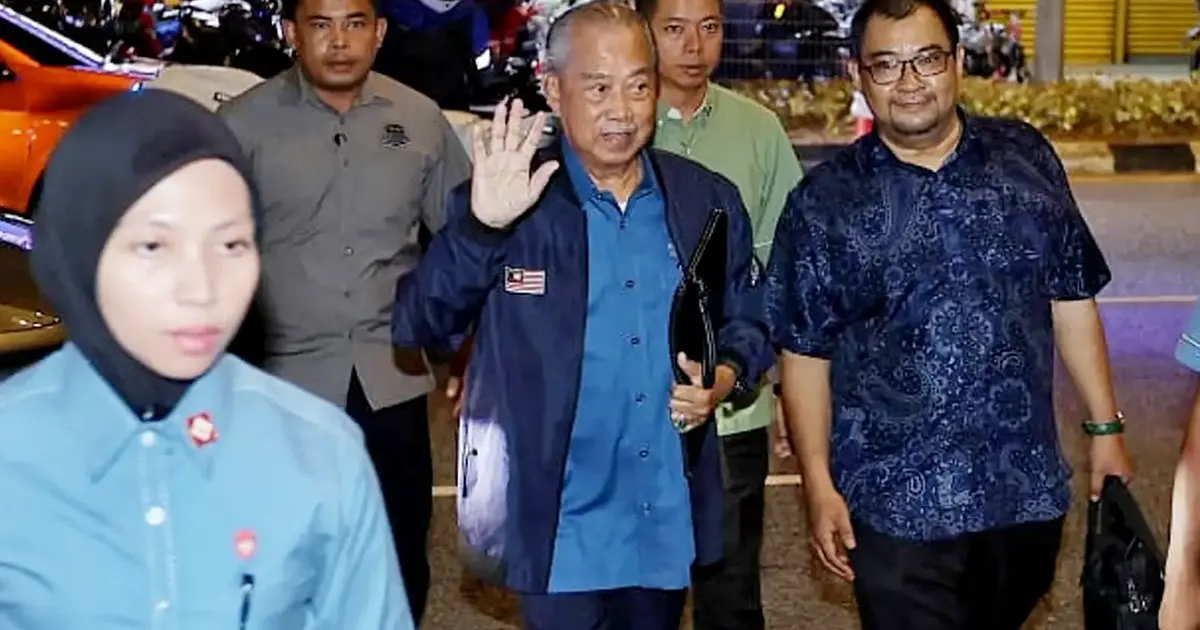
Tan Sri Muhyiddin Yassin has convened an urgent meeting of Perikatan Nasional leadership as the opposition coalition faces a significant rupture with PAS's formal exit, creating immediate uncertainty about Bersatu's future direction and viability as a political force. The hastily arranged session represents a critical moment for an alliance already fragmented by internal disputes and shifting electoral calculations, with Bersatu's position now precarious as its largest coalition partner departs.
PAS's departure marks a watershed moment for Perikatan Nasional, which emerged as a serious opposition bloc following the 2022 collapse of the Pakatan Harapan government. The Islamic party's decision to sever ties effectively dismantles the tripartite structure that gave the coalition credibility and geographic reach across multiple constituencies. This development strikes at the heart of the opposition's claim to offer voters a coherent alternative to the Pakatan Harapan-Barisan Nasional alliance that currently governs the country.
For Bersatu specifically, the loss of PAS as a coalition anchor removes both political leverage and the perception of a unified bloc capable of challenging the government. Muhyiddin's party, which controls a modest parliamentary contingent, had relied on the coalition framework to amplify its influence and demonstrate viability beyond its base in Johor and peninsular strongholds. Without PAS's substantial parliamentary presence and its deep roots in rural constituencies, Bersatu risks appearing as merely a mid-sized regional party rather than a credible national opposition force.
The emergency gathering also reflects mounting pressure on Bersatu from multiple directions. Within the party, members are likely questioning leadership decisions that positioned Bersatu within a collapsing coalition structure, while external observers question whether the party's interests are better served through other alliances or a negotiated arrangement with the federal government. This internal tension creates potential for defections and further destabilization if the party cannot articulate a compelling strategic direction.
PAS's withdrawal follows months of deteriorating relations and competing narratives within the opposition alliance. The Islamic party has increasingly pursued independent political positioning, particularly in state-level politics where it governs Kelantan and Terengganu. This move allows PAS to negotiate separately with the federal government and pursue specific policy agendas without the constraints of coalition coordination, a calculation that appears to have won internal support from party leadership.
The implications for Malaysia's political landscape extend beyond the coalition's internal mechanics. A weakened or fragmented opposition raises questions about governmental accountability and the competitive dynamics in the next general election. With Perikatan Nasional effectively broken as a cohesive force, the political center now appears dominated by the Pakatan Harapan-Barisan Nasional arrangement, potentially reducing the electoral incentive for voters seeking change through opposition voting.
Bersatu faces several difficult options emerging from tonight's discussions. The party could attempt to rebuild Perikatan Nasional through reconciliation with PAS, though the immediate circumstances suggest such efforts would face steep obstacles. Alternatively, Bersatu could pursue merger conversations with other opposition components, though such moves would require accepting subordinate positioning within potentially larger coalitions. A third path involves Bersatu seeking rapprochement with the federal government, though this option carries significant reputational costs given Muhyiddin's previous tenure as Prime Minister and his current opposition credentials.
Southeast Asia's broader political context adds urgency to Bersatu's deliberations. Throughout the region, opposition coalitions have struggled to maintain cohesion when faced with resource disadvantages and internal ideological conflicts. Thailand and Indonesia have witnessed similar opposition fragmentation, offering cautionary examples for Malaysian opposition leaders contemplating their party's trajectory. The regional pattern suggests that Bersatu's current predicament reflects systemic challenges affecting opposition politics throughout Southeast Asia.
The timing of PAS's exit also suggests calculations about Malaysia's electoral calendar and government stability. With the next general election likely several years away, political actors are repositioning for the medium term rather than preparing for immediate polling day. PAS appears to have concluded that independent positioning offers greater long-term advantage than remaining bound to a coalition that lacks clear prospects for governmental formation.
For Bersatu supporters and members, tonight's meeting carries existential significance for the party's future relevance. The decisions emerging from these discussions will shape whether Bersatu remains a meaningful political player or gradually diminishes into irrelevance. Muhyiddin's leadership will face intense scrutiny for strategic choices that brought the coalition to this juncture and for forward planning that determines whether Bersatu can recover political momentum.
Regional observers are watching this development closely as it reflects broader questions about opposition capacity in Malaysia and Southeast Asia more broadly. The effectiveness of opposition politics fundamentally depends on the ability of parties to forge and maintain functional coalitions. Bersatu's current challenge exemplifies the difficulties inherent in sustaining such arrangements when member parties pursue divergent electoral interests and ideological agendas.

