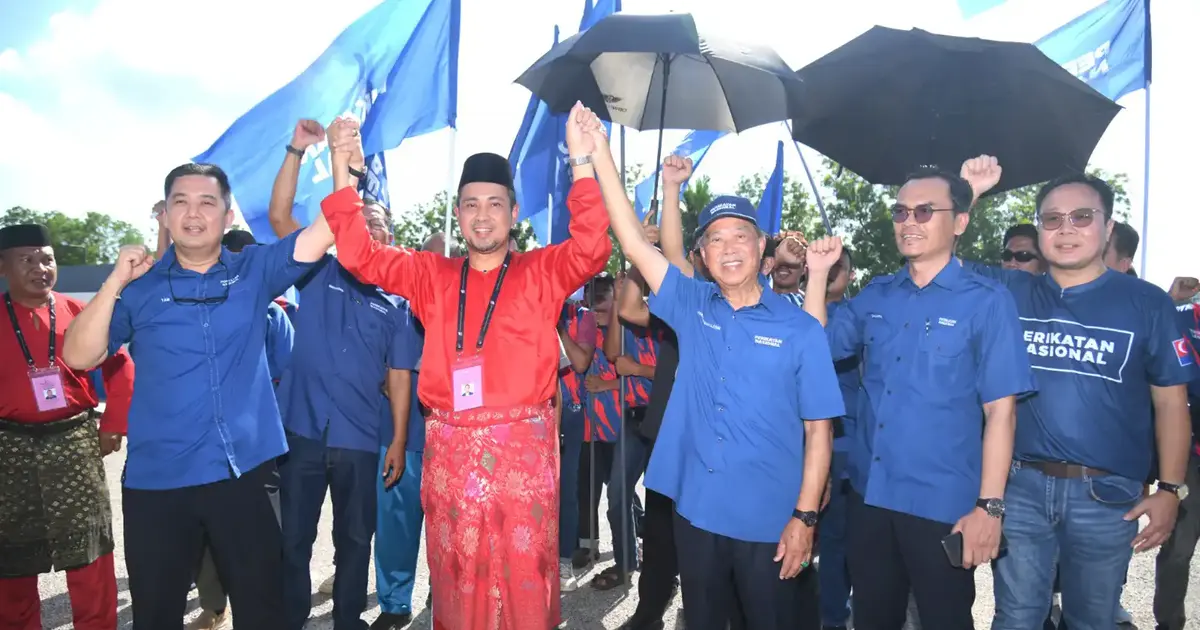
Bersatu has adopted a measured response to PAS's recent decision to withhold party machinery assistance, with party president Muhyiddin Yassin emphasizing that the coalition respects individual members' autonomy in resource allocation. The statement marks a diplomatic handling of what could have escalated into tension within the broader Perikatan Nasional alliance, one of Malaysia's most significant political blocs over the past five years.
Muhyiddin's remarks underscore a critical philosophy underpinning Perikatan Nasional's sustainability: that cooperation, while fundamental to the coalition's identity and electoral strategy, cannot be enforced through coercion or ultimatums. This principle assumes particular importance given the diverse composition of PN, which brings together parties with distinct organizational structures, membership bases, and strategic priorities. The acknowledgment that parties maintain discretion over their internal resources suggests a deliberate effort to prevent the kind of intra-coalition disputes that have fractured previous Malaysian political alliances.
The machinery issue itself reflects practical realities of modern Malaysian politics. In electoral campaigns, party machinery encompasses volunteer networks, logistical support, ground-level mobilization capacity, and organizational infrastructure that can significantly influence results in marginal constituencies. When one coalition partner declines to share these assets with allies, it necessarily affects campaign efficiency and reach in shared battlegrounds. The refusal thus carries tangible implications rather than representing merely symbolic friction.
PAS's decision to retain its machinery exclusively may stem from several calculated considerations. The Islamic party has cultivated an extensive grassroots network, particularly in peninsular states where it maintains substantial presence and electoral competitiveness. These organizational assets represent years of investment and constitute strategic advantages in constituencies where PAS contests either as a coalition member or potentially independent candidate. Withholding this machinery could reflect PAS's desire to preserve negotiating leverage, maintain organizational autonomy, or signal boundaries around Perikatan Nasional's integration.
For Bersatu, accepting this position without confrontation demonstrates confidence in its own organizational capacity and political positioning. The party, which emerged from Mahathir Mohamad's departure from UMNO in 2020, has constructed its own machinery within the timeframe of its existence. By accepting PAS's stance gracefully, Bersatu avoids escalating internal PN tensions at a moment when the coalition navigates complex dynamics involving potential cooperation with other political entities and broader national political realignments.
The Perikatan Nasional coalition itself remains strategically significant in Malaysian politics. Formed as an alternative to the Barisan Nasional-Pakatan Harapan duopoly, PN comprises Bersatu, PAS, and historically UMNO, though recent years have seen shifting configurations. The coalition's sustainability depends substantially on maintaining functional relationships despite occasional disagreements over resource sharing, candidate selection, and strategic direction. Muhyiddin's diplomatic framing of the machinery question contributes to preserving this delicate equilibrium.
From a broader Southeast Asian perspective, such intra-coalition negotiations reflect patterns seen across the region's multiparty democracies. Political blocs in Indonesia, Thailand, and the Philippines routinely manage tensions between autonomy and collective action, between organizational self-interest and coalition solidarity. Malaysia's handling of such disputes within PN offers lessons about coalition management in diverse, federalized political systems where state-level politics intersect with national coalition concerns.
The timing of these statements carries significance as Malaysian politics enters a cyclical period where both state and federal elections loom as possibilities. Coalition stability becomes increasingly valuable when electoral contests approach, yet paradoxically coalition tensions often surface during campaign preparation phases when resource competition intensifies. Muhyiddin's emphasis on voluntary cooperation rather than mandatory resource-sharing may represent strategic framing designed to preempt further disputes as parties prepare campaign machinery for potential electoral contests.
For Malaysian readers and regional observers, this episode illustrates the sophisticated negotiation required to sustain multiparty coalitions in complex political environments. Unlike monolithic parties or tightly-controlled alliances, Perikatan Nasional operates as a looser federation where members retain organizational autonomy while coordinating on electoral strategy and policy positions. This structure provides flexibility and allows parties to maintain distinct identities, but requires constant diplomatic management to prevent disagreements from metastasizing into coalition-threatening crises.
Looking forward, Bersatu's response establishes precedent: when coalition partners decline resource-sharing requests, the default approach is accommodation rather than escalation. This normalizes a negotiating framework where mutual support exists within boundaries defined by individual party interests. Whether this philosophy proves sufficient for maintaining PN's cohesion through inevitable future disputes over resources, candidate selection, and leadership will substantially determine the coalition's longevity and effectiveness in Malaysian politics over coming years.

