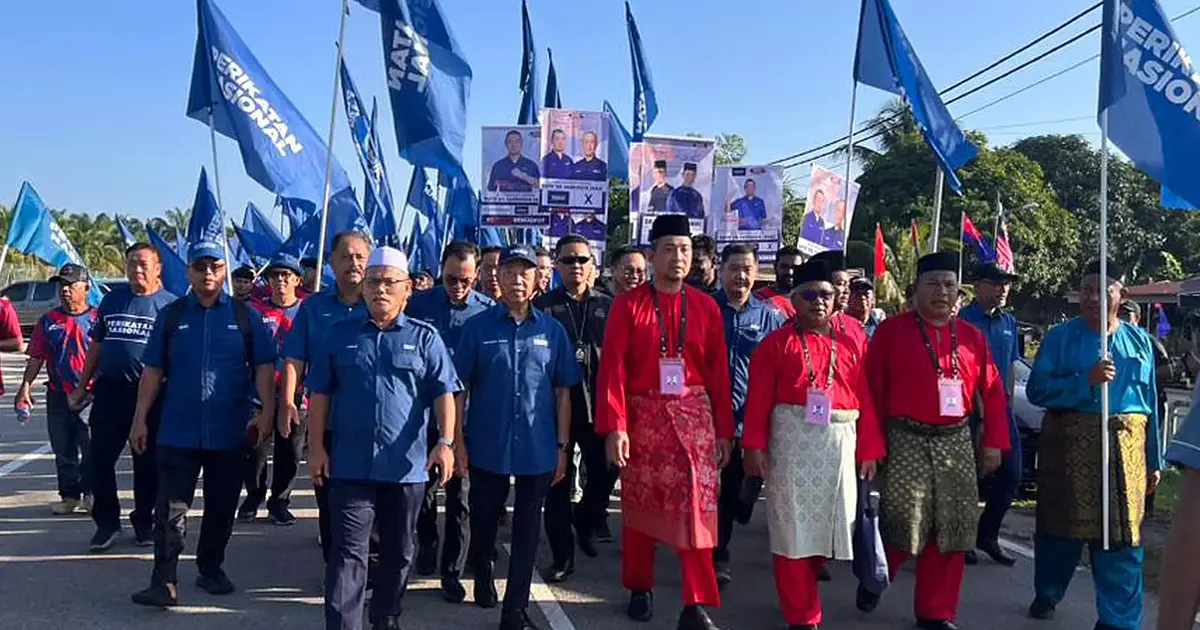
Perikatan Nasional made a conspicuous display of organisational muscle at the Bukit Kepong state constituency, with party chairman Muhyiddin Yassin joining a substantial contingent of supporters in backing the coalition's chosen candidate. The mobilisation signals the opposition's determination to consolidate support in what appears to be a competitive battleground, underscoring the intensifying struggle for voter favour ahead of the next electoral cycle.
Dr Sahruddin Jamal carries considerable incumbency credentials into the contest. Having served two consecutive terms as the assemblyman, he brings established presence and track record in the constituency. His nomination by Bersatu, the largest component party in Perikatan Nasional, reflects the coalition's confidence in his ability to retain the seat and build on existing voter relationships developed through two terms of representation.
The scale of the gathering—described as hundreds of supporters—demonstrates that Perikatan Nasional has mobilised significant grassroots infrastructure around this particular contest. Such displays serve multiple tactical purposes: they energise the party faithful, generate visual evidence of popular support for media consumption, and create momentum that can influence undecided voters through perceived momentum and organisational prowess. The presence of a high-profile figure like Muhyiddin at such an event underscores the importance attached to this particular seat within the broader regional political calculus.
For Malaysian observers, the Bukit Kepong campaign reveals the mechanics of contemporary opposition politics under Perikatan Nasional's leadership. The coalition, formed as an alternative to the previous Barisan Nasional-Pakatan Harapan arrangements, has increasingly sought to position itself as a cohesive political force rather than a loose federation of convenience. Dr Sahruddin's candidacy and Muhyiddin's active participation suggest Perikatan is investing capital in demonstrating disciplined party structures and unified messaging.
The involvement of such significant party apparatus and leadership in a state-level contest also speaks to the competitive intensity of Malaysian politics at present. State assemblyman seats, while individually representing smaller voter bases than parliamentary constituencies, collectively determine which coalition controls state government, with implications for resource allocation, development priorities, and patronage networks. A loss or gain in any single seat contributes incrementally toward broader control of state legislative chambers.
Geographically and politically, Bukit Kepong's significance within the broader Perikatan Nasional strategy deserves consideration. The constituency's composition—urban, semi-urban, or rural elements—shapes the voter concerns and communication strategies employed. Dr Sahruddin's two prior victories suggest he has successfully navigated these elements, though electoral contexts shift with boundary changes, demographic evolution, and broader national political sentiment.
Muhyiddin's personal participation in the campaign rally reflects the Perikatan chairman's approach to maintaining coalition cohesion. By physically appearing alongside candidates and their supporters, senior leadership provides visible encouragement and directs media attention toward chosen battlegrounds. This also allows Muhyiddin to maintain the high political profile necessary for managing Perikatan's component parties and navigating the complex alliance dynamics that define Malaysian coalition politics.
The broader context for Malaysian electoral politics involves fundamental questions about governance and representation. State constituencies like Bukit Kepong serve as laboratories where voters assess candidate performance, party platforms, and coalition efficacy. The outcome here will contribute to overall assessments of whether Perikatan Nasional can successfully challenge incumbent administrations and offer credible governance alternatives.
For regional observers, the Malaysian state-level campaign dynamics offer insights into how opposition coalitions function in Southeast Asian democracies. Perikatan Nasional's capacity to mobilise supporters, field credible candidates, and coordinate messaging across multiple component parties demonstrates the organisational requirements for political contestation in a mature electoral system. Dr Sahruddin's nomination and campaign support illustrate how individual political careers embed within broader coalition structures.
The Bukit Kepong campaign also reflects continuing demographic and geographic redistribution of political influence within Malaysia. As constituencies evolve and voter preferences shift, political parties must continually recalibrate their strategies and candidate selections. Dr Sahruddin's incumbency advantage will be tested against these underlying currents, and his performance will provide indicators of Perikatan Nasional's momentum heading into potential broader electoral contests.
As campaigns accelerate, the visible energy behind Dr Sahruddin's candidacy—evidenced by Muhyiddin's presence and the substantial supporter turnout—conveys that Perikatan Nasional views Bukit Kepong as contested terrain worth defending with senior leadership attention. Whether this grassroots mobilisation translates into electoral success will depend on factors extending beyond symbolic displays, including actual constituent engagement with policy positions and assessments of candidate credibility on local issues affecting daily lives.

