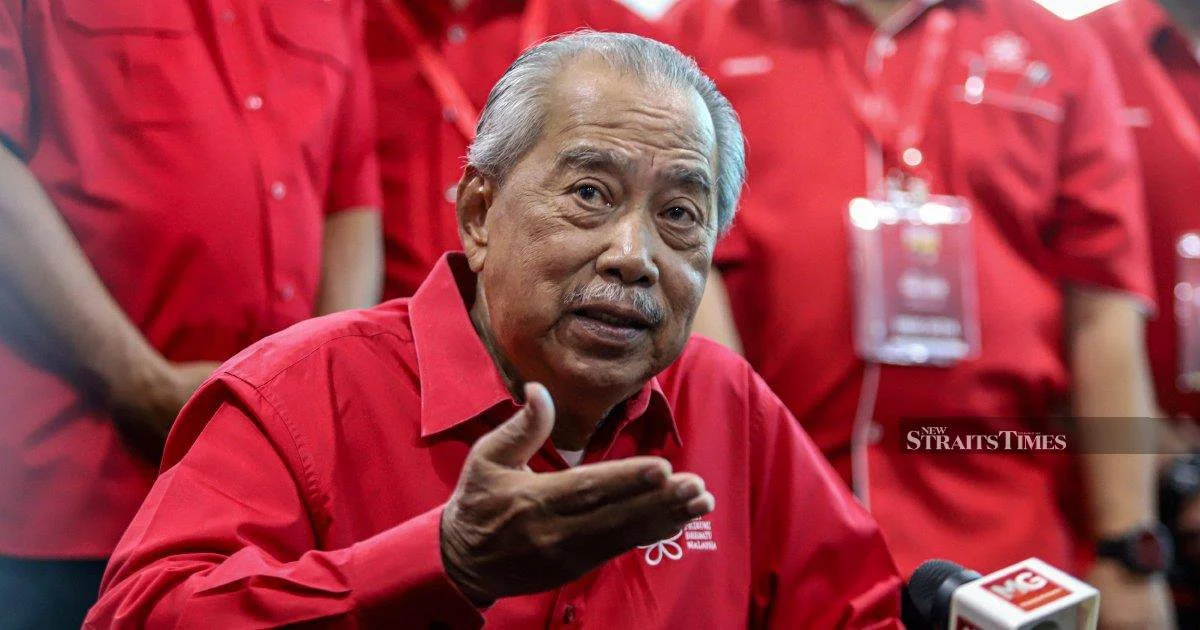
Bersatu will maintain its position within the Perikatan Nasional (PN) coalition permanently, according to party president Tan Sri Muhyiddin Yassin, even as observers continue to question the stability and trajectory of the political grouping. His unequivocal declaration appears designed to counter persistent rumours about the coalition's durability and the potential realignment of its member parties, issues that have periodically dominated political commentary in the country.
The Perikatan Nasional coalition, which comprises several political parties across different states, has faced recurring scrutiny regarding its structural cohesion and long-term viability. Since its formation, the alliance has navigated various internal tensions and external pressures that have led analysts to periodically assess whether member parties might seek alternative political arrangements. Muhyiddin's latest statement represents an attempt to provide reassurance to coalition partners and supporters that Bersatu views its membership as a permanent political commitment rather than a tactical accommodation.
Bersatu's position within the broader Malaysian political landscape carries particular significance given the party's relatively recent establishment and its evolving relationship with other major political players. The party emerged from a complex political environment and has subsequently sought to consolidate its influence through strategic coalition arrangements. The Perikatan Nasional partnership has afforded Bersatu the opportunity to participate in governance at both federal and state levels, contributing to its political consolidation during a period of significant transformation in Malaysian politics.
Muhyiddin's statement addresses speculation that has surfaced periodically regarding potential shifts in coalition dynamics. Political observers and commentators have occasionally raised questions about whether Bersatu might explore alternative alignments with other political forces, particularly given the fluid nature of Malaysian coalition politics and the tendency for parties to reassess their strategic positioning based on evolving political circumstances. Such speculation, whether founded or speculative in nature, can undermine coalition unity and create uncertainty among both supporters and government partners.
The timing of Muhyiddin's reassurance carries relevance given the current state of Malaysian politics. With various parties continuously evaluating their political strategies and the possibility of future electoral contests, the clarity provided by the Bersatu president regarding his party's coalition commitment serves to stabilise expectations among PN members and supporters. This type of explicit affirmation helps to distinguish between temporary tactical cooperation and fundamental strategic alliance.
From a Malaysian political perspective, coalition stability remains a significant consideration given the fragmented nature of the party system and the complexity of building and maintaining working majorities in Parliament. Political groupings that can demonstrate internal cohesion and long-term commitment tend to function more effectively as governing arrangements than those characterised by constant internal repositioning and uncertainty. Muhyiddin's statement thus serves a stabilising function within the coalition framework.
For Southeast Asian observers, the Malaysian coalition dynamics reflect broader patterns of political party alignment in the region, where multi-party systems frequently require coalition arrangements to establish effective governance structures. The ability of coalitions to maintain coherence over extended periods often depends on clear communication regarding the intentions and commitments of member parties, alongside tangible distributions of power and resources that reward coalition participation.
Bersatu's continued membership in Perikatan Nasional carries implications for state-level politics as well, particularly in states where PN maintains significant presence or holds executive authority. Coalition stability at the federal level typically contributes to more predictable governance arrangements at subnational levels, reducing the likelihood of sudden political shifts that could undermine policy continuity or create administrative disruption.
The statement by Muhyiddin also reflects the broader imperative for political parties in Malaysia to provide their supporters and coalition partners with clear strategic direction. In an environment where political calculations frequently change and coalition alignments face periodic recalibration, explicit commitments from party leadership regarding the party's fundamental strategic orientation provide a counterweight to rumour and speculation that can otherwise undermine political stability.
Moving forward, the actual durability of the Perikatan Nasional coalition will depend not only on formal declarations of commitment from party leaders but also on the coalition's demonstrated ability to function effectively as a governing arrangement and to deliver tangible benefits to its participating parties and their constituencies. The coalition's capacity to navigate internal disagreements, manage resource distribution equitably, and maintain relevance in a changing political environment will ultimately determine whether Muhyiddin's declaration of permanent commitment translates into sustained practical reality.

