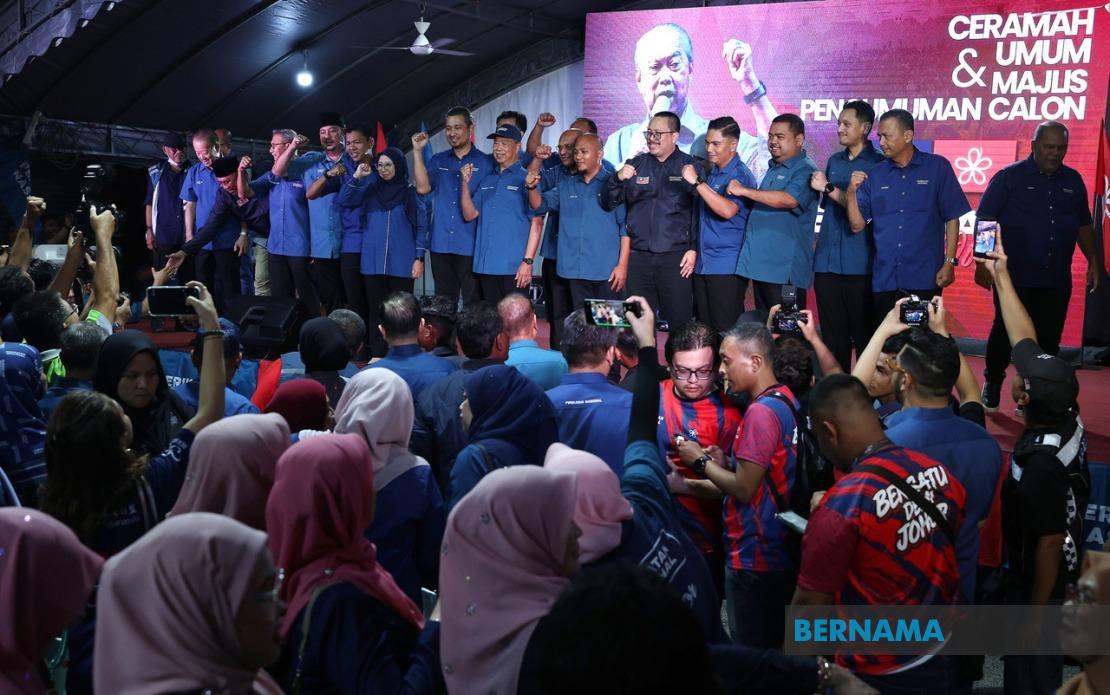
Tan Sri Muhyiddin Yassin, president of Parti Pribumi Bersatu Malaysia (Bersatu), unveiled the party's full slate of 16 candidates for the 16th Johor State Election at an event held in Muar on June 25. The announcement ceremony, featuring a public ceramah and candidate presentation, took place at the Pagoh Parliamentary Service Centre in Taman Pagoh Jaya, drawing party supporters and media attention as the polling campaign intensifies across the southern state.
The timing of the candidate announcement comes as Johor embarks on a crucial electoral contest that will reshape the state's political landscape. The Election Commission has designated June 27 as nomination day, providing candidates and their supporting parties a final opportunity to submit official documentation before the formal campaign period begins in earnest. Voting will take place on July 11, representing the first major test of electoral sentiment in Johor following the state assembly's dissolution on June 1.
Bersatu's participation with a full slate of 16 candidates reflects the party's determination to establish a meaningful presence in Johor's political arena. As a component party within the broader Perikatan Nasional coalition, Bersatu's performance in these elections carries implications beyond Johor itself, potentially influencing coalition dynamics and intra-party positioning heading into future federal considerations. The party's candidate list includes Mohd Idzharruddin Mohd Nasirruddin, who will contest in the N8 Bukit Pasir constituency.
For Malaysian political observers, Johor's state election represents a significant barometer of voter sentiment, given the state's economic importance and its role as a bellwether for peninsular politics. The state accounts for substantial industrial and agricultural output and maintains strategic geographic significance bordering Singapore. Elections here often preview patterns that emerge in later federal contests, making the outcome relevant to analysts tracking national political trajectories.
Bersatu's strategic positioning in Johor comes amid broader conversations about coalition stability and party performance at the state level. The party, which emerged from a 2016 split within UMNO, has sought to establish itself as a credible alternative within Malaysia's political spectrum. Its decision to field a complete slate of candidates in all 16 contested seats signals confidence in its organizational capacity and appeal among voters across diverse constituencies.
The Johor election occurs within a context of evolving voter preferences and coalition recalibrations across Malaysia. Since the 2022 federal election that produced a unity government arrangement, state-level contests have provided crucial data points regarding the stability of various political coalitions and the durability of voter support for different party groupings. Johor's results will offer insights into whether current federal arrangements enjoy sustained grassroots backing or whether fissures have emerged.
Muhyiddin's direct involvement in announcing candidates personally underscores the high stakes Bersatu attaches to this election. As party president, his public endorsement of each candidate and his presence at the campaign event serve to legitimize the slate and signal party unity heading into the polling period. Such visible leadership engagement often translates into organizational focus at lower party levels, influencing the intensity and coordination of ground-level campaign activities.
The fourteen-day period between nomination day and polling day will determine the intensity and focus of each party's campaign machinery. During this window, Bersatu candidates will seek to consolidate support among voters in their respective constituencies, addressing local concerns and articulating the party's policy positions on issues ranging from economic development to education and healthcare provision. The campaign period provides opportunities for undecided voters to evaluate candidates and their policy platforms.
For Johor's electorate, the 2024 state election presents a choice among competing visions for the state's future development and governance. Bersatu's 16 candidates will argue their case before voters across the state's diverse constituencies, which encompass urban centres, agricultural regions, and industrial zones. The party's performance will be measured not merely in terms of absolute seat wins but also in the breadth of its support and its ability to translate candidate nominations into actual electoral victories.
The outcome of Johor's election will carry consequences extending beyond state boundaries. Malaysia's political system remains highly federalized, with state governments wielding significant authority over land, education, and local economic matters. Control of the state assembly determines policy direction on these crucial issues, while also influencing the balance of power within broader coalition arrangements that affect national governance. Bersatu's electoral performance here will therefore shape not only Johor's immediate political future but also contribute to evolving patterns in Malaysia's broader political landscape as the nation approaches subsequent electoral contests.

