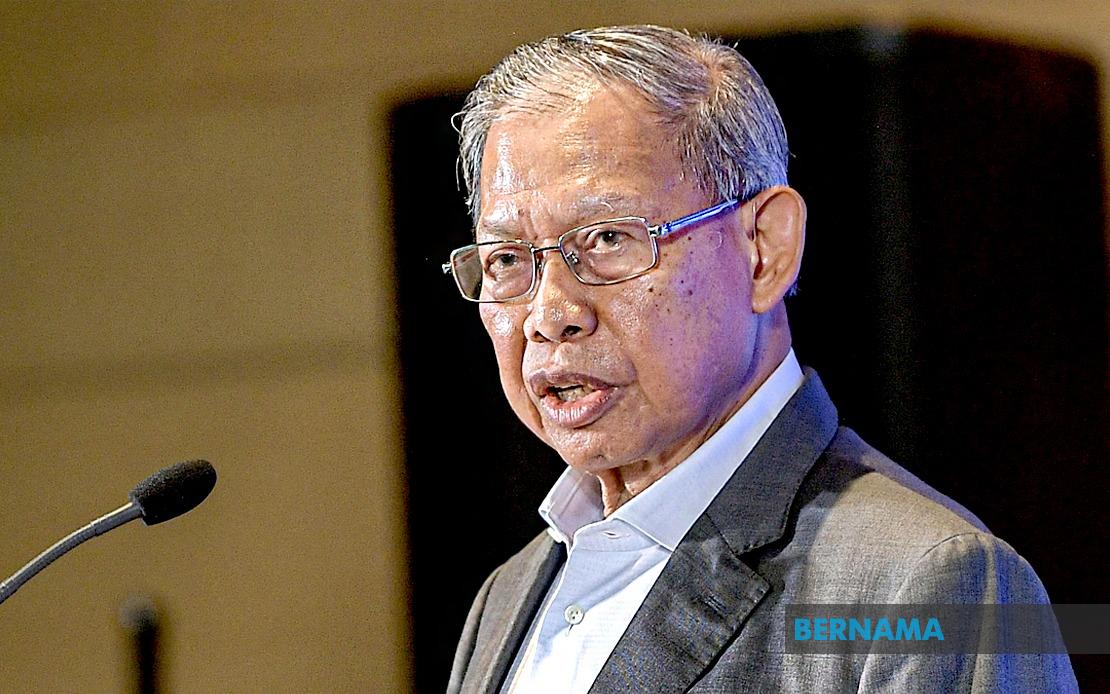
At 76 years old, former Jeli Member of Parliament Datuk Seri Mustapa Mohamed has made clear that his days as an electoral candidate are behind him. Speaking at a "Welcome Home" celebration and Independence Month event in Pasir Mas organized by the Council of Former Kelantan Elected Representatives, Mustapa reaffirmed his decision to stay out of the 16th General Election (GE16), marking a deliberate shift toward mentorship over continued personal political ambition.
Mustapa's declaration carries particular weight given his recent return to UMNO in June, which raised speculation about potential electoral involvement. However, the veteran statesman has opted instead to use his party reinstatement as a platform for supporting the organization without seeking office himself. This choice reflects both a pragmatic acknowledgment of advancing age and a deliberate statement about the necessity of leadership renewal within Malaysia's political landscape, where demographic shifts are reshaping voter expectations and party hierarchies alike.
The former Minister of International Trade and Industry articulated his reasoning with candour, noting that physical limitations naturally accompany aging. He emphasized that parties have an obligation to recognize the capabilities and potential of younger members, and that denying them advancement opportunities would represent a breach of that responsibility. This framing casts his withdrawal not as retirement but as a conscious clearing of space for emerging political talent, an important distinction that reflects changing attitudes toward succession planning within UMNO.
Despite stepping away from electoral politics, Mustapa signaled that his contribution to UMNO remains substantial, albeit recalibrated toward behind-the-scenes influence. He outlined plans to leverage his experience through advisory roles, offering younger colleagues strategic guidance and institutional knowledge accumulated across decades of ministerial service. This positioning allows him to maintain relevance and influence within party structures while acknowledging biological realities that make sustained campaigning problematic.
The former MP's emphasis on knowledge transfer represents a potential model for how long-serving Malaysian politicians might transition from direct power-holding to foundational support roles. Rather than clinging to electoral viability through contested nominations or factional maneuvering, Mustapa has embraced a role centered on institutional memory and mentorship. Such approaches, if replicated elsewhere, could mitigate generational tensions that have historically created friction within UMNO and other parties.
Beyond his immediate party commitments, Mustapa indicated his intention to engage with Malaysia's educational sector, particularly higher learning institutions both public and private. This academic dimension of his post-electoral career suggests an understanding that political knowledge and experience maintain value in non-partisan contexts, and that younger generations benefit from exposure to seasoned practitioners even outside formal party structures. Educational engagement also provides a less partisan platform for promoting his vision of Malaysian excellence.
Mustapa's political trajectory itself warrants examination in this context. He left UMNO in September 2018 to join Bersatu, a party founded to challenge UMNO's electoral dominance, only to return to the organization he initially departed from. His journey mirrors broader transformations within Malaysian politics, where coalition realignments and leadership transitions have regularly prompted high-profile movements between parties. His latest decision to accept an elder statesman role within UMNO suggests a consolidation phase, where the fluidity of recent years has given way to a more settled political positioning.
For UMNO specifically, Mustapa's withdrawal from electoral competition removes one established name from the candidate field heading toward GE16, necessitating the party to either elevate existing mid-tier figures or develop new candidates entirely. This creates both opportunity and challenge: opportunity for fresh faces to emerge, challenge in ensuring sufficient experience balances any youthful enthusiasm. The party's ability to facilitate such transitions while retaining organizational coherence will partly determine its electoral competitiveness.
The Malaysian political landscape generally stands at an inflection point regarding generational transition. Voters increasingly favor candidates who represent demographic renewal, particularly in constituencies where younger populations predominate. Simultaneously, parties require institutional depth and continuity to maintain organizational effectiveness. Mustapa's model of transitioning from electoral candidacy to mentorship-based participation offers one pathway through this tension, though its success depends on whether younger beneficiaries of such guidance actually translate it into effective governance and whether parties genuinely empower the next generation rather than simply managing their ascent.
From a Southeast Asian perspective, Malaysia's democratic system continues confronting universal challenges about succession, legitimacy, and leadership renewal. Mustapa's decision invites comparison with how other regional democracies manage elder statesmen and the transition of institutional power. Some neighboring countries have struggled precisely because senior figures refused to step aside, calcifying political structures and limiting opportunities for renewal. Conversely, others have benefited from systematic knowledge transfer that preserved institutional capacity while refreshing electoral appeal.
Mustapa's stated commitment to ensuring Malaysia "regains its excellence" encapsulates a broader anxiety within Malaysian political discourse about national trajectory and competitive standing regionally. This framing suggests that generational renewal, in his view, comprises not merely internal party management but essential national strategy. Whether younger leaders share this vision, and whether they can effectively build upon foundations laid by predecessors like Mustapa, will significantly influence Malaysian political development through the remainder of this decade.

