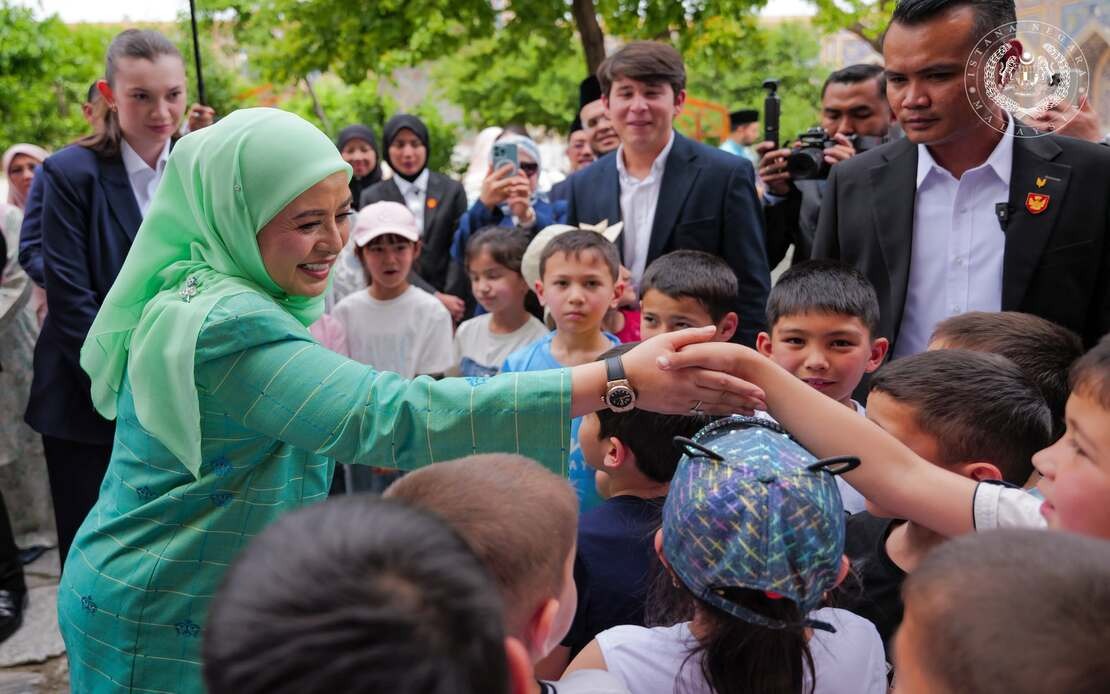
Her Majesty Raja Zarith Sofiah, Queen of Malaysia, has reaffirmed mutual respect as a defining characteristic of Malaysian society and a critical pillar sustaining the nation's multicultural stability. In remarks shared through the official Facebook page of Sultan Ibrahim Sultan Iskandar, the Queen highlighted how this value has consistently underpinned both national unity and the broader well-being of Malaysians across generations, positioning respect not merely as a social courtesy but as a foundational principle woven into the country's identity.
The Queen's emphasis on mutual respect carries particular significance at a time when societies worldwide grapple with polarisation and social fragmentation. By anchoring her message in this value, Raja Zarith Sofiah addressed a concern that resonates across multicultural nations in Southeast Asia, where maintaining harmony across diverse religious, ethnic, and cultural communities requires deliberate commitment to shared principles. Her remarks serve as a reminder that Malaysia's relative stability compared to some regional peers rests substantially on citizens' willingness to treat one another with dignity and consideration.
Central to the Queen's message was her citation of Islamic teachings, specifically a hadith transmitted by Al-Bukhari and narrated by Abu Hurairah. The hadith contains three interconnected directives attributed to Prophet Muhammad: believers should refrain from harming their neighbours, should honour their guests generously, and should communicate only with kindness or choose silence. By invoking this religious text, the Queen deliberately grounded her call for mutual respect in the faith tradition practised by Malaysia's Muslim majority, demonstrating how Islamic values and secular notions of civility converge on the importance of respectful conduct.
The three components of the prophetic hadith each address different dimensions of social responsibility. The prohibition against harming neighbours extends beyond physical harm to encompass emotional, reputational, and economic injury—a broad conception of neighbourly duty that encompasses everyone in one's community. The instruction to honour guests reflects the Islamic tradition of hospitality and suggests an obligation to welcome outsiders with warmth, a principle particularly relevant to a nation that welcomes tourists and migrant workers. The final directive regarding speech implicitly acknowledges that words carry power and that silence can sometimes demonstrate greater wisdom and restraint than speech, encouraging thoughtfulness in public discourse.
The Queen's decision to highlight these teachings reflects a deliberate choice to frame national harmony not as an imposed top-down requirement but as emerging organically from deeply held religious and cultural values. This rhetorical strategy addresses both Muslim and non-Muslim Malaysians: Muslims are reminded of obligations rooted in their faith tradition, while others are invited to recognise that these religious principles align with universal values of respect and dignity that transcend religious boundaries. Such framing strengthens the moral case for harmonious coexistence by presenting it as something believers actively choose rather than something imposed by government.
The Queen's remarks were contextualised by reference to a visit in February when she interacted warmly with more than 100 international tourists at the entrance to Istana Negara. This anecdote serves multiple purposes: it demonstrates the Queen's personal embodiment of the courteous values she advocates, illustrates how respect and graciousness can extend beyond national boundaries to create positive impressions among visitors, and suggests that harmonious conduct produces tangible benefits including enhanced diplomatic relations and tourism appeal. For Malaysia's economy, which depends substantially on international tourism and reputation management, such demonstrations of courtesy carry practical as well as moral significance.
The inclusivity implicit in the Queen's message—addressing all Malaysians while specifically reminding Muslims of their faith traditions—reflects the complex balancing act required to maintain harmony in a nation where Islam holds a constitutional position while other religions are freely practised. By choosing language and examples that speak simultaneously to different communities, Raja Zarith Sofiah modelled an approach to unity that acknowledges distinct identities while emphasising shared commitment to respectful coexistence. This inclusive messaging carries implications for how Malaysian leaders across all sectors might frame appeals for social cohesion.
The timing of these remarks, though not explicitly addressed, falls within a period when Malaysia, like many nations, has experienced social tensions around various issues including religion, ethnicity, and governance. In such contexts, leadership voices reiterating commitment to fundamental values like mutual respect serve to anchor national discourse around shared principles rather than divisive grievances. The Queen's intervention in public messaging on this theme demonstrates how constitutional monarchies can contribute to national unity by articulating and reinforcing the values upon which societies depend for stability.
For Malaysia's international standing in Southeast Asia, the Queen's emphasis on respect and hospitality towards visitors carries strategic implications. As nations compete for tourism revenue and regional influence, demonstrating genuine warmth towards outsiders—whether tourists, diplomats, or business partners—creates competitive advantage. The Queen's warm interactions with international visitors and her public endorsement of hospitality as an Islamic value communicate that Malaysia welcomes engagement with the wider world while maintaining core principles of conduct.
The Queen's framing of mutual respect as foundational to Malaysian harmony invites reflection on how this value manifests in practical terms across different sectors of society. In workplaces, educational institutions, government agencies, and community organisations, mutual respect translates into specific behaviours: listening actively to others, assuming good intentions, protecting others' dignity in disagreement, and recognising the legitimacy of different perspectives. By articulating this abstract principle at the highest level, royal messaging creates space for more specific elaboration at institutional and community levels about what respect requires in particular contexts.
The invocation of prophetic teachings on neighbourly conduct and virtuous speech also carries implications for public discourse in an era of digital communication. When interactions increasingly occur online and allow for anonymous expression, the need for deliberately cultivated respect becomes more acute rather than less. The Queen's reminder that believers should speak only good or remain silent takes on fresh relevance in digital spaces where the absence of face-to-face interaction can encourage disregard for the impact of words on others' dignity and well-being.

