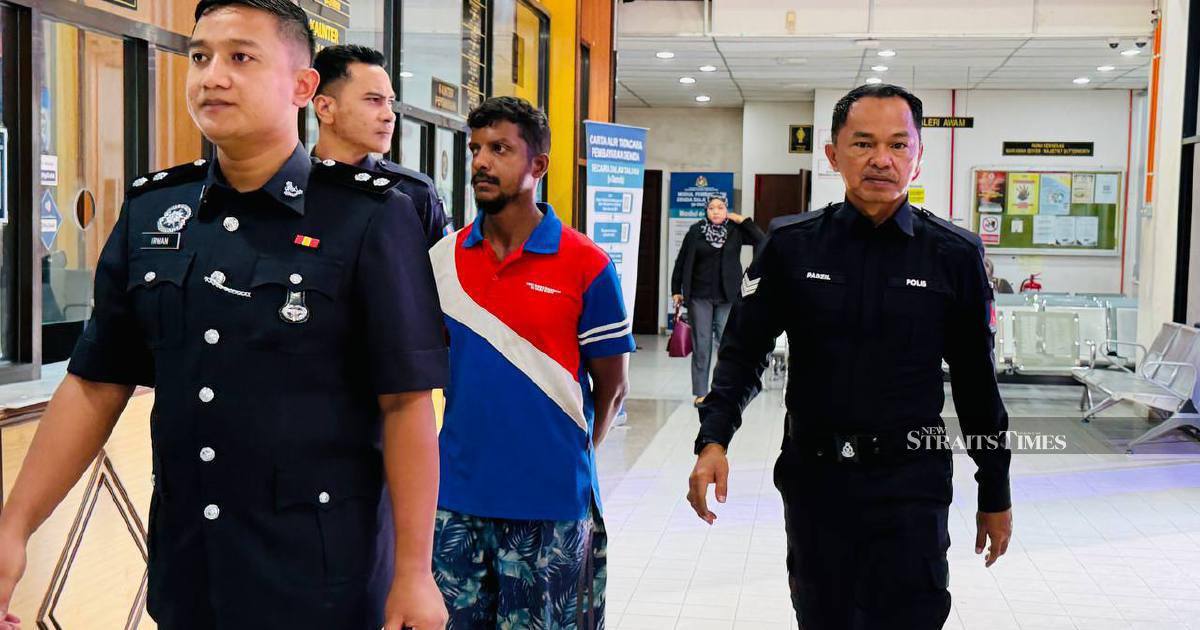
A Myanmar national appeared in the Sessions Court in Butterworth on Wednesday to answer charges of inflicting grievous hurt upon a countryman during an incident that occurred earlier in the week. The accused presented himself before the bench to hear the formal charges laid against him, marking the first stage in what is likely to be an extended legal process given the nature of the allegations.
The Sessions Court made the decision to remand the accused in custody without offering bail, a measure typically employed when the court harbours doubts about the accused's identity or when immediate verification of documentation is required. In this case, the lack of bail was specifically attributed to the need for proper identification document verification, suggesting that the court had concerns about establishing the accused's true identity and residential status. This procedural step is not uncommon in cases involving foreign nationals who may not possess readily available documentation or whose credentials require cross-referencing with relevant authorities.
The incident that prompted the charges allegedly occurred within the previous seven days, though specific details regarding the circumstances, location, and nature of the injuries sustained by the alleged victim were not disclosed during the initial court proceedings. Cases of grievous hurt—a term denoting injuries that are more severe than those classified as simple hurt and potentially requiring medical intervention—are treated seriously under Malaysian law and can result in substantial penalties if a conviction is secured.
The involvement of two foreign nationals in this matter adds a layer of complexity to what might otherwise be a straightforward assault case. When disputes arise between individuals from the same country living abroad, cultural and communication factors can complicate investigations and legal proceedings. Authorities in Butterworth have presumably been conducting preliminary investigations to establish the sequence of events and the degree of culpability on the part of the accused.
From a broader perspective, incidents involving migrant workers or foreign nationals in Malaysia frequently come before the courts. Myanmar nationals constitute a significant portion of the foreign workforce in Malaysia, engaged in various sectors including manufacturing, construction, and domestic service. The prevalence of such cases underscores ongoing challenges related to labour disputes, interpersonal conflicts, and the integration of migrant communities within Malaysian society.
The court's insistence on proper identification documentation before considering bail reflects standard judicial practice, particularly given the increasing scrutiny on document verification following various incidents involving undocumented or improperly documented foreign nationals. The Sessions Court in Butterworth clearly wanted assurance that the individual appearing before it could be properly identified and tracked throughout the legal process. This requirement, while potentially extending the accused's detention, serves to protect the integrity of the judicial system and ensure that the correct person faces charges should the matter proceed to trial.
Remanding an accused without bail pending documentation verification typically results in the accused remaining in custody for a period lasting anywhere from a few days to several weeks, depending on how readily the relevant authorities can produce or verify the necessary identification materials. In this instance, the burden falls upon the accused or his representatives to facilitate the provision of valid identification documents to the court.
The next phase of proceedings would likely involve a bail hearing once the identification issues have been resolved, at which point the prosecution would present its case for why bail should remain withheld, while the defence would argue for bail to be granted pending trial. The strength of the evidence collected during the police investigation will substantially influence how these subsequent hearings unfold and what conditions, if any, might ultimately be imposed upon the accused.
For the alleged victim, the court process can be lengthy and demanding, requiring multiple appearances to give testimony should the matter reach trial. The serious nature of the grievous hurt charge suggests that the injuries sustained were significant enough to warrant the elevated classification, potentially indicating hospitalisation or requirement for medical treatment. The judicial system will need to balance the interests of the victim in obtaining justice with the rights of the accused to a fair trial and the presumption of innocence that underpin the Malaysian legal framework.
The coming weeks will be crucial in determining whether the accused can provide satisfactory identification documentation and whether bail may subsequently be arranged. Should the documentation verification process be completed expeditiously, the matter may progress swiftly towards preliminary inquiry or committal proceedings. However, any delays in obtaining or verifying documents could substantially prolong the accused's pre-trial custody, adding yet another layer of complexity to an already involved case.

