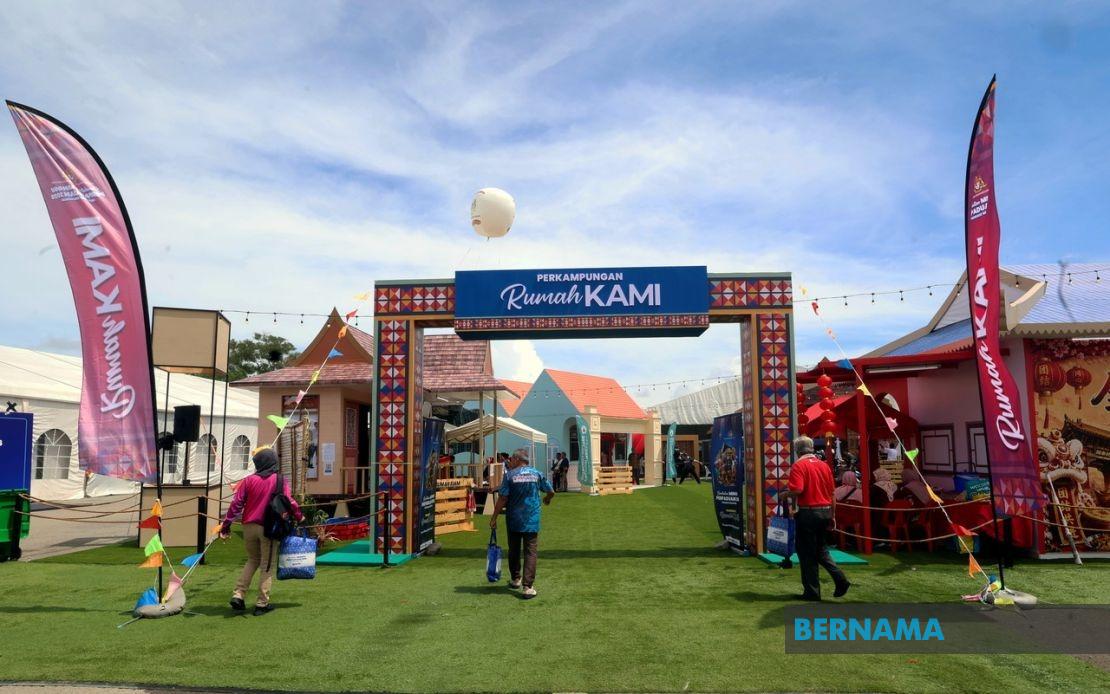
The National Unity Week 2026 celebration in Kota Kinabalu has set a new benchmark for public engagement with Malaysia's cultural narrative, drawing 284,448 visitors over four days from June 11 to 14. This figure represents the most significant turnout recorded since the national programme commenced in 2023, marking a substantial increase in grassroots participation in unity-building initiatives across the country. The strong attendance figures suggest that Malaysians are increasingly receptive to platforms that celebrate and explore the nation's multicultural fabric, a development that carries implications for how policymakers approach national cohesion strategies moving forward.
National Unity Minister Datuk Aaron Ago Dagang attributed the record attendance to mounting public consciousness regarding Malaysia's cultural diversity, heritage preservation, and the distinct identities that collectively strengthen the nation's social foundation. His remarks underscored a broader recognition within government circles that national unity is not merely an abstract political goal but rather a tangible social objective that resonates with ordinary Malaysians when presented through immersive, experiential formats. The minister's emphasis on public appreciation suggests that the government views cultural celebration as a legitimate instrument for reinforcing national bonds across demographic divides.
Three specific attractions emerged as the primary draws for visitors throughout the event, each serving distinct educational and experiential purposes. The Ethnic Village functioned as a living museum, presenting daily life practices and domestic arrangements characteristic of Malaysia's principal communities, allowing visitors to engage with cultural traditions in contextualised settings. This immersive approach proved more effective than traditional static displays, offering attendees tangible windows into how Malaysia's diverse populations organise their domestic and social spheres. The venue essentially translated abstract notions of cultural plurality into concrete, observable reality that visitors could witness firsthand.
The Ethnic Houses exhibition component highlighted architectural and heritage distinctions among communities including the Bajau, Melanau, Banjar, Kedayan, and Portuguese populations, demonstrating how material culture reflects distinct historical trajectories and geographic adaptations. By showcasing built heritage alongside artefacts and design elements specific to each group, the exhibition communicated that Malaysia's unity encompasses recognition and celebration of particularistic identities rather than their erasure or homogenisation. This approach carries pedagogical significance, as it models how national cohesion can coexist with, rather than suppress, cultural specificity—a nuance often lost in simplified unity messaging.
Particularly noteworthy was the success of the Negara Bangsa and Raja Kita Exhibition in capturing younger visitors' attention and fostering deeper engagement with national history. The apparent effectiveness of this display in stimulating youth interest carries strategic implications, as generational transmission of unity consciousness requires that younger Malaysians develop genuine attachment to the nation's historical narrative rather than treating patriotic duty as obligatory performance. The exhibition's capacity to translate historical events and institutional development into formats appealing to contemporary youth suggests that heritage presentation methodologies can substantially influence how successive cohorts understand national identity.
Datuk Aaron emphasised that the sustained development of national unity transcends episodic programming and demands continuous commitment capable of transmission across generations. This acknowledgement represents a significant departure from treating national celebration as occasional events divorced from everyday social practice. The minister's framing suggests that the government recognises the limitations of periodic festivals in generating durable attitudinal change, instead positioning such events as components within broader, systematic approaches to social integration. This perspective aligns with international scholarship emphasising that meaningful unity requires institutional reinforcement beyond ceremonial occasions.
The Ministry of National Unity has committed to continuing the National Unity Week as an annual fixture, explicitly framing it as a national platform facilitating cross-community interaction. This decision reflects confidence in the programme's effectiveness as measured by both attendance figures and reported visitor satisfaction. For Malaysia's regional standing, the event demonstrates that multicultural societies can convert potential vulnerabilities into distinctive strengths through intentional, well-designed cultural engagement strategies. Other Southeast Asian nations with comparable demographic complexity may observe the model's apparent success with interest.
Government officials indicated that feedback mechanisms revealed substantial visitor appreciation for opportunities to interact across ethnic and cultural boundaries in non-adversarial contexts. The event's design—structured around cultural display and interactive experience rather than political messaging or ceremonial ritual—appears to have facilitated organic cross-community engagement. This organic quality distinguishes the experience from top-down unity campaigns that often generate cynicism or performative compliance rather than authentic relationship-building among citizens from different backgrounds.
The initiative aligns with the MADANI Government's broader nation-building vision, which emphasises transcendence of particularistic divisions through cultivation of shared purpose and vision. By organisationally embedding unity-focused programming within a dedicated ministry rather than scattering related functions across multiple agencies, the government has signalled structural commitment to the agenda. For Malaysian businesses and civil society organisations monitoring policy trends, this ministerial focus suggests that national unity considerations may increasingly influence procurement decisions, funding allocations, and programmatic priorities across the public sector.
Datuk Aaron's statements regarding the necessity of multisectoral commitment—encompassing government institutions, private enterprise, civil society organisations, and individual citizens—reflect recognition that sustainable social cohesion cannot emerge from state action alone. This articulation of shared responsibility distributes agency across society rather than concentrating unity obligations within bureaucratic structures. The formulation invites private corporations to recognise diversity and inclusion as commercial and civic imperatives rather than regulatory compliance burdens, potentially reshaping how Malaysian businesses approach workforce composition and community engagement.
The record attendance and stated public enthusiasm suggest that Malaysian communities possess appetite for cultural knowledge and cross-community experience that formal educational systems and everyday social segregation may insufficiently address. The event's success indicates latent demand for structured opportunities to transcend compartmentalised cultural existence and encounter diverse Malaysian identities as integral aspects of national reality rather than exotic or peripheral phenomena. This demand creation opens space for expanded programming throughout the year, from school-based heritage education to workplace diversity initiatives and community-anchored cultural centres.
Looking forward, the demonstrated capacity to attract nearly 300,000 visitors within a single city suggests substantial opportunity for decentralising and scaling similar programmes across Malaysia's regions, particularly in areas where demographic segregation and limited intercommunal contact characterise everyday experience. Replicating the Kota Kinabalu model in Peninsular Malaysia or East Malaysia could deepen public engagement with unity narratives while generating economic activity for host cities through tourism-related spending. The financial and social returns from unity programming deserve greater attention in policy discussions dominated by security or economic frameworks.
The National Unity Week 2026 ultimately demonstrates that carefully curated, experientially engaging cultural platforms can translate abstract political commitments to diversity and cohesion into memorable public experiences that bridge demographic divides. As Malaysia navigates increasingly complex questions regarding national identity amid rapid economic and social transformation, the event model offers practical evidence that citizens across the nation's communities remain receptive to narrative frameworks emphasising shared belonging without requiring surrender of distinctive cultural heritage. Sustaining this momentum requires consistent investment, creative programming evolution, and authentic empowerment of communities to represent and interpret their own cultural traditions rather than seeing heritage presentation as exclusively government-controlled messaging.