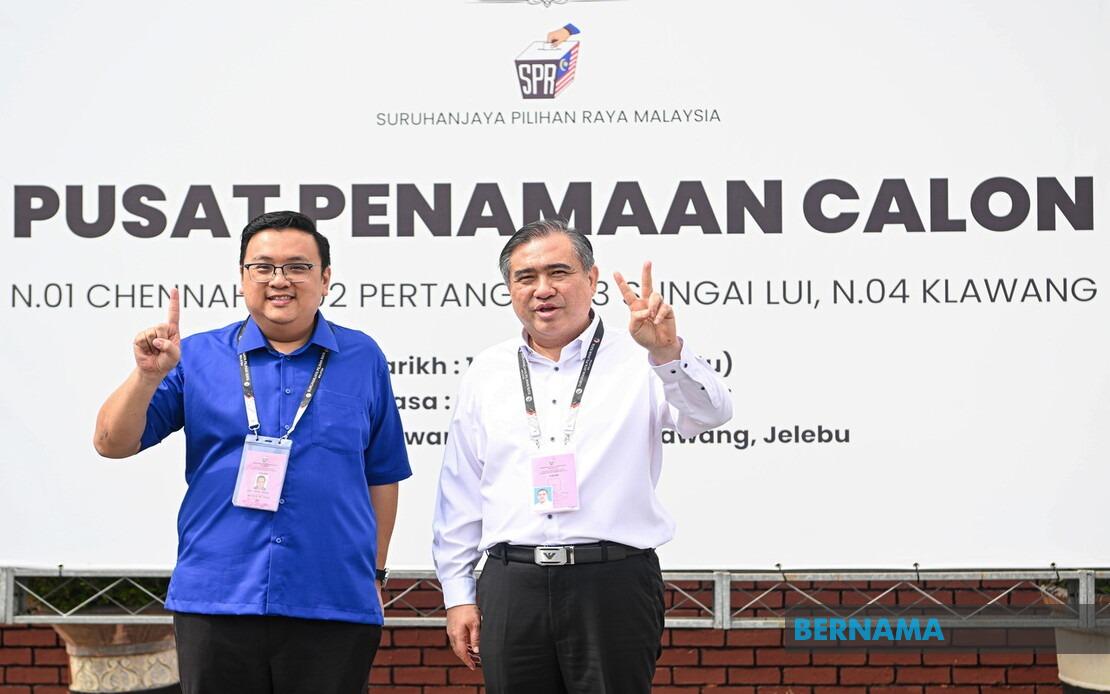
The 16th Negeri Sembilan State Election on August 1 will reshape the state's political landscape through an unprecedented fragmentation of electoral contests, with only 11 of 36 seats featuring straight fights compared to 27 in the previous poll. This dramatic reversal signals the collapsing of traditional two-coalition bipolarism that had long defined Malaysian politics, replaced instead by a splintered multi-party environment where voters face increasingly complex choices. The shift reflects broader instability within opposition coalitions and the resurgence of smaller parties competing across a wider front.
Three-cornered contests have surged to dominate the ballot, capturing 21 of the 36 seats—nearly 60 percent of the chamber. This represents a tripling from the mere seven three-way races in 2023, suggesting that no single faction can confidently claim control of significant battlegrounds. The emergence of Parti Pribumi Bersatu Malaysia as a consistent third force across multiple constituencies demonstrates how the fractured opposition has created space for smaller parties to intervene strategically. Meanwhile, Negeri Sembilan's profile as a mixed-composition state with diverse ethnic demographics has made it attractive terrain for parties seeking to build broader coalitions and test new electoral strategies.
Two constituencies will see four-cornered contests, while Nilai and Sri Tanjung will witness unprecedented five-way battles—contests that did not occur during the 2023 state election. In Nilai, incumbent J. Arul Kumar of Pakatan Harapan must defend against Lai Chien Kong from Barisan Nasional, Datuk V. Saravana Kumar of Bersatu, Barisan Jemaah Islamiah Se-Malaysia's Zamani Ibrahim, and independent candidate Omar Mohd Isa. Sri Tanjung presents an equally fragmented scenario, with incumbent Datuk Dr G. Rajasekaran facing A. Achuthan, M. Leevineshwaraan, plus two independent candidates. These contests will test voters' capacity to navigate crowded ballots while forcing campaigns to become increasingly localized and personality-driven rather than ideology-driven.
Among the dwindling straight fights sits an encounter between heavyweight political figures that could reshape Negeri Sembilan's leadership trajectory. Transport Minister and DAP Secretary-General Anthony Loke will contest the Chennah seat directly against Barisan Nasional's Siow Kong Choon, presenting one of the election's clearest ideological choices. Elsewhere, UMNO Deputy President and Foreign Minister Datuk Seri Mohamad Hasan defends Rantau against Pakatan Harapan's Dr Azizul Hakim Mahdi, continuing a battle for one of the state's most strategically important constituencies. These contests suggest that while three-cornered fights proliferate at grassroots level, national-level figures and federal ministers maintain traditionally competitive two-way races.
The fragmentation creates particular challenges for the incumbent Menteri Besar, as PKR's Datuk Seri Aminuddin Harun faces a three-cornered contest in Linggi against Barisan Nasional's Datuk Mohd Faizal Ramli and Bersatu's Zamri Md Said. This constellation of forces complicates seat-by-seat projections and makes coalition mathematics volatile. Should Aminuddin win but see Pakatan Harapan lose ground elsewhere in the state, a complex post-election negotiation could determine whether he retains the menteri besar post or whether numbers require cross-coalition arrangements. The Pertang constituency presents similar complexity, with Negeri Sembilan UMNO Chairman Datuk Seri Jalaluddin Alias facing both Pakatan Harapan's Mohd Umry Abdul Khois and Bersatu's Mohd Faizal Fadli Mohd Idrus.
Bersatu's consistent presence across multiple constituencies reveals how Tan Sri Muhyiddin Yassin's party has embedded itself within Negeri Sembilan's political structure despite its tumultuous national trajectory. Rather than concentrating forces in targeted seats, Bersatu appears committed to contesting broadly, suggesting either confidence in local organization or a strategy to complicate opposition unity. The Klawang seat exemplifies this approach, where PN's Danni Rais—son of veteran politician Tan Sri Rais Yatim—will challenge incumbent Datuk Bakri Sawir of Pakatan Harapan alongside Bersatu's Muhammad Adib Musa. Such contests pit personality-driven campaigns against organizational infrastructure, with family political legacies competing against incumbent service records.
The four-way contests in Jeram Padang and Rahang introduce additional complexity through independent and minor-party candidates. In Jeram Padang, incumbent Datuk Mohd Zaidy Abdul Kadir must contend not only with Pakatan Harapan's G. Manivannan and Bersatu's R. Sri Sanjeevan but also with Dayana Dal representing Parti Orang Asli Malaysia, signaling how indigenous representation concerns can fragment electoral support. The Rahang seat similarly features Socialist representation through S. Thinagaran of Parti Sosialis Malaysia alongside Barisan Nasional's Yap Siok Moy, incumbent Siaw Meow Keong of Pakatan Harapan, and Bersatu's Tang Jay San. These candidates, though unlikely to win, can strategically split votes and swing margins in tight races.
Negeri Sembilan's electoral eligibility stands at 889,490 voters, comprising 867,151 ordinary electors alongside 16,884 military personnel and spouses and 5,455 police personnel. The inclusion of significant uniformed services voting populations means that security-sector perceptions regarding governance and economic management may disproportionately influence outcomes. Military and police voting patterns traditionally lean toward establishment parties, which could provide Barisan Nasional with structural advantages in constituencies where these voters concentrate. The Election Commission has scheduled early voting for July 28, with polling day on August 1.
The broader context reveals how Negeri Sembilan's electoral transformation mirrors national trends toward political fragmentation. The collapse of straight fights from 75 percent to 31 percent of seats reflects erosion of the two-coalition model that governed Malaysian politics throughout the post-2018 reformation period. As Bersatu maintains parallel competition rather than clear alignment, independent candidates proliferate, and smaller parties seek opportunities, voters increasingly face decisions requiring sophisticated differentiation between multiple platforms. For Kuala Lumpur policymakers, the Negeri Sembilan result will provide crucial evidence about whether Malaysia's political system is stabilizing toward a new equilibrium or descending into chronic fragmentation that complicates governance and accountability. The state election therefore transcends local significance to signal the trajectory of peninsular politics during a period of unprecedented realignment.

