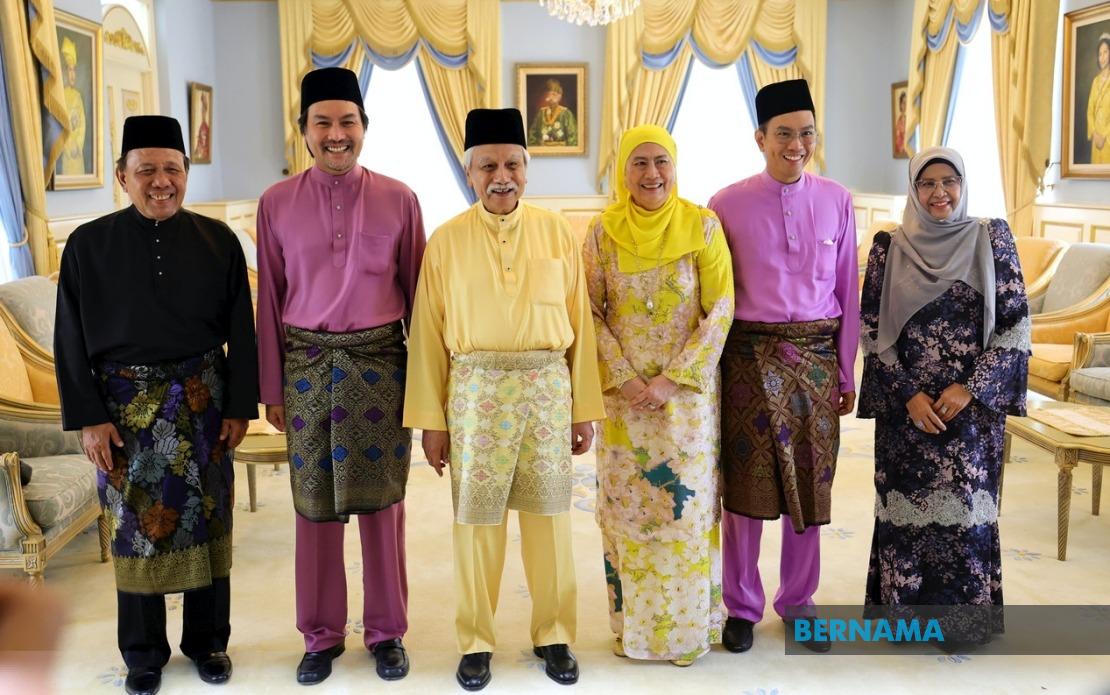
Newly sworn-in Negeri Sembilan Menteri Besar Datuk Ismail Lasim has signalled that the formation of the state executive council will move swiftly, with a target completion date of this Friday, contingent on securing necessary approvals through the proper channels. Speaking at his inaugural press conference following his oath-taking ceremony before Tuanku Muhriz Tuanku Munawir at Istana Besar Seri Menanti, the Juasseh Assemblyman outlined a carefully choreographed process designed to balance coalition interests while respecting the constitutional role of the state ruler.
The path to finalising the cabinet composition involves multiple stakeholders whose input carries significant weight in the decision-making process. Ismail explained that he will first consult with the broader Barisan Nasional leadership before presenting his proposed cabinet structure to Tuanku Muhriz for formal approval. This sequence reflects established constitutional practice in Malaysian states, where the Yang Dipertuan Besar holds the prerogative to approve ministerial appointments, though this power is typically exercised on the advice of the Menteri Besar in consultation with relevant political leaders.
A particularly significant element of these discussions will involve Ismail meeting with UMNO president Datuk Seri Dr Ahmad Zahid Hamidi to explore perspectives on how the executive council should be constituted. Notably, this conversation will specifically address the possibility of including representatives from Perikatan Nasional despite Barisan Nasional's stronger electoral position. This inclusive approach reflects the political mathematics that emerged from the recent state election, where the two coalitions collectively secured sufficient seats to govern with a commanding legislative majority.
The recent Negeri Sembilan state election delivered a decisive mandate for collaborative governance between the two coalitions. Barisan Nasional captured 18 of the 36 contested state assembly seats, while Perikatan Nasional secured seven seats, providing the combined partnership with a two-thirds supermajority. This outcome creates both opportunities and complexities for the new state government, as the inclusion of PN representatives in executive positions would signal a commitment to genuine power-sharing rather than marginalisation of the junior coalition partner.
Regarding the operational structure of the state administration, Ismail indicated that maintaining a ten-member executive council, consistent with Negeri Sembilan's recent governance practice, appears to be the preferred approach. However, he acknowledged that final decisions on the precise composition and the distribution of portfolios remain pending, contingent upon completion of consultations with party hierarchies. The size and structure of the EXCO carries practical implications for administrative efficiency and the state government's capacity to address policy priorities across diverse sectors.
The Menteri Besar emphasised that people-centric governance will anchor his administration's strategic direction. He framed public welfare and citizen well-being as the foundational principles guiding the state government's policy framework and long-term development agenda. This positioning is significant as Negeri Sembilan navigates post-election consolidation, with emphasis on demonstrating that the new government delivers tangible benefits to constituencies that voted for both BN and PN candidates.
The speed with which Ismail has moved to establish his cabinet represents a departure from extended political negotiation periods that sometimes characterise state-level government formations in Malaysia. Tuanku Muhriz's apparent preference for timely resolution of the executive council matter has presumably encouraged expeditious decision-making, though this must still accommodate the legitimate consultation requirements of coalition partners and constituent parties within both BN and PN.
The prospective inclusion of Perikatan Nasional representatives in the state executive council, should it materialise, would represent a notable governance model within the current Malaysian political landscape. Such an arrangement would differ from the approach adopted in several other states where larger coalitions have opted to exclude or minimise opposition coalition representation in executive positions. For Negeri Sembilan, this model could potentially foster greater cross-coalition cooperation on issues of state-wide concern and reduce zero-sum political competition within the legislature.
The involvement of both MCA and MIC representatives from the Barisan Nasional component parties in the cabinet formation process underscores the coalition's commitment to multi-ethnic representation within the state executive. These parties, historically significant within BN's political architecture, expect meaningful participation in the state government, and their inclusion reflects long-established power-sharing norms within the coalition structure. Balancing their aspirations alongside UMNO's dominance and potential PN participation represents a delicate political calculus that Ismail must navigate.
As the state government consolidates its institutional structure over the coming days, the broader implications for Negeri Sembilan's development trajectory will depend substantially on how effectively the new administration can translate its electoral mandate into coherent policy implementation. The Friday deadline, while ambitious, demonstrates political determination to move beyond election-phase mobilisation toward substantive governance. Whether the cabinet formation proceeds according to schedule will signal to Negeri Sembilan voters the new government's capacity for decisive action and professional administration.
The cabinet formation process also carries implications for how Negeri Sembilan positions itself within broader regional governance dynamics across Southeast Asia. As a state that has experienced considerable economic development and urbanisation, particularly around the Kuala Pilah district and surrounding areas, demonstrating effective multi-party cooperation in government could model alternative governance approaches that value consensus-building over adversarial politics. The coming weeks will reveal whether this collaborative impulse translates into substantive institutional outcomes.

