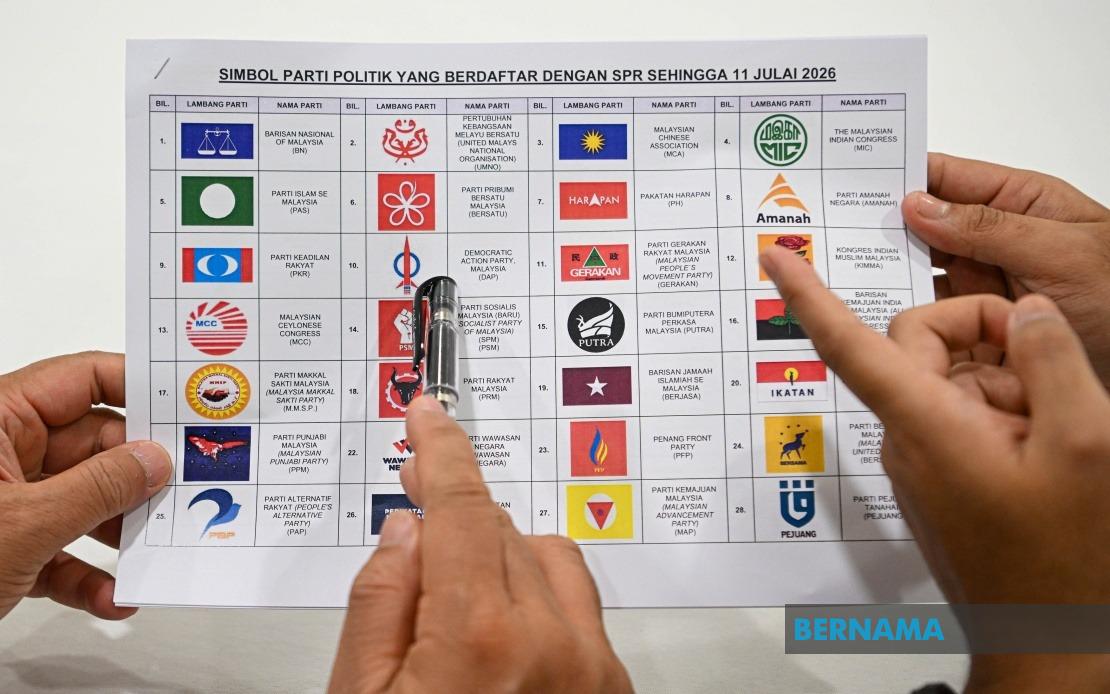
The 16th Negeri Sembilan state election formally commenced today in Seremban as prospective candidates rushed to lodge their nomination papers at eight designated centres throughout the state. The nomination process began at 9 am, with a submission deadline of 10 am for all candidates seeking to contest the 36 available state seats. This marks the beginning of what promises to be a competitive electoral contest across the state, following the dissolution of the Negeri Sembilan State Legislative Assembly on June 5 with the sanction of Yang Dipertuan Besar Tuanku Muhriz Tuanku Munawir.
The Election Commission had reported strong early interest from potential contestants, with 464 nomination forms sold and 70 prospective candidates having already paid their required election deposits by yesterday. These figures suggest substantial competition across multiple parties vying to represent Negeri Sembilan's constituents. Once the returning officers verify and announce the official list of eligible candidates, the state will enter its officially designated 14-day campaign period, lasting until 11.59 pm on July 31. This compressed timeframe means political parties will need to deploy their resources strategically to reach voters across the state's diverse constituencies.
Voting procedures have been carefully structured to accommodate different voter categories and preferences. Early voting has been scheduled for July 28, providing an option for those unable to participate on the main polling day of August 1. The eligible electorate comprises nearly 890,000 registered voters, including 867,151 ordinary voters alongside 16,884 military personnel and their spouses, and 5,455 police personnel and their spouses. This voter base represents a substantial cross-section of Negeri Sembilan's population and reflects the diversity of communities across the state that parties must engage with during their campaigns.
Political parties have adopted notably different strategies in their candidate selection and seat coverage. Pakatan Harapan has committed to contesting all 36 seats, signalling confidence in its ability to field comprehensive slates across the state. Barisan Nasional has chosen a more selective approach, fielding candidates in 25 seats, while Perikatan Nasional will compete in 11 seats. This variation in seat coverage reveals distinct coalition strategies, with some parties choosing focused competition in stronghold areas while others attempt comprehensive representation. Additionally, several smaller parties including Parti Orang Asli Malaysia, the Socialist Party of Malaysia, and Parti Barisan Jemaah Islamiah Se-Malaysia have each fielded single candidates, contributing to the overall diversity of choice available to voters.
Bersatu's participation merits particular attention given its involvement in Malaysia's evolving political landscape. The party is contesting 24 seats under its own banner, with an additional two candidates fielded through Parti Bersepakat Hak Rakyat Malaysia (Urimai) using the Bersatu logo. This arrangement reflects ongoing coalition negotiations and the complex dynamics of how parties distribute candidacies among allied organisations. Such configurations have become increasingly common in recent Malaysian elections as parties seek to maximise seat coverage while maintaining formal partnerships.
The 2023 election results provide crucial context for understanding the current contest. Pakatan Harapan emerged with the strongest showing, securing 17 of the 36 seats and forming the state government. Barisan Nasional captured 14 seats, while Perikatan Nasional won five, leaving four seats distributed among other contestants. These results suggest relatively balanced competition, with no party commanding overwhelming dominance. The fact that PH's majority remains workable but not commanding means the current contest could potentially shift the balance of power if opposition parties can consolidate support effectively during this campaign period.
Security arrangements have been scaled up substantially to ensure the election's smooth administration. The Negeri Sembilan police have deployed 4,800 officers and personnel, supplemented by an additional 1,373 officers and personnel from Bukit Aman's federal contingent. This significant security presence underscores the importance placed on maintaining order during the nomination process and throughout the electoral period. The Election Commission has explicitly reminded all candidates and their supporters to comply with regulations and refrain from provocative conduct that might disrupt proceedings. Such reminders reflect ongoing efforts to maintain electoral integrity and prevent incidents that could undermine public confidence in the democratic process.
Nomination day itself is anticipated to draw substantial crowds comprising party supporters, political leaders, and candidates converging on the eight nomination centres simultaneously. These events typically generate considerable political energy and media attention as parties demonstrate their organisational strength through turnout of activists and supporters. The spectacle of nomination day serves both practical and symbolic functions, allowing parties to energise their bases while signalling campaign readiness to the broader electorate.
Weather conditions may influence nomination day activities, according to forecasts from the Malaysian Meteorological Department. Morning hours are expected to bring generally fair conditions across most of Negeri Sembilan, though Port Dickson and Seremban specifically may experience rain. Afternoon conditions are predicted to see thunderstorms develop statewide, potentially affecting later nomination submissions and the movement of party supporters attending nomination centres. Election administrators will need to account for these conditions when managing crowds and ensuring orderly processing of nomination documents.
The contest ahead carries significance extending beyond Negeri Sembilan's borders. As a mid-sized state with diverse constituencies spanning urban and rural areas, electoral developments here often provide indicative signals about broader political trends affecting Malaysia. The relative fortunes of Pakatan Harapan, Barisan Nasional, and Perikatan Nasional will be closely watched by political analysts and observers seeking to understand momentum shifts among the country's major political coalitions. The emergence of any notable new political forces or the performance of smaller parties may also offer insights into voter preferences regarding alternatives to the major coalitions.
For Malaysian and Southeast Asian observers, this election illustrates the ongoing competitive dynamics characterising Malaysia's electoral system. The structured nomination process, clearly defined campaign periods, and transparent voting mechanisms reflect established democratic procedures that have evolved over decades of elections. The diversity of parties contesting, from major coalitions to small independent movements, demonstrates the pluralistic nature of Malaysia's political landscape. How voters respond to the various platforms, candidates, and messages presented during the 14-day campaign will ultimately determine which parties claim the mandate to govern Negeri Sembilan for the next electoral term.

