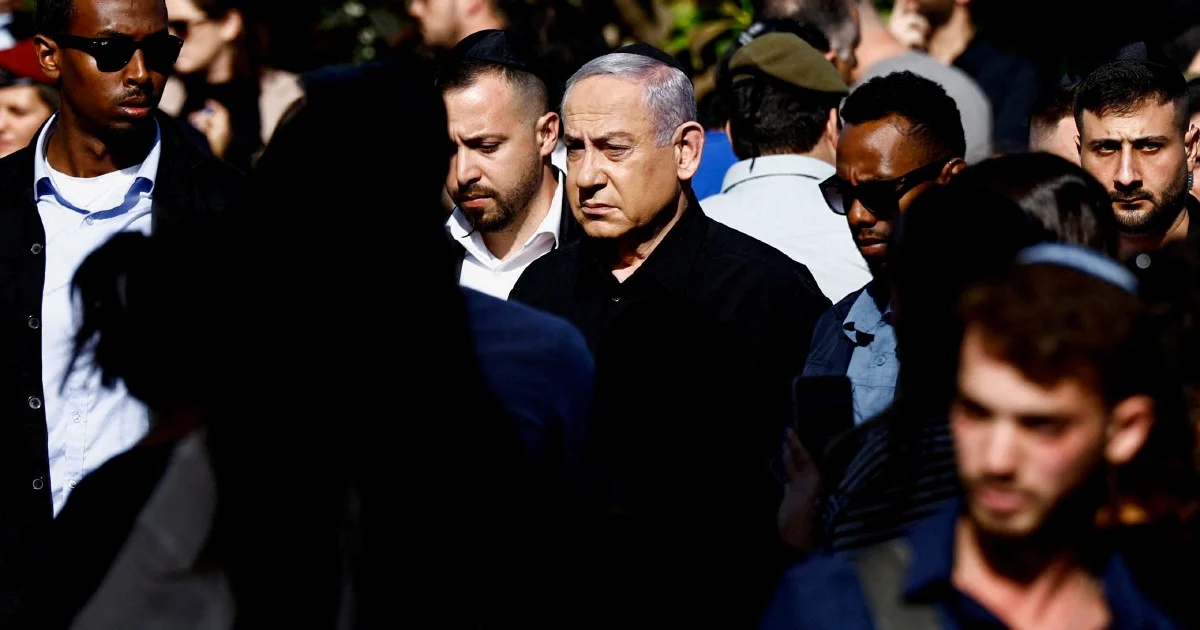
Benjamin Netanyahu's testimony in his long-running corruption trials has reached completion, the Israeli justice ministry confirmed on Wednesday, marking a significant milestone in legal proceedings that have shadowed the Prime Minister's tenure. The announcement arrives as Netanyahu navigates complex geopolitical pressures, particularly surrounding nuclear diplomacy involving the United States and Iran—a development that has generated substantial concern within Israeli policy circles and among the country's security establishment.
The conclusion of Netanyahu's testimony represents the culmination of a protracted legal process that has tested the boundaries of Israeli governance and judicial independence. For months, the Prime Minister has appeared before the courts to address allegations spanning multiple charges related to bribery, breach of trust, and fraud. This extended testimony phase underscores the complexity and gravity of the accusations arrayed against him, each requiring detailed examination and cross-examination within the judicial framework.
Netanyahu's simultaneous engagement with these domestic legal challenges and international security matters reflects the intricate balancing act demanded of Israeli leadership. While the Prime Minister has been managing courtroom appearances, the diplomatic landscape has shifted with renewed discussions around a potential nuclear agreement framework. Israeli officials have expressed deep reservations about any arrangement perceived to weaken constraints on Iranian nuclear advancement, viewing such agreements through the lens of national security concerns that resonate throughout the Middle East.
The timing of these overlapping pressures reveals how Israel's political environment remains fractured across multiple fronts. Domestically, the legal system operates with apparent independence, pursuing cases against the sitting Prime Minister with the kind of scrutiny that reflects institutional checks on executive power. Simultaneously, Netanyahu must defend Israeli interests in an international arena where questions about Iran's nuclear programme remain persistently contentious and geopolitically consequential.
For Malaysian and Southeast Asian observers, Netanyahu's predicament illustrates broader questions about governance structures in democracies confronting security dilemmas. The tension between judicial accountability for sitting leaders and the demands of international diplomacy creates practical complications that extend beyond Israel's borders, resonating in contexts where leadership legitimacy intersects with legal proceedings and national security imperatives.
The US-Iran negotiations referenced in official circles carry implications that extend well beyond bilateral relations. Any agreement that regional actors, particularly Israel, perceive as inadequately constraining Iranian nuclear capabilities could reshape Middle Eastern security dynamics and international alignment patterns. For Southeast Asian nations maintaining economic and strategic interests across the region, developments in this sphere warrant careful attention, as they influence broader patterns of great power competition and regional stability.
Netanyahu's position as a Prime Minister simultaneously defending himself in criminal proceedings while conducting high-stakes diplomacy presents a distinctive challenge to Israeli governance. The country's constitutional arrangements lack a formal separation of powers that would automatically sideline an indicted executive, leaving the judiciary to proceed with prosecutions while Netanyahu retains his full governmental authority and international diplomatic role.
The multiple charges against Netanyahu have generated extensive public discourse within Israel about accountability, leadership fitness, and the appropriate relationship between political power and legal consequence. Each phase of courtroom proceedings has attracted scrutiny from both domestic constituencies and international observers monitoring how a developed democracy handles such circumstances. The completion of testimony does not resolve these underlying tensions but rather advances the cases toward verdict phases where judges must weigh evidence and arguments of substantial consequence.
Regional analysts note that Netanyahu's security-focused rhetoric and policies have consistently emphasised Israeli concerns about Iranian regional ambitions. The intersection of these security priorities with ongoing legal vulnerabilities creates a complex narrative wherein Netanyahu's political survival, judicial outcomes, and Israeli security strategy remain fundamentally intertwined. His performance in legal proceedings and his diplomatic positioning both carry weight for his political future and Israel's strategic direction.
For the broader Middle East, including implications for states across Asia maintaining varied relationships with regional powers, the trajectory of these cases and associated diplomatic negotiations matters considerably. Israeli policy decisions, particularly those addressing Iranian capabilities, cascade through regional security calculations and can influence broader patterns of alliance formation and arms acquisition strategies pursued by multiple stakeholders across the Eastern Mediterranean and Middle Eastern theatres.
The justice ministry's announcement that testimony has concluded signals that Israeli courts will now move toward deliberation and verdict phases in what remain among the most significant legal cases involving a sitting democratic leader. As these proceedings advance, the international dimensions of Netanyahu's government—including diplomatic engagement with Washington over Iranian matters—will continue to intersect with domestic legal accountability processes that operate according to Israel's constitutional traditions and judicial independence frameworks.

