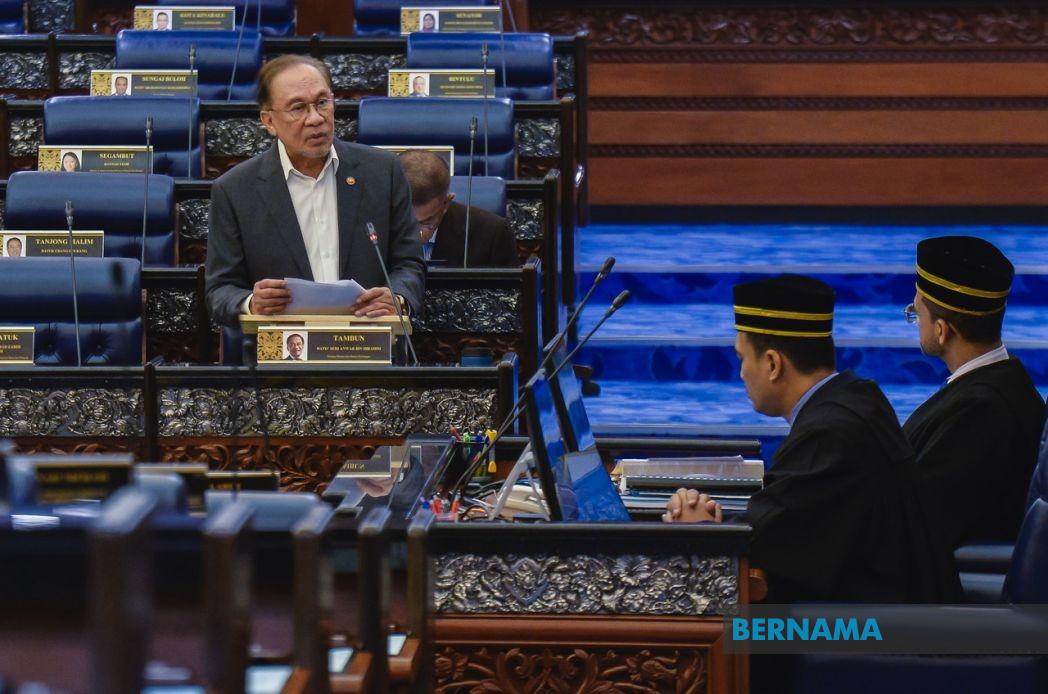
Prime Minister Datuk Seri Anwar Ibrahim moved to dispel concerns that the federal government has restricted programmes in FELDA settlements, stating clearly during parliamentary proceedings that no such prohibition exists. Speaking in the Dewan Rakyat on June 30, Anwar distinguished between the freedom to hold activities and the legal constraints surrounding government resource deployment during electoral periods.
The clarification came in response to questions from Datuk Seri Hamzah Zainudin from Perikatan Nasional, who had raised concerns about the apparent cancellation of the FELDA Settlers' Day programme scheduled for Kluang, Johor on June 20 and 21. Anwar firmly denied that his administration had issued any directive to cancel this event, presenting the matter as potentially stemming from misunderstanding rather than governmental interference. This distinction matters significantly for FELDA communities, who have historically represented an important electoral constituency and source of grassroots political activity.
The Prime Minister's core argument rested on a fundamental legal principle: state governments possess complete discretion to organise events within FELDA areas without requiring federal approval or consent. Menteri besar officials can enter settlements, mobilise support, and conduct their own programmes independently. Similarly, state administrations retain authority to issue land titles and conduct development initiatives within their jurisdictions. The restriction, Anwar emphasised, does not target the programmes themselves but rather the mechanism through which they are conducted.
Under Malaysian election laws, the critical prohibition involves utilising government machinery for campaigning purposes. FELDA resources, federal facilities, and administrative apparatus cannot be deployed to advance partisan political objectives during election periods. This constraint applies uniformly across government agencies and statutory bodies, including FELDA itself. State governments must therefore organise their own activities using non-governmental resources and personnel. The distinction, while technically straightforward, carries practical implications for how state administrations coordinate with settlers and communities within FELDA areas.
Anwar's statement reflects broader tension within Malaysian federalism between state and federal authority over settlement lands. FELDA settlements, established as federal development schemes, occupy a unique constitutional and administrative position. While settlements fall within state territories, the original federal development mandate creates overlapping jurisdictional claims. This ambiguity occasionally generates disputes about which level of government can legitimately conduct activities and claim credit for development initiatives within these communities.
The MADANI Government has positioned itself as committed to comprehensively rehabilitating FELDA communities following what Anwar characterised as decades of inadequate management. This revival programme extends beyond mere policy announcements to tangible infrastructure development. The establishment of dialysis centres within FELDA settlements addresses genuine healthcare access challenges affecting rural communities, while expanded development facilities through federal agencies target long-standing infrastructure deficits. These initiatives suggest the administration views FELDA revitalisation as a core governance priority rather than a residual concern.
Anwar's comments indicate partnership between his office and Deputy Prime Minister Datuk Seri Dr Ahmad Zahid Hamidi in driving FELDA-focused initiatives. This collaborative approach signals that senior leadership recognises FELDA communities' historical grievances and current development needs. Many settlements have indeed lagged behind national development trajectories, experiencing relative stagnation in infrastructure, service provision, and economic opportunity. Rural development projects frequently overlooked FELDA areas despite their strategic importance, creating accumulated deficits that require deliberate corrective action.
The clarification carries significance beyond the immediate parliamentary exchange. For state governments contemplating electoral strategies, Anwar's statement essentially confirms they retain freedom to organise political activities within FELDA areas without seeking federal approval or navigating bureaucratic hurdles. This reassurance may prove important for opposition-controlled states seeking to maintain political presence within FELDA communities. Simultaneously, it establishes clear boundaries: such activities cannot depend on official government resources or personnel without triggering legal consequences.
For FELDA settlers themselves, the statement addresses anxiety that the federal government might be leveraging its control over settlement machinery to restrict political pluralism or curtail competitive political activity. Historically, such concerns have surfaced periodically, particularly during transition periods between administrations. Anwar's explicit denial and detailed explanation may help rebuild confidence that the settlement communities retain political agency despite the administrative control exercised by federal authorities.
The broader policy context suggests the government views FELDA revitalisation as integral to rural development strategy and social equity objectives. Infrastructure improvements and service expansion represent investments in communities that statistical evidence indicates face comparative disadvantage in healthcare, education, and economic opportunity. These targeted initiatives may also reflect recognition that FELDA communities, comprising significant populations in multiple states, constitute constituencies whose development status influences broader national development indicators.
Moving forward, the clarification establishes operating parameters for state-federal relations within FELDA areas during electoral periods. State governments understand they possess programmatic freedom provided they avoid deploying federal or settlement machinery. Federal authorities can pursue development initiatives without accusations of electoral manipulation. This framework potentially reduces friction between levels of government while protecting electoral integrity principles embedded in Malaysian law. However, practical implementation will require continued clarity and cooperation, particularly as multiple states govern FELDA settlements with varying political complexions and administrative capacities.

