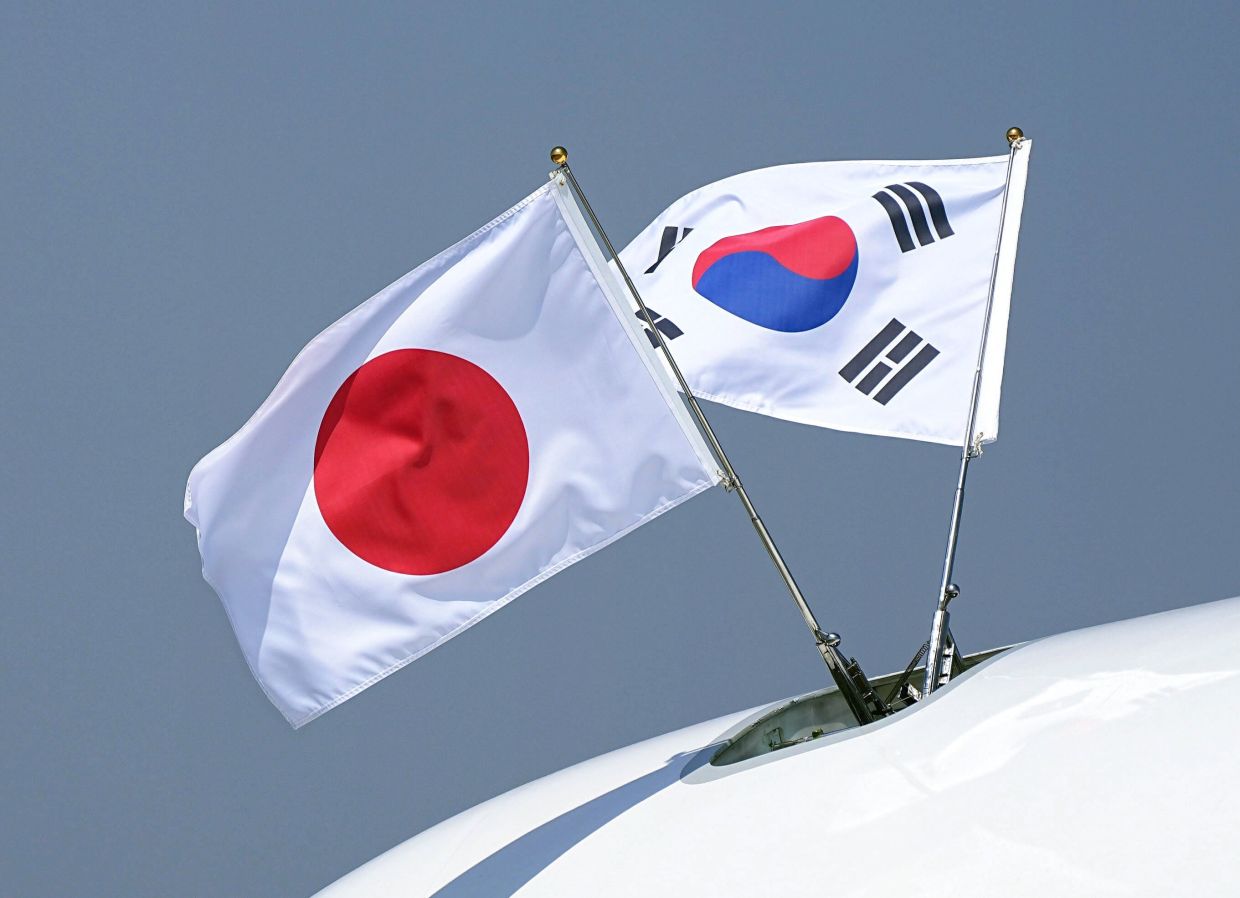
Strategic leaders across Japan and South Korea remain firmly opposed to their nations developing nuclear weapons programmes, according to a comprehensive survey by the Washington-based Center for Strategic and International Studies (CSIS) released this week. Yet beneath this surface consensus lies a fragile equilibrium that experts warn could unravel with alarming speed should either country alter course, potentially triggering a destabilizing cascade of proliferation throughout northeast Asia.
The CSIS survey, led by Victor Cha, president of CSIS's geopolitics and foreign policy department and Korea chair, alongside Kristi Govella, CSIS senior adviser and Japan chair, gathered responses from current and former government officials, parliamentarians, academics, think tank researchers and business leaders across both nations through October. The results showed 75 per cent of South Korean strategic elites and nearly 80 per cent of Japanese strategic elites expressing opposition to or serious reservations about their respective countries acquiring nuclear arsenals.
However, this strong elite consensus masks a striking divergence with public opinion in South Korea, where polling from the Chey Institute for Advanced Studies and Gallup revealed over 72 per cent of the public supports nuclear weapons possession. No such divide appears in Japan, where existing surveys consistently show roughly 80 per cent of ordinary citizens opposed to nuclear armament, suggesting greater alignment between Japanese leadership and popular sentiment on the issue. Govella noted that media coverage has sometimes exaggerated the strength of pro-nuclear sentiment within Japanese policymaking circles, a distortion that risks misrepresenting actual decision-making inclinations.
The survey's most significant finding concerns the potential for rapid reversal should neighbouring countries pursue nuclear development. If either Japan or South Korea acquired nuclear weapons, support for similar programmes in the other country could rise sharply, according to CSIS analysis presented during Thursday's briefing. Experts at the think tank assessed that such a development could prove more destabilizing to regional security than even a major reduction in United States military deployments across northeast Asia, a sobering verdict on the multiplier effects of proliferation in such a densely populated, technologically advanced region.
The motivations behind pro-nuclear sentiment differ strikingly between the two countries. South Korean respondents who favour nuclear weapons development primarily cite the perceived threat from North Korea and the need for independent deterrent capabilities. Japanese supporters, by contrast, focus less on immediate regional adversaries and more on anxieties about the long-term reliability of United States security commitments and extended nuclear deterrence guarantees. This distinction reveals fundamentally different strategic calculations and threat perceptions, even as both nations currently refrain from pursuing weapons programmes.
Washington has been actively reinforcing its security partnerships with both allies. Earlier this month, the United States conducted bilateral meetings in Seoul to advance nuclear cooperation initiatives with South Korea, followed by an extended deterrence dialogue in Tokyo with Japan. These high-level consultations underscore American commitment to reassuring its Asian allies through conventional means, a diplomatic gesture aimed partly at forestalling independent nuclear ambitions. The timing of these consultations immediately before the CSIS survey release suggests coordinated messaging about the credibility and sustainability of the US security umbrella.
Simultaneously, the United States is substantially expanding its own nuclear capabilities in response to perceived challenges from China. Brandon Williams, under secretary for nuclear security at the Department of Energy and administrator of the National Nuclear Security Administration, announced Thursday that the agency would invest $600 million in artificial intelligence this year to accelerate nuclear weapons design and production digitalisation. The current timeline for fielding new nuclear weapons—a decade to fifteen years from initial requirement to deployment—would be compressed, Williams indicated, reflecting Washington's assessment that strategic competition with Beijing requires faster innovation cycles in nuclear technology.
American defence planners are also reconsidering doctrinal constraints on nuclear weapon employment. During a separate CSIS discussion, Heather Williams, director of the project on nuclear issues and senior fellow in CSIS's defence and security department, argued that the United States should incorporate nuclear warheads aboard hypersonic delivery systems rather than restricting such weapons to conventional warheads alone. A more diverse and credible American nuclear arsenal, Williams contended, would strengthen extended deterrence and reassure allies of continued US commitment, thereby reducing incentives for independent nuclear development. The logic implies that greater American nuclear capability paradoxically enhances allied confidence and reduces proliferation pressures.
This reasoning directly connects to the CSIS survey findings. Williams noted that reassured allies remain less likely to pursue proliferation, a dynamic that the Japan and South Korea survey corroborates through empirical research. The survey essentially validates a counterintuitive strategic principle: robust and visible American nuclear commitment to allies serves as a proliferation brake rather than an accelerant. Yet the survey simultaneously warns that this brake operates within narrow parameters; should either Japan or South Korea perceive American guarantees as weakening or should a neighbouring state acquire nuclear weapons, the entire regional calculus could shift within months.
China remains conspicuously absent from formal arms control frameworks despite American pressure. Beijing has consistently refused to join the Strategic Arms Reduction Treaty and other multilateral nuclear negotiations, maintaining that it will not participate in such agreements until the United States and Russia reduce their arsenals to Chinese levels—a precondition that effectively removes Beijing from negotiating tables. Simultaneously, China has accused Japan of pursuing covert remilitarization objectives, including alleged nuclear weapons ambitions, a charge that Tokyo firmly disputes but that reflects broader anxieties about shifting regional power balances.
For Malaysian and Southeast Asian policymakers, the CSIS findings carry immediate implications for regional security architecture. Japanese or South Korean nuclear weapons development would fundamentally alter the security environment across the entire Indo-Pacific, potentially triggering cascading proliferation pressures affecting multiple nations. The survey underscores how elite consensus, however strong currently, remains vulnerable to rapid erosion through demonstration effects and changing threat perceptions. This fragility should inform how ASEAN nations engage with Tokyo and Seoul on security matters, as well as how they calibrate relationships with Washington regarding extended deterrence guarantees that extend into Southeast Asia.
The survey ultimately reveals northeast Asia balanced on a knife's edge regarding nuclear proliferation. Strategic elites in Japan and South Korea have reached a durable consensus against independent nuclear weapons programmes, yet this consensus explicitly depends upon maintained status quo conditions—robust American security commitments, stable alliance relationships, and most critically, neither neighbour acquiring nuclear capabilities first. Should any of these conditions shift, the entire regional architecture could transform within a remarkably compressed timeframe, with consequences extending far beyond northeast Asia into Southeast Asian security calculations and the broader balance of power shaping the Indo-Pacific for decades.

