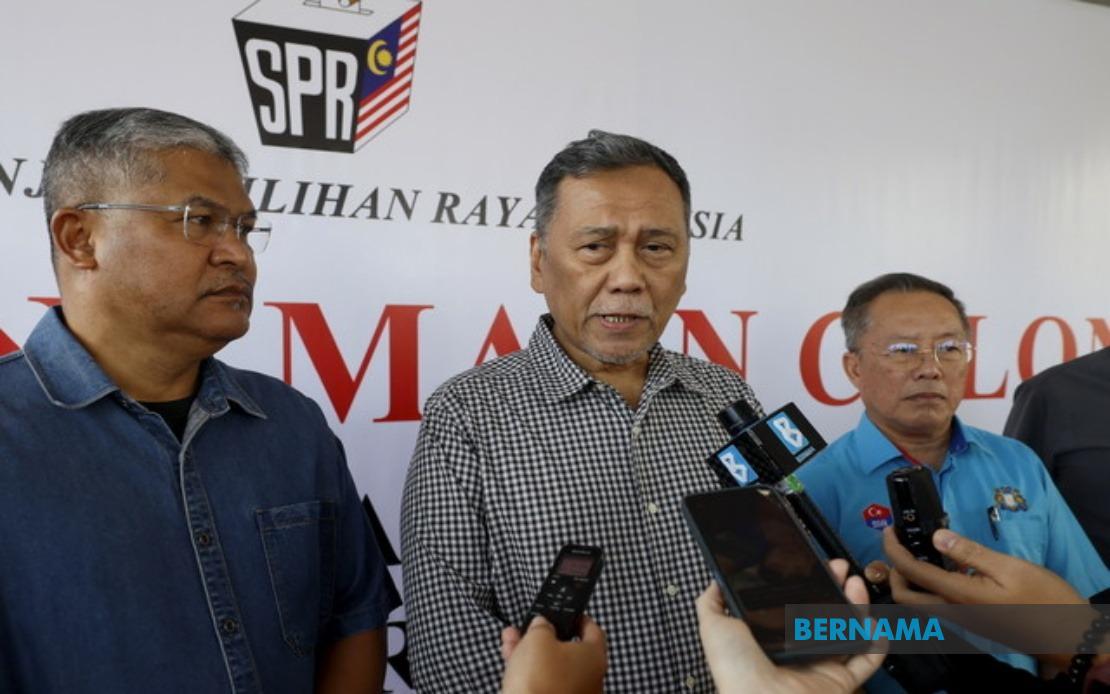
With nomination day imminent for the Johor state election, the Election Commission reported that 593 nomination forms have been distributed across returning officer offices throughout the state, yet only 133 candidates have taken the decisive step of paying their nomination deposits to confirm their candidacy. Election Commission chairman Datuk Seri Ramlan Harun acknowledged the gap between form purchases and confirmed candidates, suggesting that the final tally would likely climb as the nomination window remained open until the formal process commenced the following morning. The disparity underscores the distinction between initial interest and firm commitment to contest, a pattern observed in previous state elections where late registrations were common.
Ramlan emphasised that candidates still had opportunity to complete their formalities before the nomination process opened, urging those planning to run to arrive early and settle their deposits to facilitate a smooth launch of proceedings. The Election Commission had designated 56 nomination centres across Johor, each staffed and prepared following two days of operational rehearsals to ensure systems functioned without disruption. This preparation reflected lessons learned from previous electoral exercises and aimed to prevent bottlenecks that might otherwise frustrate the nomination timeline.
The coalition landscape for Johor's 56 contested seats revealed substantial competition from multiple political formations. Pakatan Harapan committed to fielding a full slate of candidates, distributing representation across its three component parties: PKR would field 20 candidates, Amanah 19, and DAP 17, each bringing distinct political identities and voter bases to the contest. Barisan Nasional similarly pledged complete coverage of all seats, with UMNO taking the bulk of nominations at 36 seats, supplemented by MCA's 16 and MIC's four, reflecting the traditional dominance of UMNO within the BN structure in Johor.
Perikatan Nasional demonstrated a more fragmented approach, with PAS contesting 11 seats, Bersatu 16, the Malaysian Indian People's Party five, and Pejuang one. This allocation suggested strategic negotiations within the coalition to avoid internecine competition, though the overall seat distribution indicated Bersatu's expanded role within Perikatan structures compared to previous cycles. Beyond these established blocs, smaller formations sought representation: the Malaysian United Democratic Alliance fielded four candidates, Parti Sosialis Malaysia one, while Parti Bersama Malaysia announced its electoral debut through 15 state seat nominations.
Security considerations weighed heavily on Election Commission preparations as nomination day approached. Zainal Eran, the returning officer for Maharani constituency, outlined protocols designed to maintain order and prevent confrontations between partisan supporters. Only candidates, their official proposers, and one designated supporter would gain access to nomination centre interiors, a restriction intended to reduce tensions within confined spaces where rival candidates might converge. Remaining party supporters would occupy designated field areas separated by physical barriers, creating buffer zones between different political contingents to diminish prospects for unscripted conflict.
Ramlan reinforced messaging around adherence to regulations and avoidance of provocative conduct, directing this appeal simultaneously to political parties, individual candidates, and their respective support networks. The emphasis on peaceful and orderly proceedings reflected broader institutional concerns about managing competitive politics in an era when social media amplification could rapidly escalate localised incidents into broader controversies. Previous state elections had demonstrated how nomination day confrontations, if unmanaged, could cast shadows over subsequent campaign periods and erode public confidence in electoral integrity.
The Johor dissolution on June 1 triggered the electoral timeline that would culminate in polls on July 11, with early voting scheduled for July 7. This compressed calendar compressed candidate preparation periods and reduced campaign duration compared to federal elections, though adequate time existed for parties to mobilise their organisational capacities and reach voters through traditional and digital means. For electoral observers and political analysts, the gap between forms sold and deposits paid offered preliminary insight into genuine participation intentions versus speculative or exploratory interest from prospective candidates.
The full slate of nominations would determine the actual competitive intensity of this poll. Should the 133 confirmed candidates expand substantially through additional deposits, the contest could evolve into a genuinely three-cornered or multi-cornered fight in multiple constituencies, creating unpredictable outcomes where vote fragmentation might produce unexpected results. Conversely, if final nominations clustered around the established coalitions with minimal independent or minor party representation, the traditional BN-versus-Pakatan dynamics would dominate the electoral narrative.
For Malaysian politics more broadly, the Johor election held significance as an early test of voter sentiment following recent federal political realignments and the ongoing consolidation of PN structures. Johor historically tilted towards BN dominance, yet Pakatan's presence signified the state's evolution toward more competitive political terrain. Results from this poll would offer valuable indicators regarding regional political trajectories ahead of eventual federal elections and additional state contests scheduled for coming years.

