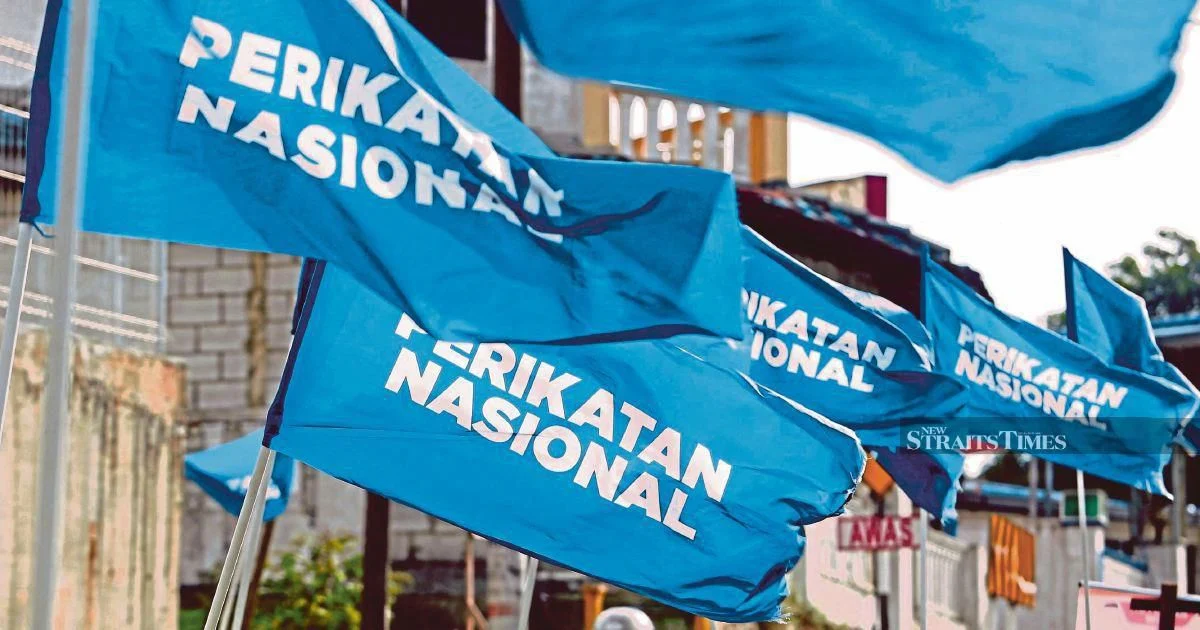
Fractures within Perikatan Nasional widened considerably yesterday as Pas intensified scrutiny over Bersatu's deployment of the coalition's identifying insignia for forthcoming state elections in Johor and Negri Sembilan, signalling deepening organisational tensions that threaten the stability of this crucial opposition alliance.
The dispute centres on procedural governance within the three-party coalition, which also encompasses Hamim. Pas leadership has made explicit that unilateral decisions regarding logo usage fall outside Bersatu's prerogative, and that such determinations require explicit authorisation from the coalition's central authority—a position that fundamentally challenges how Bersatu has been conducting its electoral preparations.
The sequence of events underscores persistent disagreements about decision-making architecture within Perikatan Nasional since its formation and subsequent evolution. As the coalition navigates its role as the primary opposition force, questions about institutional clarity and power distribution have become increasingly prominent. This latest dispute represents not merely a technical disagreement but reflects broader anxieties about coalition cohesion and whether member parties genuinely operate according to shared frameworks.
For Malaysian political observers, the PN logo controversy carries particular significance given the coalition's stated ambitions for the 2025 electoral cycle and beyond. The use of unified branding across state elections has historically strengthened voter identification and messaging consistency. However, when coalition partners cannot agree on fundamental operational matters, the resulting confusion undermines that very objective and raises questions about strategic alignment.
Johor and Negri Sembilan represent strategically important battlegrounds for Perikatan Nasional. Success in these states could substantially enhance the coalition's national positioning and credibility as a viable alternative government. Conversely, internal bickering over procedural matters risks damaging electoral prospects by projecting an image of disunity and poor organisation precisely when voter confidence becomes paramount.
Pas's insistence that only the coalition chairman possesses authority to approve logo deployment reflects a hierarchical governance interpretation—one that Bersatu apparently views differently. This divergence suggests the coalition never fully resolved fundamental questions about internal authority structures, decision-making thresholds, and member-party autonomy when its formal structures were established. Such ambiguities inevitably resurface under operational pressure.
The timing of this disagreement, emerging publicly just as campaigning preparations intensify, compounds the damage. Public disputes over internal authority and procedural legitimacy erode the professional impression necessary for electoral success and provide ammunition to rival coalitions attempting to characterise Perikatan Nasional as dysfunctional or factionally divided.
Moreover, these tensions reflect deeper ideological and strategic differences between coalition components. Pas maintains grassroots networks primarily concentrated in peninsular Malaysia, particularly the northeast, whereas Bersatu has positioned itself as a multi-ethnic, broad-based alternative claiming relevance across diverse communities. These organisational realities generate competing visions about electoral strategy, messaging approach, and coalition direction—disagreements that bureaucratic disputes about logo usage may simply mask.
For voters and political analysts examining Perikatan Nasional's viability, the unresolved institutional questions prove troubling. Coalitions require not merely programmatic agreement but robust governance frameworks that permit coordinated action without constant factional contestation. When fundamental procedural matters require repeated clarification, it suggests inadequate institutional foundations.
Regionally, these developments may influence broader Southeast Asian coalition politics, where multi-party alignments increasingly shape governance outcomes. The PN experience demonstrates both the opportunities and vulnerabilities of opposition coalitions—their capacity to aggregate diverse constituencies against incumbent forces, yet their susceptibility to internal fracture when formal structures prove insufficiently robust.
The resolution of this particular dispute will likely determine whether Perikatan Nasional successfully executes coordinated campaigns in Johor and Negri Sembilan or whether public disagreements continue undermining electoral messaging. Beyond immediate electoral consequences, how PN leadership addresses these governance questions will signal whether the coalition possesses sufficient institutional maturity to function effectively should it acquire national governing responsibility.
Moving forward, Perikatan Nasional member parties must establish unambiguous protocols governing logo usage, campaign coordination, and decision-making authority. Postponing such clarifications risks recurring disputes that incrementally erode coalition credibility and suggest to voters that the alliance prioritises internal positioning over coherent governance preparation. Whether current PN leadership demonstrates capacity for such institutional reform remains uncertain, but the necessity has become undeniable.