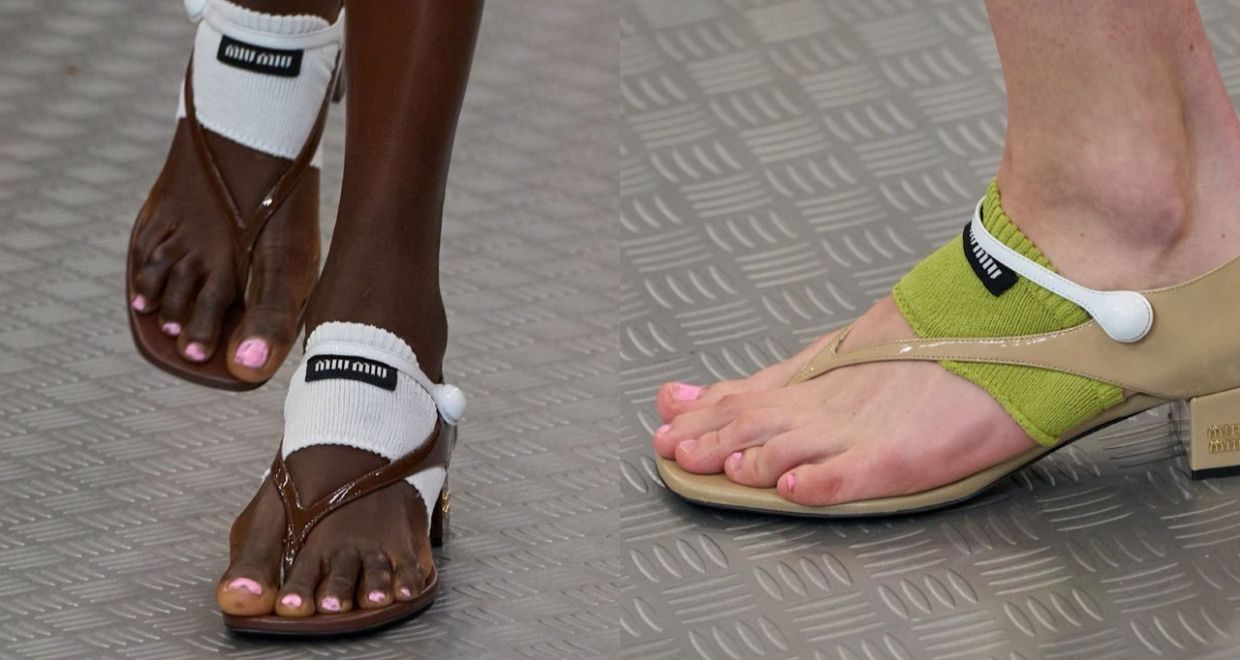
Fashion retailers across South Korea are championing an unconventional solution for the season: open-toe socks that leave toes exposed while covering the foot's arch and top. This peculiar hybrid between traditional hosiery and sandal culture is gaining momentum as consumers navigate the discomfort of choosing between overheating feet and the aesthetic plainness of going bare. The trend represents a departure from conventional footwear logic, yet online sales data suggests it is resonating strongly with style-conscious shoppers seeking novel approaches to summer dressing.
The momentum behind this trend owes much to an unseasonably early heat wave that swept through South Korea, accelerating the shift towards lighter, more breathable footwear options. Retailers tracking consumer behaviour observed a dramatic surge in summer shoe categories, with sales of mules, slides and flip-flops climbing 80 percent in the week from May 31 to June 7 compared to the same period a year prior, according to online fashion platform W Concept. This seasonal acceleration has compressed the typical fashion calendar, forcing shoppers to make immediate styling decisions and adopt experimental approaches to wardrobe building.
The most striking indicator of the trend's velocity emerges from transaction data on style commerce platforms. Ably reported that the transaction value for socks designed to pair with flip-flops surged 1,664 percent over a single month spanning mid-May through mid-June, whilst search interest in these items climbed even more dramatically at 3,227 percent. Such exponential growth suggests more than mere viral curiosity; instead, it indicates a genuine shift in how consumers perceive sock functionality during warmer months. The figures underscore how quickly trends propagate through social commerce channels in the region's digitally sophisticated markets.
The sartorial origins of this trend trace directly to the influence of luxury fashion houses. Miu Miu's 2025 Spring/Summer collection introduced an unexpected reinterpretation of the sock, presenting versions that wrapped only around the arch rather than encasing the entire foot. This designer validation provided crucial legitimacy to an otherwise counterintuitive concept, signalling to broader fashion audiences that unconventional foot coverage could constitute a deliberate styling choice rather than a wardrobe malfunction. Celebrity adoption has further accelerated acceptance, with South Korean actor Cha Jung-won recently sharing social media images pairing sky-blue flip-flops with complementary beige knit leg warmers, demonstrating how the trend could be integrated into aspirational lifestyle imagery.
The contemporary versions of open-toe socks differ fundamentally from their winter predecessors, prioritising breathability and visual impact over thermal function. Manufacturers utilise sheer fabrics, mesh constructions and loosely knitted materials that allow moisture evaporation whilst maintaining the foot coverage that prevents friction and chafing from sandal straps. This engineering perspective transforms the socks from a fashion oddity into a practical solution addressing genuine discomforts associated with summer footwear. The socks function simultaneously as functional accessories and styling components, allowing wearers to introduce colour, texture and visual interest to otherwise minimalist summer silhouettes.
Practical advantages extend beyond aesthetics into genuine comfort considerations. The foot coverage provided by open-toe socks significantly reduces the friction and irritation caused by repeated contact between bare skin and sandal or flip-flop straps during prolonged wear. This benefit becomes particularly pronounced during Southeast Asia's monsoon seasons, when wearers might pair the socks with rain boots as a moisture management and blister-prevention strategy. For consumers in tropical climates, addressing skin irritation whilst maintaining breathability represents a legitimate problem that traditional sock options fail to solve adequately.
Retailers and fashion editors advocate for accessibility in adopting the trend, recommending that newcomers begin with neutral foundation colours such as grey, black or white before experimenting with bolder palettes. A grey sock paired with black flip-flops or ballerina flats complements classic summer staples including denim, Bermuda shorts and satin skirts, creating looks that feel intentional rather than accidental. Those willing to embrace stronger colour statements might select vivid yellows, pinks or sky blues, with fashion experts suggesting that deliberately mismatching sock and shoe colours creates an even more compelling visual statement that reads as fashion-forward rather than confused.
Styling these pieces effectively requires understanding their visual weight within an overall ensemble. Because open-toe socks and their accompanying footwear already command significant visual attention, fashion professionals recommend restraint in other outfit components. Simple t-shirt and shorts combinations or straightforward shirt and skirt pairings allow the socks and shoes to function as focal points without creating visual cacophony. Patterns such as dots or florals work particularly well with the trend, introducing additional textural interest that complements rather than competes with the socks themselves.
The broader cultural significance of this trend extends beyond mere seasonal fashion novelty. In contexts like Malaysia and wider Southeast Asia, where climate considerations shape footwear choices year-round, the emergence of breathable yet coverage-providing options addresses real practical needs whilst offering creative styling possibilities. The trend challenges conventional assumptions about what constitutes appropriate seasonal dressing, suggesting that fashion logic in tropical regions need not replicate patterns established in temperate climates. As Asian fashion markets increasingly influence global conversations about style, solutions specifically engineered for hot, humid conditions may gain international traction, positioning the region's fashion innovation as responding to distinctive environmental requirements rather than simply following Western seasonal templates.

